


Summary
Most garage door problems trace back to a worn opener, broken springs or cables, dirty or bent tracks, misaligned safety sensors, and flattened weatherstripping. Track cleaning, lubrication, sensor alignment, and new seals are safe weekend fixes, but anything under spring tension belongs to a trained technician. A twice-yearly tune-up and a monthly safety reverse test catch most faults before they turn into a costly replacement.
Common Garage Door Problems Start Small and Grow Expensive
Your garage door is the largest moving part on your house, and it cycles more than a thousand times a year. That workload is why garage door problems show up long before the door finally quits on you.

Ignoring small garage door issues turns a cheap fix into a four figure replacement, and a door that stalls or drops becomes a hazard for kids, pets, and cars.
Electrical or Mechanical: Narrowing Down Garage Door Faults
Good garage door troubleshooting starts with one question: electronics or hardware? Sorting symptoms into those two buckets keeps you from replacing parts that were never broken.
| Symptom | Points to electrical | Points to mechanical |
|---|---|---|
| Motor hums but nothing moves | Stripped drive gear or failed capacitor | Snapped spring pinning the door down |
| Door reverses before touching the floor | Dirty or misaligned safety sensors | Obstruction or binding along the track |
| Door opens partway and stops | Travel limits set incorrectly | Frayed cable or damaged track section |
Quicker still: pull the emergency release cord and lift the door by hand. If it glides up and stays put, blame the opener; if you feel real resistance, you're dealing with springs, cables, or tracks. A door that stops halfway through its travel has its own cause list.
Your Garage Door Won't Open or Close and Seems Completely Dead
Wood rots and warps in wet Midwest weather, swelling the panels until nothing slides, so material choice drives longevity more than most people expect. Still, a malfunctioning garage door opener causes more dead doors than every other fault combined.
Check power first: confirm the unit is plugged in, reset the breaker, and swap the remote battery before assuming the motor died.
If power isn't the issue, you may need to repair the garage door opener or replace it. Garage door openers come in several styles, and the chain versus belt drive decision turns on noise and cost.
Once the opener checks out, the remaining solutions belong to a professional. Forcing a door that won't open bends panels and snaps cables that were only slightly worn.
Sticking Garage Door Problems Along the Tracks and Rollers
You've almost certainly fought a sticking door. It's one of the most common garage door problems, and one of the easiest to solve, since dirty tracks cause most sticking garage door complaints. Wipe the channels with a damp rag, clear the grit, then spray garage door lubricant on each roller stem, hinge, and bearing plate.
Still binding? The rollers have worn flat or the door needs realignment in its opening. Leave a door that has jumped its track closed until someone resets it, since the weight no longer sits evenly.
Broken Springs and Frayed Cables Under Constant Tension
Springs do the heavy lifting; the opener only guides the door. When one snaps, you'll hear a bang like a gunshot. Look for a visible gap in the coiled spring above the opening, a door that rises a few inches then stops, or cables hanging loose off the drum. Our guide to diagnosing faulty garage door springs covers the rest of the symptoms.
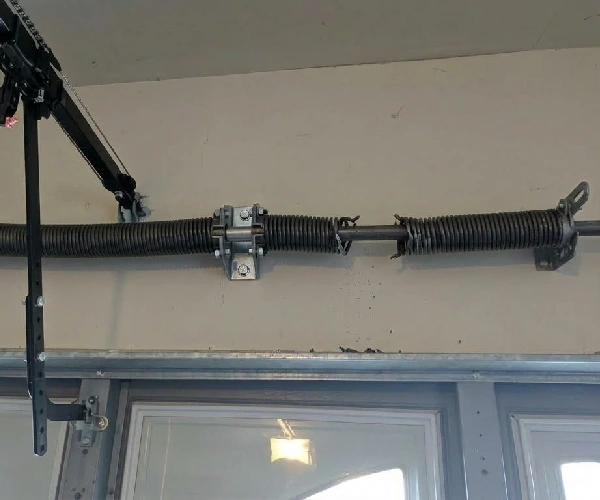
Replacement runs $150 to $350 per spring installed, and cables cost $100 to $200 for the pair.
Here's the part worth taking seriously: a loaded torsion spring stores enough energy to break bones. This is the one repair where calling a pro isn't optional.
Quick Tip
Stop using the door the moment a spring breaks. Without that tension, the opener and cables carry its full weight and can fail next.
Opener Malfunctions, Safety Sensors and Remote Interference
Troubleshooting garage door openers gets easier once you separate the three systems: motor unit, photo eyes, and the radio link to your remote. A motor that hums without moving has a stripped gear; clicking with no hum points to a dead capacitor.
Aligning Your Garage Door Safety Sensors in a Few Minutes
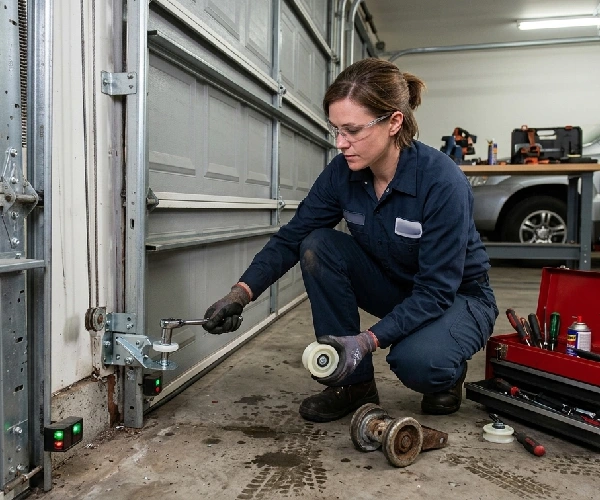
Photo eyes sit six inches off the floor on each side of the opening. Knock one with a rake and the door refuses to close.
- Wipe both lenses to clear dust, cobwebs, and road salt.
- Loosen the bracket wing nut so the eye pivots freely.
- Aim one at its partner until the indicator light burns steady.
- Tighten the bracket, then wave a broom through the beam to test the reverse.
Our walkthrough on aligning garage door sensors covers wiring faults and sun glare, which alignment won't fix.
Clearing Remote and Keypad Signal Interference Problems
LED bulbs and smart home hubs crowd the frequency your remote uses, so a range drop to a few feet usually means interference. Swap the opener bulb for one rated for garage door use, then reprogram the handset.
Your Garage Door Is Drafty and Driving Up Your Energy Bills

A door that leaks outside air risks everything parked inside through a Midwest winter, and heated air escapes under the panels as fast as you make it. Start with the bottom seal and perimeter weatherstripping, since both flatten and crack with age.
When fresh seals don't help, the door has warped or the sections no longer meet squarely. Find experts to measure the opening properly.
Loud Garage Door Problems: Grinding, Screeching and Banging
A door that announces itself to the whole block has something wearing out, and the noise tells you where to look.
- Grinding: roller bearings gone or a chewed up opener gear
- Screeching: dry hinges and springs needing lubricant
- Rattling: loose nuts, bolts, and mounting brackets
- Popping: sections binding as the door flexes out of square
Tighten every visible fastener, grease the moving parts, and swap steel rollers for quieter nylon ones.
Your Garage Door Slams Shut and Puts Everyone at Risk
The most dangerous of these malfunctions is a door that drops instead of lowering. Worn springs cause almost every slamming door, with weak cables and a failed safety reverse close behind.
Test that reverse monthly. Lay a two by four flat in the door's path and press close; it should touch the wood and immediately go back up.
Cracked and Dented Panels That Weaken the Entire Door
A dent looks cosmetic, but it changes how the section flexes through the track's curve and throws off the balance your springs were set for.
Many dings come out at home, and surface damage like rust or spray paint has its own fixes.
Once two sections are compromised, full replacement beats piecing it together. A car door guard on the garage wall stops the next round of dents.
Opening Your Garage Door by Hand During a Power Outage
Storms knock out Midwest power every year, usually right when you need the car. Every opener has a manual release for this.
- Lower the door fully, so it can't drop once you disconnect the trolley.
- Pull the red cord on the ceiling rail straight down until the trolley clicks free.
- Lift with both hands, gripping the bottom section rather than a seam between panels.
- Once power returns, pull the cord toward the opening and run the motor to reconnect.
One caution: never disconnect the trolley while the door is up. Without the motor holding it, a weak spring lets it drop hard.
Child, Pet and Security Features Worth Adding to Your Door
Federal rules have required automatic reversal since 1993, but plenty of older Midwest openers predate that. Newer systems add more.
- Wall buttons mounted five feet up, out of a toddler's reach
- Rolling code remotes that change frequency after every use
- Timer to close, so nothing sits open after the kids come inside
- Pinch resistant panel joints that close without catching fingers
The same hardware deters intruders, since rolling codes stop thieves from copying your remote's signal.
DIY Garage Door Repair Versus Hiring a Trained Professional
Cleaning tracks, greasing hinges, replacing weatherstripping, tightening hardware, and aligning sensors are genuinely weekend work. Springs, cables, and anything affecting balance belong to a technician, and the drawbacks of going it alone include serious injury.
These are the most common mistakes to avoid with garage door repair:
- Loosening a torsion spring bracket without proper winding bars
- Using WD-40 as lubricant, which strips grease instead of adding it
- Disabling the safety sensors to force a stubborn door shut
- Replacing one spring on a two spring system, so the second fails soon after
- Adjusting travel limits to mask a track or cable fault
A service call runs $100 to $200 before parts, cheap next to an emergency room visit.
Garage Door Problems Should Always Be Taken Care Of
Every issue here gets worse the longer it waits: a dry roller becomes a bent track, and a frayed cable becomes a door on the floor. Twice a year, spend thirty minutes to lubricate, tighten, and test the reverse. When repairs stop holding, weigh the cost against replacing the garage door outright or moving to glass garage door styles for more daylight in a space you use as extra living space.
Feldco has been the Midwest's number one home exterior company since 1976, serving over 500,000 homeowners across Illinois, Wisconsin, Indiana, and Iowa. Every door is installed by a trained crew, not a subcontractor. Talk with a product specialist and get a free quote today.
FAQs
How long do garage door springs and cables usually last?
Standard springs are rated near 10,000 cycles, roughly seven to nine years for most families. Cables last a similar stretch, though salt and humidity shorten it, so have both inspected annually.
Is it safe to replace a garage door spring yourself?
No. A wound torsion spring holds hundreds of pounds of force and releases it instantly if it slips. Hire a technician who carries winding bars and knows the right replacement rating.
Why is my garage door sensor blinking yellow or red?
A blinking light means the photo eyes can't see each other, usually from a bumped bracket, a dirty lens, or something parked in the beam. Clean both and pivot them until the light holds steady.
Can garage door sensors wear out and fail completely?
Yes. Moisture, corroded wiring, and cracked housings kill a photo eye for good, and most last roughly ten years. Replace them in pairs.
What are the early signs that a garage door opener is failing?
Watch for a motor that hums without moving anything, patchy remote response, grinding from the housing, and hesitation partway up. Each points to worn gears, a dying capacitor, or a failing logic board.
Why does my garage door open halfway and then stop?
Short travel limits, an obstruction in the track, or a frayed cable will all halt a door mid lift.
Should I choose a chain drive or a belt drive opener?
Chain drives cost less and handle heavy doors well; belt drives run quietly enough for a garage under a bedroom.
What are the most common reasons a garage door stops working?
A broken spring, a dead or unplugged opener, blocked safety sensors, a tripped breaker, and debris in the tracks account for most cases. Checking power and sensors first resolves a large share of these calls.


 866-4FELDCO