


Summary
Garage floor sweating is condensation that forms when warm, humid air meets cooler concrete, usually in spring and summer. A plastic sheet test shows whether the water comes from the air or from below the slab. Lower humidity, steady airflow, a warmer slab, and tight seals stop most sweating.
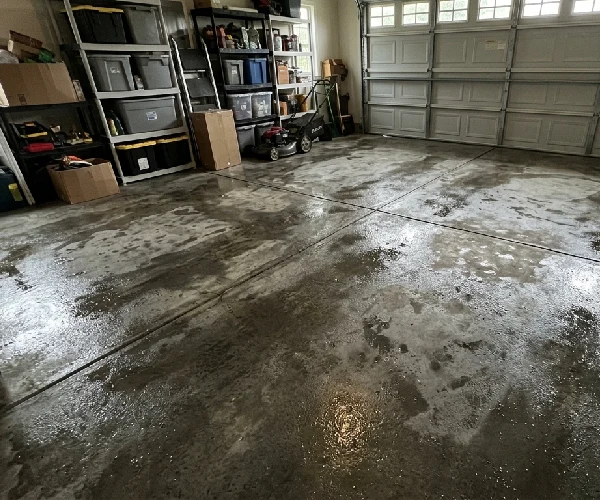
Common Causes of Garage Floor Sweating and Condensation
Garage floor sweating is condensation, and it's the most common reason homeowners find a slick film underfoot. It happens when humid air touches a slab that's cooler than its surroundings. The layer just above the surface cools below its dew point, and excess water vapor settles on the concrete as droplets.
Condensation on garage floor slabs builds fastest under a few everyday conditions. These are the most common causes:
- Humid air rushing in when you open the door on muggy mornings
- A slab kept cold by constant contact with the ground
- Poor ventilation that lets moist air linger
- Wet cars or snowmelt drying inside
Sweating Slab Syndrome and Warm, Humid Summer Weather
The problem is common enough to have its own name: sweating slab syndrome. It peaks in spring and summer, when moist air meets concrete still chilled from cooler nights.
Moisture Rising From Below the Slab After Heavy Rain
Condensation isn't the only source of moisture in garage floor slabs. Groundwater can wick up through concrete, which is why you'll sometimes find your garage floor wet after rain with no leaks anywhere.
Many older slabs have no vapor barrier underneath. Even concrete rated at 3,000 to 4,000 psi, typical for residential garages, has capillary pores that pull water up like a sponge.
Sweating Floor or Deeper Moisture Problem: Test It First
Before you pick a fix, find out where the water comes from. A simple test pinpoints the source of floor dampness using nothing but plastic and tape.
The Plastic Square Test for Air vs. Ground Moisture
- Pick a day when the concrete is completely dry.
- Tape an 18-inch square of heavy plastic to the floor, sealing all four edges.
- Leave it in place until the floor turns damp again.
Reading the Results: Moisture From Above or Below the Slab
Peel back the plastic and compare the covered spot to the rest of the floor. A dry patch surrounded by wet concrete means humid air is causing sweating. If the underside of the plastic is wet but the surrounding slab is mostly dry, moisture is rising from the ground.
Why a Sweaty Garage Floor Is Worth Fixing Right Away
A sweaty garage floor rarely signals structural damage, but it's a real slip hazard, especially when you're carrying tools or groceries. A moist floor also keeps the space humid, which leads to rusty equipment, musty odors, and mold on drywall and stored boxes.
How to Keep Your Garage Floor From Sweating Year-Round
Once the test confirms sweating, your target is the air, not the concrete. A wet garage floor solution changes the conditions behind condensation, since a sealer alone won't stop droplets from forming.
Knowing how to stop concrete from sweating comes down to five changes. Each one tackles a different part of the problem:
- Lower the humidity in the air
- Increase air circulation
- Raise the air and slab temperature
- Keep doors and windows sealed
- Change the floor surface
Garage Tip
Keep garage humidity below 50% with a dehumidifier, and leave the big door closed on muggy mornings while the slab is still cool.
Reduce Humidity With a Dehumidifier During Summer Months
A dehumidifier pulls water vapor out before it reaches the concrete, making it the most direct way to reduce humidity in garage air. Aim for less than 50% relative humidity through the summer, and choose a garage-rated unit that works in cooler temperatures. Hook up a drain hose so you don't have to empty the bucket.
Improve Air Circulation With a Fan Aimed at the Floor
Moving air keeps humid pockets from resting on the concrete long enough to cool and condense. An oscillating fan pointed at the floor works best because it sweeps a wide area.
Raise the Slab Temperature With Heat and Door Insulation
Condensation only forms when the slab is colder than the air's dew point, so a warmer floor stays dry. A garage heater and insulated walls help hold heat in the concrete.
Your garage door is often the largest uninsulated surface in the space. An insulated door slows overnight heat loss, keeping the slab closer to air temperature and cutting down on morning condensation.
Seal Garage Doors and Windows to Keep Humid Air Outside
Drafts carry humid outdoor air straight onto cool concrete, so sealing gaps keeps your floor drier. Replace a worn bottom seal on your garage door, too. You'll keep out rodents and hold a steadier temperature at the same time.
Change the Floor Surface With Tiles or a Protective Coating
If you'd rather not manage humidity forever, upgrade the surface. Interlocking tiles and vinyl don't soak up water like bare concrete, and you can compare garage flooring options by cost and durability.
A polyaspartic or epoxy coating seals the concrete's pores, so water sits on top where you can squeegee it away. Coatings won't stop condensation alone, but a flake finish adds grip.
Garage Floor Sweating Is Easy to Fix but Takes Patience
Garage floor sweating usually points to nothing worse than condensation. Run the plastic test first, though, so you don't treat a deeper moisture problem the wrong way.
Once you know the cause, you can fix concrete sweating with cheap changes to humidity, airflow, and temperature. Give it some time and patience, and your floor will stay dry.
Protect Your Garage Floor With a Polyaspartic Coating
Once you've tackled humidity, a polyaspartic coating gives your concrete lasting protection. It seals the surface, resists hot tires, oil, and road salt, and won't yellow in sunlight like many epoxies. A textured flake finish adds grip, so any leftover dampness is easier to handle.
Feldco has been the Midwest's #1 home exterior company since 1976, serving over 500,000 homeowners across Illinois, Wisconsin, Indiana, and Iowa. We've built over 100,000 garages, so we know what a garage floor goes through. Talk to a specialist and get a free quote on your garage floor coating today.
Frequently Asked Questions About Garage Floor Sweating
What makes a garage floor wet on a dry, sunny day?
Water on your garage floor in dry weather is almost always condensation. It forms when humid air hits the cooler slab, often right after you open the door on a muggy morning.
Why does my garage floor turn damp after rain without any leaks?
Rain saturates the soil, and groundwater wicks up through slabs that lack a vapor barrier. Extend downspouts and slope the soil away from the garage so water doesn't collect near the foundation.
Should I use epoxy or a penetrating sealer on a damp garage floor?
A penetrating sealer is the safer pick when moisture rises from below, because it soaks in and lets vapor escape. Epoxy forms a solid film that can blister over a damp slab unless installers test moisture first and use a vapor-blocking primer. Neither one stops condensation from humid air.
Will a sweating garage floor cause drywall mold?
Yes. Constant humidity soaks into drywall's paper facing, especially near the slab, and mold follows. The EPA recommends keeping indoor humidity below 60%, ideally between 30% and 50%.
How can I keep garage floor moisture from rusting a classic car?
Keep humidity below 50% with a dehumidifier, and don't close the door on a wet car. Choose a breathable cover over plastic, which traps moisture against paint and metal.


 866-4FELDCO