


Summary
Garage humidity comes from damp concrete slabs, air leaks, poor insulation, wet cars, and plumbing problems, and it causes mold, rust, and musty odors. Keep levels between 30% and 50% with a mix of a dehumidifier, better airflow, insulation, and leak repairs.
Common Causes of High Humidity and Condensation in a Concrete Garage
Garages aren’t supposed to be perfect. They aren’t meant to have supremely clean floors, pristinely kept cabinets, swept surfaces, and cobweb-free corners. The garage doesn’t regulate temperature as well as the main house, and garage humidity can make the air feel thick in what should be a cool getaway spot for hanging out or starting a new home project, whether you live in the warm South or a four-season state.
This car keeping, equipment storing, seasonal tool harboring room is designed for the buzz saw worthy projects, but most decidedly not for humid, sticky temperatures that hinder the potential of a homeowner’s greatest do-it-yourself work. No matter where you live, start by finding the source, then use these foolproof ways to downplay the nasty humidity in your garage.
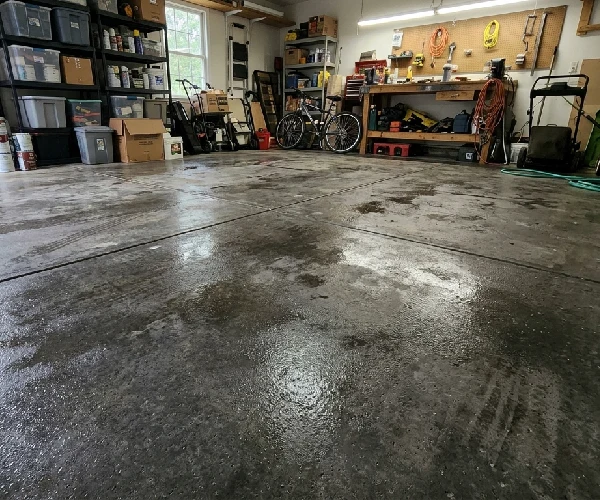
If you keep wondering, “Why is my garage so humid?” check the floor first. Concrete is porous, so ground moisture wicks up through the slab, and warm air hitting that cool surface leaves condensation in garage corners and on windows.
Other common moisture sources include:
- Gaps around the garage door and windows
- Thin or missing insulation
- Rain and snow dripping off your car
- Damp firewood, cardboard boxes, or a washer and dryer
Humidity Tip
Fix the moisture source first; no dehumidifier keeps up with a leak, a wet slab, or a gap under the door.
Ideal Garage Humidity Levels for Comfort, Tools, and Storage
Good humidity control starts with a target: 30% to 50% relative humidity. For tool storage, stay under 50%, since rust forms quickly once levels sit above 60%. Check with an inexpensive hygrometer, and let it settle for about two hours before you read it.
Get a Garage Dehumidifier
What’s the simplest answer to humidity? A dehumidifier. There’s a reason why so many homeowners turn to dehumidifiers for their dark, damp basements, and it’s because dehumidifiers excel at leveling out the moisture in a room, making the air dry, warm, and allowing the environment to be free of excess water. Humidity won't only make your garage wildly uncomfortable, but it'll also be a cause for mold growth.
For this fact, homeowners run dehumidifiers in rooms where mold can grow rampant, with the aid of a dark, damp, warm environment where it can spread and be a cause for health concern.
Run a dehumidifier when the air in your garage becomes thicker with moisture, as the humidity begins to set in. The sooner you take action, the less of a chance mold will have to take root.
Compressor vs. Desiccant Dehumidifiers for Cold, Unheated Garages
Garage dehumidifiers come in two main types. Compressor models are the most common dehumidifiers for garages that stay warm, but they lose efficiency below about 60°F. If you need a dehumidifier in the garage in winter, desiccant models keep working near freezing.
| Feature | Compressor | Desiccant |
|---|---|---|
| Works best | Above 60°F | Near freezing and up |
| Energy efficiency | Highest in warm weather | Highest in cool weather |
| Best for | Heated or summer-use garages | Unheated garages |
Exhaust the Humidity Away
When humidity has become such a prevailing problem in your garage that it seems as if the air is thick with extra moisture, trapped within your garage’s four walls, and especially if you often try to make use of this space, then installing an exhaust fan is the best solution for you. Yes, it’s not as simple as plugging in a dehumidifier and letting it do the work, but once the exhaust fan has been installed, it'll be that simple!
Homeowners who have transformed their garage into a hangout space, a living area, a rec room, or a loft-style apartment, absolutely don't want the old foe of humidity to ruin their hard work.
If this is the situation for you and you find that the upstairs of the garage traps humidity and heat, then installing an exhaust fan will help regulate the garage’s overall temperature. If the garage is attached, this will also help ensure that the humidity isn't sneaking into the rest of your home, too.
Air Conditioner to Dehumidify Your Garage
Some homeowners are lucky enough to have air conditioners in their garages, and if you’re one of these folks, then it’s time to utilize the unit to help cool off your garage. Or, if you plan on spending a decent amount of time in your garage, then buy a window air conditioning unit. These are relatively inexpensive and go on sale during off seasons. Garage air conditioners can also help dehumidify a garage.
Some people don’t realize that air conditioners can actually reduce the levels of moisture in a room by condensing it out of the air as they run, and the best perk about using the air conditioning unit to reduce humidity is that you’ll enjoy the coolness of the room. Your garage air conditioner can make an otherwise stuffy room enjoyable. Overall, it’s a win-win.
Ventilate Your Garage
Your garage may have few windows that should be opened to increase ventilation throughout the room, thus decreasing the levels of humidity. Of course, many homeowners will turn their noses up to the idea of cracking open a cobweb-ridden window in their garage, only to let in critters and other debris. However, having much-needed airflow through your garage will immensely lower the humidity within it.
If you’ve taken up the suggestion of an exhaust vent, this will greatly assist in your garage’s ventilation, but if not, consider installing sturdy storm windows if you have windows in your garage. Even opening blinds and letting in the sunlight will help evaporate excess moisture throughout the day.
Insulate and Weatherstrip Your Garage to Keep Moisture Outside
Humid air slips in through the same gaps that let heat escape. To prevent moisture in garage spaces, caulk cracks and replace worn weatherstripping and the garage door’s bottom seal. Insulation also limits temperature swings, so warm air won’t condense on cold walls; here’s why your garage needs insulation.
Investigate Your Garage’s Drains and Plumbing
As a homeowner, you’re well aware that bad drainage problems can lead to a slew of bigger issues at hand, some you might not even consider, like humidity. Leaky pipes, moisture escaping from a rogue washing machine or faucet, or a backed up storm drain can be the cause to blame for the air heavy with an unshakable wetness.
Take a look at all the places where water travels, the bends of the pipes, the source of the water, and any machines that utilize water hook-ups. By ensuring that nothing is leaking, you can stop not only the humidity in your garage, but the potential growth of harmful mold, and the dreaded weakening and damage of your garage’s structural integrity.
Reduce Humidity in Your Garage: Tips and Tricks
Now that you’re outfitted with a few solutions to try for your humid garage, you’re looking at a cooler, much more bearable workspace in your future. Keep in mind that chasing away the humidity may take a few solutions at once, or the solution could be just as simple as plugging in a dehumidifier or cracking open a window for a breeze. You can also reduce humidity in a garage without a dehumidifier: store items in sealed plastic bins instead of cardboard, and set out moisture absorbers like calcium chloride tubs.
Resolving the problem of a humid garage if it’s attached can also regulate the temperatures in the main house. For a detached garage, you can expect to regain comfort over your space once again.
Detached garages are ideal for all four seasons. We properly build garages to your needs to ensure that your garage stays cool in the summer.
Get Started on a Comfortable, Moisture-Smart Garage With Feldco
The right build keeps moisture out from day one. Feldco has built over 100,000 garages and served over 500,000 homeowners across Illinois, Wisconsin, Indiana, and Iowa, as the Midwest’s #1 home exterior company since 1976. Get a free quote and talk with a garage specialist today.
FAQs
What’s the difference between dampness and humidity in a garage?
Humidity is water vapor in the air, while dampness is liquid moisture on or in surfaces like walls, boxes, and the slab. High humidity often turns into dampness through condensation.
Is a dehumidifier or a ventilation fan better for a garage?
A ventilation fan only lowers humidity when the outdoor air is drier than the air inside. A dehumidifier works in any weather, so it’s the better pick for muggy stretches.
Should I use a dehumidifier or an air conditioner for summer moisture?
Use an air conditioner if you spend time in the garage and want it cooler. For a storage-focused garage, a dehumidifier removes moisture more efficiently and costs less to run.
How do I get rid of a musty smell in my garage?
Find and dry the moisture source, clean any mold or mildew spots, and toss damp cardboard. Then run a dehumidifier to keep humidity under 50%, and set out baking soda to absorb lingering odors.
Do you ever need a humidifier for a garage?
Rarely. A garage humidifier only helps in a heated winter workshop where the air drops below 30% and dries out woodwork; most garages need a dehumidifier instead.


 866-4FELDCO