


Summary
Garage ventilation clears out car exhaust, chemical fumes, trapped heat, and moisture before they seep into your home or damage what you store. Most garages need a mix of passive intake vents and an exhaust fan sized to the room's volume, mounted high and opposite the main door. A fan kit is a manageable DIY install with the power off, and a few summer habits keep heat and humidity in check.
Why Proper Garage Ventilation Matters for Your Whole Home
A musty smell the moment you open the service door is usually the first clue. So is a space that bakes in July and turns frigid in January.
Garages tend to get neglected. Plenty of homeowners treat them as storage units or second-rate rooms. However, skipping proper garage ventilation creates real problems for the rest of your house.
Poor airflow is bad news for two big reasons. First, fumes and chemicals from your vehicle, power tools, and stored products are dangerous when they drift into your living space.
Second, heat that builds up in an attached garage over the summer makes the rooms next to it uncomfortable. The same thing happens in winter, when a cold garage pulls warmth out of the adjoining walls.
To vent a garage correctly, many homeowners start with a garage exhaust fan. Below, you'll find how to assess your space, which ventilation options to consider, and how to install a fan yourself.
How to Inspect Your Garage Ventilation and Spot Problems Early
If your garage suffers from poor ventilation, adding windows or remodeling gets expensive fast. And if you don't want to leave the overhead door cracked open for security reasons, a garage exhaust fan is the next best solution.
Checking your airflow isn't complicated. Ask yourself a few simple questions:
- Are you uncomfortable when you stand in the room?
- Is it too hot or too chilly?
- Does the space give off strong, unpleasant odors?
Garages don't have the same temperature control as the rest of your home, but they should still feel bearable. Intense chemical odors always point to poor ventilation; your garage shouldn't smell like a hazard zone.
Warning Signs of Poor Garage Airflow and Moisture Buildup
Odors and temperature swings aren't the only red flags. Trapped moisture leaves its own evidence, especially after rainy weeks or snowy winters. Watch for:
- Condensation on windows, metal doors, or the concrete slab
- Rust on tools, bike chains, or metal shelving
- Mildew spots on drywall, cardboard boxes, or stored fabric
- Peeling paint or warped wood trim
- Exhaust fumes that linger long after you've shut off the car
An inexpensive hygrometer takes the guesswork out. Relative humidity that stays above 60% makes mold growth likely, which means the space needs more air movement or a dehumidifier.
Measure the Square Footage to Size Your Ventilation Correctly
Once you've decided it's time to ventilate, get the square footage of the space by multiplying its length by its width. Then multiply that figure by the ceiling height to find the volume in cubic feet. This number tells you how much fan power you need.
Fans are rated in cubic feet per minute (CFM). To find your target, use this formula: CFM = cubic feet × air changes per hour ÷ 60. Many ventilation pros use about 6 air changes per hour for a home garage and more for a workshop with paint or solvent fumes.
| Garage Size | Typical Dimensions | Volume (9-ft Ceiling) | Suggested Fan Capacity |
|---|---|---|---|
| 1-car | 12 × 22 ft | 2,376 cu ft | About 240 CFM |
| 2-car | 24 × 24 ft | 5,184 cu ft | About 520 CFM |
| 3-car | 32 × 24 ft | 6,912 cu ft | About 690 CFM |
These figures assume 6 air changes per hour. Natural leakage around doors and vents covers part of the load, so a drafty building gets by with a bit less.
Passive vs. Active Systems: Natural Airflow Compared to Fans
Every residential garage ventilation system falls into one of two camps. Passive setups rely on vents, windows, and the fact that warm air rises. Active setups use powered fans to push stale air out on demand.
| Factor | Passive Ventilation | Active Ventilation |
|---|---|---|
| Examples | Ridge, soffit, gable, and wall vents; windows | Ceiling, wall mount, and roof-mounted exhaust fans |
| Operating cost | None | Small electricity cost |
| Airflow control | Depends on wind and temperature | Steady, measurable CFM |
| Fume removal | Slow | Fast |
| Best for | Storage-only garages, mild weather | Workshops, attached garages, humid climates |
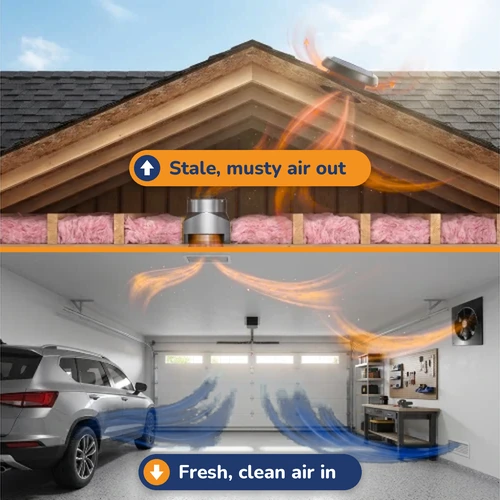
For most homes, the best results come from combining both. Passive vents supply fresh intake air while an exhaust fan pulls hot, stale air out.
Quick Tip
Pair every exhaust fan with an intake vent on the opposite side of the garage. Without a path for fresh air to enter, even a powerful fan can't move much air.
Garage Ventilation Options, From Roof Vents to Wall Mount Fans
Adding ventilation doesn't always mean a major project. The right mix depends on your roof style, how you use the space, and whether the garage shares a wall with your house.
Garage Roof Venting Lets Rising Heat Escape on Its Own
Heat collects near the ceiling, so the roof is a natural exit point. A ridge vent runs along the peak and works best with soffit vents under the eaves that draw cooler air in low. Gable vents, mounted high on the end walls, do the same job on gable-style roofs.
Garage roof venting is passive and silent, but cutting into shingles is usually a job for a pro. Once it's in, keep stored items away from every garage air vent so nothing blocks the flow.
Garage Door Ventilation and Wall Vents Bring In Fresh Air
Garage door ventilation is one of the simplest upgrades. Vent panels set low in the door let cooler outdoor air in, while vents or a fan high on the opposite wall let warm air out. This bottom-to-top path is called stack ventilation.
A louvered wall vent works the same way on a side wall. Most homeowners can install vent kits as a DIY project: cut an opening between studs, mount the vent from outside, and seal the edges against water. Choose models with insect screens and, in cold climates, closable louvers.
Benefits of a Through-the-Wall or Wall Mount Exhaust Fan
A wall mount exhaust fan for garage use goes straight through an exterior wall, so there's no attic ductwork or roof penetration. That makes it one of the easiest powered options to install and one of the least likely to leak. Common models move anywhere from 70 to more than 400 CFM.
Through-the-wall fans also give you control. Many include a switch, timer, or thermostat, and built-in shutters close when the motor stops to keep outside air and pests out. Mount the fan high on the wall opposite the main door for the strongest cross-draft.
How to Ventilate a Garage With No Windows Using Fans and Vents
Knowing how to ventilate a garage with no windows comes down to creating your own openings. Start with a garage vent fan to do the heavy lifting. If wall space is tight, choose an exhaust fan for garage ceiling installation and duct it through the roof.
Next, add a wall vent or door vent on the far side so the fan has a steady source of makeup air. A fan on a timer keeps fumes from building up while you're away.
Choosing a Garage Exhaust Fan Kit for Your Ceiling or Wall
Fumes and odors build up in a garage for predictable reasons. The most common culprits include:
- Paint, fuel, fertilizer, and cleaners you store there
- Exhaust that drifts in from vehicles and small engines
- A lack of windows or fans to keep air moving
That's why so many homeowners invest in a garage exhaust fan. You'll find them at any hardware store, and many come in kits that are fairly easy to self-install.
Check each fan's CFM rating against the number you calculated earlier. If you'll spend time working in the space, compare noise levels too, which are measured in sones. Fans come in a wide range of prices, so you'll find ventilation options to fit your budget.
How to Prepare for Garage Exhaust Fan Installation Safely
Your fan kit should include installation instructions. Product labels aren't always clear, though, so here are the basic steps to prep for installation:
- Mark the spot on the ceiling or wall where you want the fan, and cut the opening to the size listed in the kit.
- Locate the nearest junction box or power source you'll wire from.
- Before you touch any wiring, shut off power to the garage at the breaker. Test the wires with a voltage tester to confirm they're dead.
- Run new wire from the junction box to the opening. Large fans draw a lot of power, so give them a dedicated circuit to avoid overloading existing ones.
If your water heater or furnace sits in the garage, add an intake vent before running a strong exhaust fan. Without one, the fan can pull combustion gases back down the appliance flue. And if you're not comfortable with electrical work, hire a licensed electrician.
How to Install a Garage Fan and Vent It Through the Roof
With the prep work done, it's time to mount the fan. Here are the basics of a DIY install:
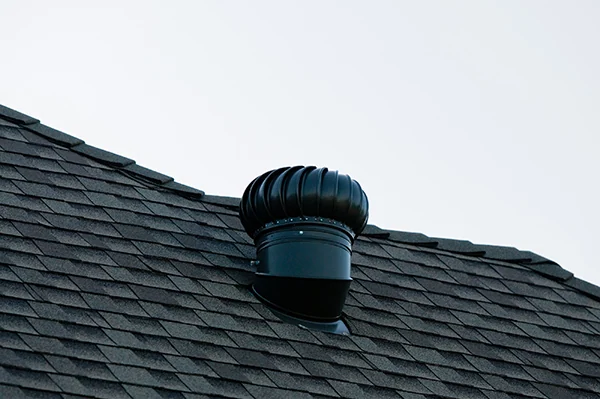
- Connect the exhaust duct to the fan, then push it through the roof until the outlet is fully through.
- Secure the duct and roof cap to the outside of the roof with the brackets included in the kit, and seal around it to keep water out.
- Connect the wires to the fan and screw the housing into the ceiling or side wall.
- Caulk around the edge of the housing to seal any gaps between the fan and the ceiling.
- Turn the power back on and test the fan. If it doesn't run, check the troubleshooting section of the manual first.
Other Garage Heat Ventilation Factors to Consider in Summer
A fan goes a long way toward keeping temperatures pleasant and eliminating nasty odors. Still, a single fan can only do so much, so a few extra steps are worth taking.
Account for Which Way Your Garage Faces and Its Sun Exposure
South- and west-facing garages struggle with heat the most because they take the brunt of the afternoon sun. A fan helps, but these garages start at a disadvantage, and keeping them fully cool in summer is tough. Light-colored doors and shade trees cut down on the heat they absorb.
Park Hot Cars Outside Until the Engine Has Time to Cool Down
Try not to pull into the garage right after driving. A car that's been on the road carries a lot of heat, and the engine takes a while to cool.
Even after a 15-minute errand, leave the vehicle outside for a couple of hours when you can. It won't radiate as much warmth into the garage.
Rethink Insulated Garage Doors If You Live in a Warm Climate
Insulated garage doors are incredibly efficient at keeping cold air out in winter. In warm months, though, they work against you.
Insulated doors keep hot air trapped inside. That's not a problem up north, where winters are long and bitter. In a milder climate, you'd do better with a non-insulated door and more ventilation.
Run Fans During Cooler Hours to Flush Out Built-Up Summer Heat
Timing matters as much as equipment. Run your fan and open the doors in the early morning or evening, when outside air is cooler than the air trapped inside. During the hottest part of the day, keep doors closed so you're not pulling in more heat. A thermostat-controlled fan handles this for you by switching on only when temperatures climb.
Improving Garage Ventilation and Air Flow for Better Circulation
Garages aren't just unpleasant when they're hotter or colder than the house and full of strong odors. They also affect the rest of your home.
If the garage is too hot or cold, the adjacent rooms feel it, too. You can't stop that transfer of heat or cold completely, so your best defense is plenty of air movement.
Your garage can only get as cool as the temperature outside. Still, one or more ceiling or sidewall exhaust fans keep conditions within reason.
For the best results, placement matters. Fans mounted high on the wall or ceiling, directly opposite the main garage door, move air most effectively. A through-the-wall fan and a ceiling vent both work well in this setup, giving you a couple of solid ventilation ideas to compare.
Clear Lingering Smoke and Chemical Odors With Cross-Ventilation
To get smoke smell out of garage walls and stored belongings, start with airflow. Open the overhead door and a service door or window on the opposite side, then run the exhaust fan for several hours. A box fan facing out of the doorway speeds things up.

Fresh air clears new odors, but old smoke clings to surfaces. Wash walls with a vinegar or TSP solution, replace any fabric you can't clean, and seal stained drywall with an odor-blocking primer before repainting.
Controlling Moisture, Mold, and Humidity With Steady Airflow
Garages collect moisture from wet cars, snowmelt, laundry machines, and humid summer air meeting a cool concrete slab. Ventilation carries that damp air outside before it condenses. There are several proven ways to reduce humidity in garage spaces, and airflow is the foundation for all of them.
How Consistent Airflow Protects Stored Items From Mold Growth
Mold needs moisture and still air to grow. Steady ventilation removes both, which protects cardboard boxes, holiday decorations, furniture, and seasonal clothing. Airflow alone won't fix a leaky roof or a wet foundation, so address water sources first.
Storage habits help, too. Use plastic bins with tight lids, keep items on shelves off the concrete, and leave a few inches between boxes and exterior walls so air can circulate.
Ventilating a Garage Home Gym to Keep Humidity Under Control
A hard workout adds a surprising amount of heat and moisture to a closed garage. Without ventilation, you'll notice foggy mirrors, rusty weights, and stale air within weeks. An exhaust fan paired with a dehumidifier keeps the space comfortable and protects your equipment.
A wall mount fan near your workout area adds a cooling breeze. If you're still planning your setup, these garage home gym ideas offer a good starting point.
Building a New Garage With Proper Ventilation From Day One
Every garage needs proper ventilation to clear out the chemicals and fumes your vehicle produces. It also builds up heat over the summer, so it'll feel uncomfortable without a good garage ventilation system, especially if it has no windows.
Building new makes the job much easier than retrofitting. You can plan soffit and ridge vents into the roof, place windows for cross-breezes, and pre-wire a dedicated circuit for an exhaust fan. A weatherstripped, self-closing door to the house adds another layer of protection against fumes.
A well-ventilated garage starts with how it's built. Every Feldco garage is designed to air out the heat, chemicals, and fumes your vehicle produces, and we've built over 100,000 garages. As the Midwest's #1 home exterior company since 1976, Feldco has served over 500,000 homeowners across Illinois, Wisconsin, Indiana, and Iowa. Talk with a specialist about your new garage and get a free quote today.
FAQs
Does an attached garage really need its own ventilation?
Yes. Car exhaust, carbon monoxide, and fuel vapors can move into your home through gaps around the connecting door and shared walls, so an attached garage needs ventilation even more than a detached one. A carbon monoxide detector in the adjoining rooms adds an extra safeguard.
Are there code requirements for venting a residential garage?
Most residential codes based on the International Residential Code don't require a mechanical fan in a private garage. They do regulate the garage-to-house connection, such as fire-rated, self-closing doors and sealed ductwork. Local rules vary, so check with your building department before cutting new openings or adding a circuit.
Why does a garage stay damp with the door wide open?
On muggy days, an open door lets in more humid air, and that moisture condenses when it hits the cooler concrete slab and walls. Close up during humid weather, run a dehumidifier, and ventilate during cooler, drier hours instead.
Will a bathroom exhaust fan work in a garage?
A bathroom fan works in a small one-car garage or as a supplement, since most move about 50 to 110 CFM. A two-car garage usually needs several hundred CFM, so a garage-rated wall or ceiling fan is the better fit.
Does venting the garage help lower home energy bills?
Yes, especially with an attached garage. Venting summer heat cuts the warmth that reaches neighboring rooms, so your air conditioner runs less. In winter, put the fan on a humidistat or timer so it isn't pulling heat out all day.