


Summary
A misaligned garage door usually comes down to a loose or bent track, worn rollers, slipped cables, uneven spring tension, or a settled concrete floor. Most track adjustments take under an hour with a wrench, a level, and a rubber mallet, while spring and cable work belongs to a trained technician. A twenty-minute tune-up twice a year catches most alignment problems before they turn costly.
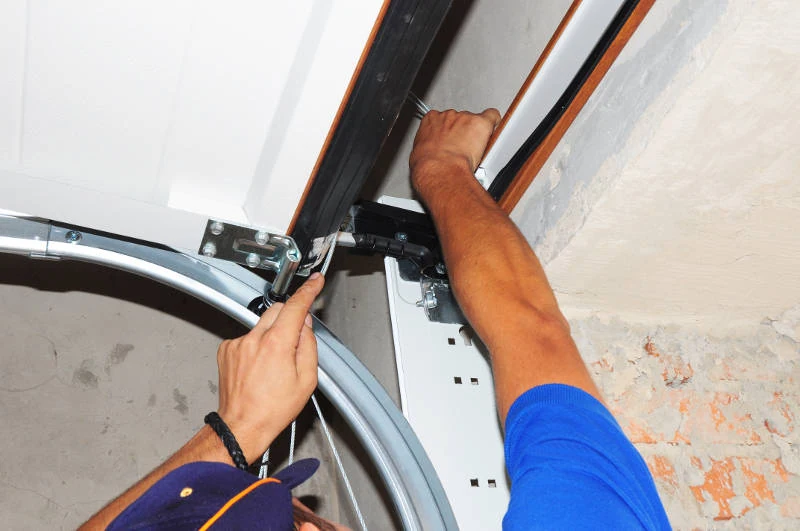
Warning Signs That Your Garage Door Alignment Is Off
Most homeowners hear the problem before they see it. A door that used to glide up quietly starts grinding or scraping, and that noise is your first clue that garage door alignment has slipped. Catching it early keeps a short adjustment from becoming a track replacement.
Close the door, check the gap along the top and both sides, then watch a full cycle:
- The door looks lopsided or sits visibly off center in the opening.
- One side of the garage door lands higher than the other.
- An uneven gap runs under the bottom seal, wider at one corner.
- The door closes unevenly, touching down on one side first.
- Rollers grind, squeal, or pop as they travel through the curve.
- The panel rubs the stop molding on one side and leaves daylight on the other.
Two or more of these together usually point to a spring or cable problem rather than the track itself.
Common Reasons a Garage Door Becomes Misaligned Over Time
A garage door cycles up and down more than a thousand times a year. That's constant vibration working against every bolt in the system, which is why a door that hung perfectly at installation ends up crooked a decade later.
- Loose hardware. Track bolts and bracket lags back out under vibration, letting the track drift.
- Impact damage. A bumper or a tipped ladder bends a vertical track enough to throw the door off.
- Worn rollers. Flattened or seized rollers ride high on one side and drag the panel with them.
- Uneven spring tension. When one spring weakens faster than its partner, the door lifts harder on that side.
- Slipped cables. A cable that unwinds off its drum drops one corner instantly, so a lopsided door often appears overnight.
- A settled garage floor. Concrete shifts as the soil beneath it moves, leaving the bottom seal short on one end.
Steel tracks expand in July heat and contract in January cold, and an unheated garage can swing more than a hundred degrees across a Midwest year. That daily movement is tiny, but it works fasteners loose season after season.
Freeze and thaw cycles do the same to the slab, lifting concrete a fraction of an inch. That's why so many uneven gaps show up in early spring.
Why Level Garage Doors Matter for Safety and Security
A small wobble is easy to ignore until the door refuses to open on a morning you need to leave. An off-balance door carries hundreds of pounds on hardware never meant to hold weight unevenly, and doors left that way can jump the track and fall.
Security is the other half. A door that sits off center leaves a lip a burglar can get a pry bar under, and a door that won't seal can't lock properly. Our guide to preventing garage door break-ins covers what thieves look for.
Tools You Need to Realign Garage Door Tracks at Home
You don't need power tools for this job. Most homeowners already own several of these:
- An adjustable wrench or socket set, usually 7/16" and 1/2" for track bolts
- A rubber mallet for nudging tracks without denting them
- A two-foot level and a tape measure
- A stepladder tall enough to reach the horizontal track
- Locking pliers or C-clamps to hold the door in place
- Work gloves and safety glasses
If this is your first repair on the house, start with the vertical tracks. They sit at eye level and cause most alignment complaints.
Laser Level Versus a String Line for Checking Track Alignment
A laser level projects a plumb line down the full height of the track, so you can see where the steel bows without moving anything. A string line and plumb bob cost a few dollars and read just as accurately over a seven-foot track.
Tape the string up top, let the bob hang free, and measure the gap at three points. Readings that differ by more than an eighth of an inch mean the track needs adjusting.
Fixing a Crooked Garage Door: Springs, Cables, and Tracks
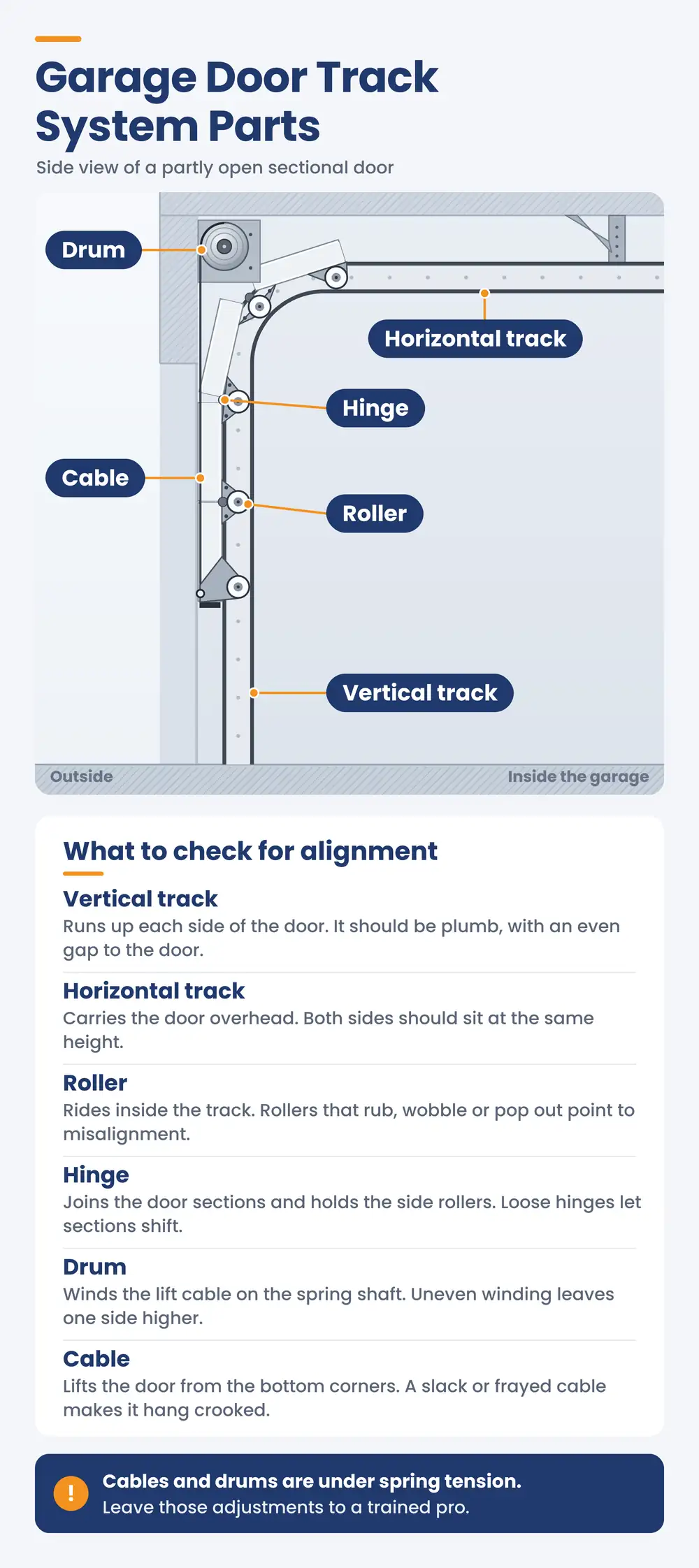
Start with the cables running from the bottom brackets to the drums overhead. A cable that has frayed, gone slack, or jumped its drum drops that corner and needs replacing before anything else makes sense.
Next, inspect the tracks for bends, dents, or debris packed into the channel. Find the point where the door starts to bind and look closely there. Badly kinked track is worth replacing rather than hammering back into shape.
Spring and cable work stays with a professional. Torsion springs hold enough stored energy to break bones.
Fixing a Sticky Door With Garage Door Track Alignment
A door that binds partway up usually has a vertical track pushed out of plumb. The fix is loosening, tapping, and retightening one side at a time.
Quick Tip
Run the balance test before you loosen a single bolt: disconnect the opener, raise the door to waist height, and let go. If it drifts up or slides down, the springs need a technician, and no track adjustment will fix it.
- Close the door and pull the emergency release cord so the opener isn't fighting you.
- Clamp locking pliers to the track above a roller to keep the door from moving.
- Loosen the lag screws on the first vertical track about half a turn each. Don't remove them.
- Tap the track with a rubber mallet until the level reads plumb front to back and side to side.
- Set the track so it rests lightly against the weatherstripping.
- Tighten the screws, remove the clamp, and lift the door by hand to test the travel.
- Repeat on the opposite track.
Run three or four manual cycles before reconnecting the opener. Smooth travel by hand is the only reliable proof the fix worked.
Closing an Uneven Gap Under a Misaligned Garage Door
A gap at the bottom lets in cold air, rain, leaves, and mice, and it gives anyone with a pry bar a place to start. Loosen the bolts on the lower track brackets, then shift the track toward the opening so the door settles flush against the seal.
Work one bracket at a time and check after each move. A gap of a quarter inch or less is fine and helps the garage breathe. Retighten every bolt and give it a firm tug.
Damaged Hardware That Keeps a Garage Door From Sitting Level
Sometimes the wear runs deeper than an adjustment can reach. Check the panels first, since steel rusts through and wood warps, and a swollen bottom panel won't seal evenly however well the tracks are set.
Spin each roller by hand: a good one turns freely, a bad one wobbles or shows flat spots. Then check the springs, since a broken torsion spring can be replaced by matching the model number on your door.
Carriage-style double doors need a hinge inspection instead, since rust and screw pull-out cause most of the sag. On older homes, replacement hardware can be hard to source at all.
Extra Tips to Realign a Garage Door That Closes Unevenly
Test the balance before you adjust anything. Disconnect the opener, raise the door to waist height, and let go. A balanced door holds its position; if it drifts up or slides down, spring tension is the issue and the tracks aren't your problem.
Prop the door open with a sturdy ladder while you work overhead. That takes the load off the springs and gives you a clear look at them for rust and warping.
Opener Type Changes What Garage Door Alignment Requires
An overhead trolley opener, the kind with a rail down the middle of the ceiling, pulls the door from one center point. The rail must sit square to the header and centered on the door, or every cycle tugs the top panel off line.
A side-mount opener bolts to the wall beside the torsion shaft and drives it directly. It has no rail to misalign, but it demands a level torsion tube and cables that wrap evenly on both drums. A quarter turn of difference between the drums shows up as a lopsided door.
Safety Rules to Follow Before You Level a Garage Door
Cut power to the opener at the outlet or the breaker before you touch anything. A door that starts moving while your hands are in the track causes the injuries that send people to the emergency room.
Keep the door closed during adjustments so it can't drop, and work one track at a time so the other holds it steady. Never back a bolt all the way out, and wear eye protection and gloves throughout.
Simple Maintenance That Keeps Your Garage Door Aligned
Twenty minutes twice a year prevents most alignment calls. Schedule it alongside your furnace filter and you'll catch problems while they're still free to fix.
- Tighten every track bolt, hinge screw, and bracket lag you can reach.
- Vacuum grit and leaves out of the vertical track channels.
- Spray a garage-door lubricant on rollers, hinges, and springs.
- Wipe the bottom seal and check it for cracks or hardened spots.
- Run the balance test and watch for one side lagging behind the other.
Signs It Is Time to Call a Garage Door Professional
Plenty of alignment problems are a wrench-and-mallet job. Others aren't, and knowing the difference protects both you and the door. Call a technician when you see:
- A track that's cracked, badly kinked, or pulling away from the frame
- Rollers that keep jumping out no matter how you set the track
- A spring with a visible gap in the coils, or two springs under different tension
- Frayed, slack, or snapped cables
- A door that won't move at all, or that drops when you release it
- Rusted-through panels or rotted wood along the bottom rail
When corrosion has taken the hardware and the panels together, replacement often costs less than chasing repairs. A new door brings fresh springs, cables, and rollers, and none of them carry a decade of wear.
Feldco has replaced over 100,000 garage doors and served more than 500,000 homeowners across Illinois, Wisconsin, Indiana, and Iowa. Every door we install is built to fit its opening, and factory-trained crews set the tracks plumb and balance the springs before they leave. Get a free quote to see what a replacement costs for your home.
FAQs
Why Does My Garage Door Move at an Angle?
A door travels at an angle when one side meets more resistance, usually from a bent track, a seized roller, or a cable that slipped on its drum. Uneven spring tension produces the same tilt.
Is a Crooked Garage Door a Security Risk for Home Intruders?
Yes. A crooked door leaves a gap that gives a pry bar leverage, and it often stops the lock bar from seating in the track. Burglars look for this because it takes seconds to exploit.
Do Steel or Nylon Rollers Hold Alignment Longer?
Nylon rollers with sealed bearings hold alignment longer in homes because they resist flat spots and don't rust in a damp garage. Steel carries more weight on commercial doors, but cheap unsealed versions wear quickly.
Why Is One Side of My Garage Door Higher Than the Other?
The usual cause is a cable that unwound unevenly from its drum, which raises or drops one corner immediately. Springs wearing at different rates and a settled floor produce the same look, and both corrections need a technician.
Can You Align a Garage Door Without Power Tools?
You can. Track alignment needs only a wrench, a level, and a rubber mallet. Power tools make the job harder, since they strip lag screws and overtighten bolts into the wood frame.


 866-4FELDCO