


Summary
Garage doors come in five opening styles and three main materials, and each pairing changes price, upkeep and curb appeal. Steel sectional models suit most Midwest homes because they balance cost, insulation and maintenance. Below you'll find the opening types, design looks, materials and R-values that help you match a door to your house.
Opening Styles Every Garage Door Falls Into
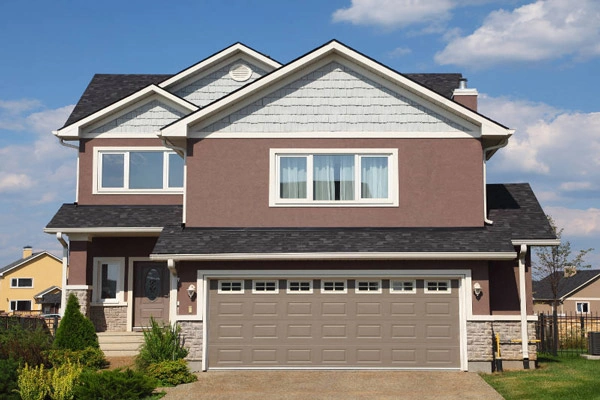
A garage door can take up a third of the front of your house, so garage door styles shape how your home reads from the street. Start with movement though: the way a door opens decides what fits your ceiling and your budget.
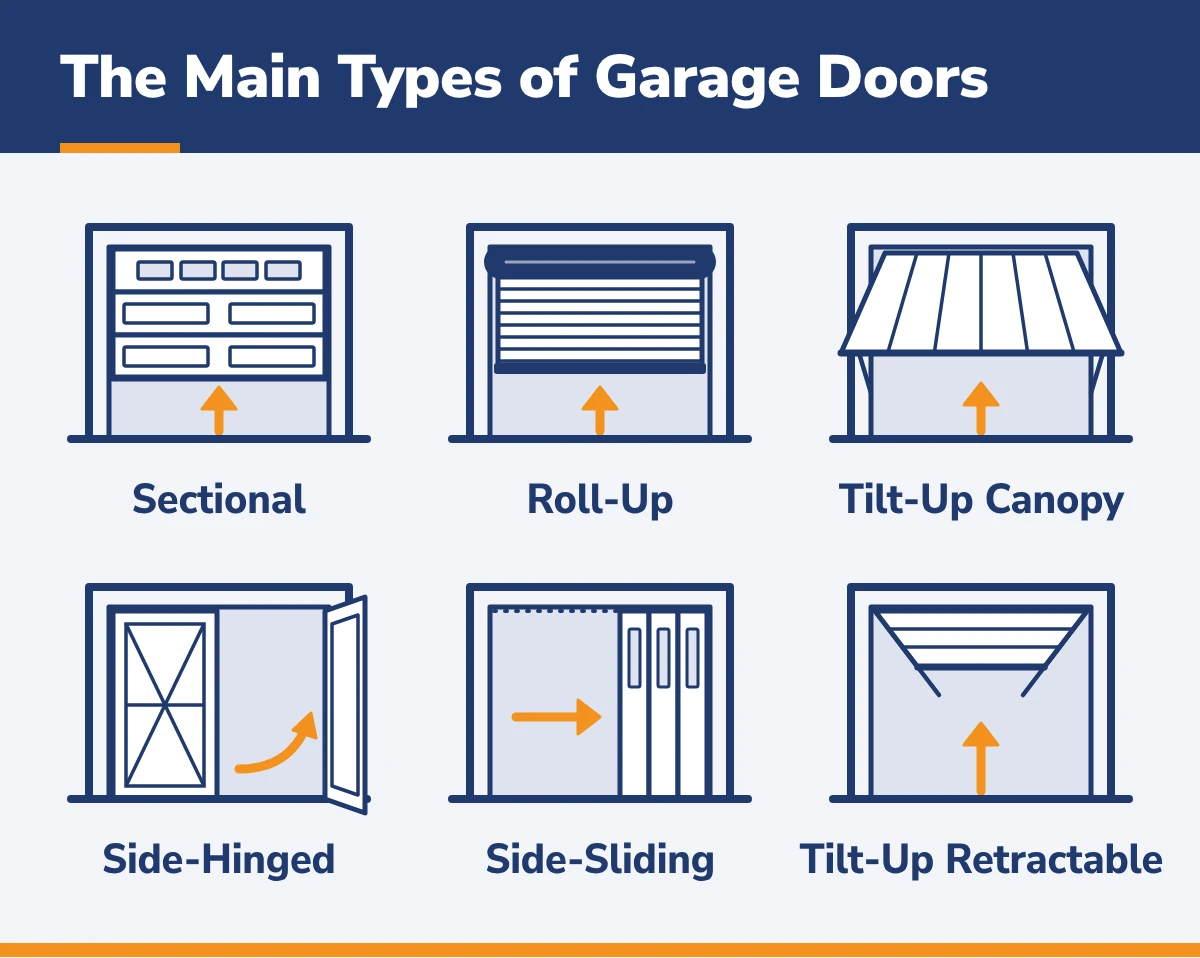
- Sectional: hinged panels that roll up on tracks, and the most popular choice by far.
- Roll-up: slats coil into a drum above the opening, great for tight ceilings.
- Slide to the side: the door runs along one interior wall, no headroom needed.
- Swing out: two hinged leaves open outward like carriage doors.
- Tilt up: one solid slab pivots up and back.
Sectional doors need proper framing and about 14 inches of headroom for the tracks. Short on clearance? The price climbs, since low-headroom hardware costs extra. Very tall ceilings work too, with high-lift tracks.
Popular Garage Door Design Styles and Where They Fit Best
Once the opening type is settled, design decides the personality. Four looks cover most residential garage door types sold today.
Traditional Raised Panel Doors for Classic Home Exteriors
Rows of short rectangular panels, usually white or almond. It's the default look on most streets, suits nearly any elevation, and costs the least. Add decorative glass on the top row for daylight.
Carriage House Doors With Barn Inspired Hardware and Trim
These mimic swing-open barn doors with strap hinges, handles and vertical planking, yet still operate as sectionals. Colonials, Tudors and Victorians wear them well, though overlays add cost.
Farmhouse Style Doors That Suit Craftsman and Ranch Homes
Farmhouse style leans on wide vertical boards, matte black or charcoal paint and minimal glass. It reads warm without fuss and pairs with board-and-batten siding, gabled porches and stone.
Modern Glass and Aluminum Doors for Contemporary Facades
Full-view doors set frosted, tinted or clear panes in an aluminum frame. They flood the garage with daylight and suit flat-roofed homes. Privacy and insulation both take a hit.
Different Materials and What Each One Costs You Long Term
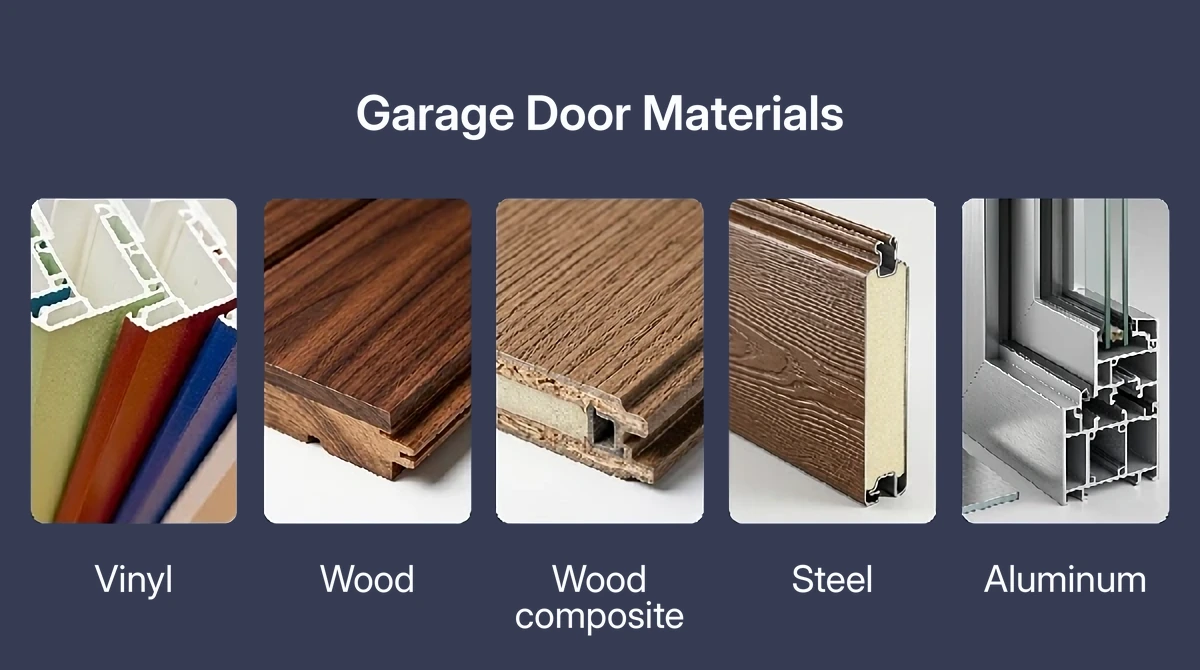
Material drives more of your spend than design does. Here's how the three common choices compare.
Steel Garage Doors: Low Maintenance and Budget Friendly
Steel is the practical winner. It's among the least expensive materials, won't rot or warp, and shrugs off Midwest winters without seasonal attention.
Most are built thick with foam insulation inside, which steadies garage temperatures and muffles street noise. Better models carry lifetime warranties on overlays, structure and the paint finish. Bargain versions offer far shorter coverage, so read the terms.
Wood Garage Doors: Natural Looks With Real Upkeep Costs
If you want genuine grain, wood delivers it in any size opening. It also absorbs impacts from basketballs and bumpers better than thin steel.
The trade-off is money and time. Mahogany or cedar runs far above plywood, warranties often stop at a year, and you'll sand and restain every few seasons. Midwest humidity causes warping and rot, which is why steel outsells it.
Aluminum Garage Doors: Lightweight and Rust Resistant
Aluminum sits between wood and steel. Framing, laminated paneling and heavier gauges strengthen it, though each upgrade adds cost. Budget versions dent easily, so skip the cheapest tier.
Low weight is the real advantage. It makes wide double doors practical and puts less strain on the opener.
Matching Your Garage Door Style to Your Home Architecture
Pick up cues already on your house. Match panel direction to your siding, echo the window grid in glass inserts, and repeat a trim color in the finish.
A carriage door on a sleek modern build looks off, just as full-view glass does on a 1920s bungalow. Unsure? A raised panel door in a color drawn from your roof is the safe answer.
Insulation R Values and Energy Savings by Panel Construction
R-value measures how well a panel resists heat transfer. Higher numbers hold conditioned air and cut street noise.
| Panel construction | Typical R-value |
|---|---|
| Single-layer steel, no insulation | R-0 to R-2 |
| Two-layer steel with polystyrene | R-6 to R-10 |
| Three-layer steel with polyurethane | R-12 to R-19 |
| Solid wood or wood composite | R-2 to R-6 |
| Full-view aluminum and glass | R-0 to R-3 |
Sandwich construction also stiffens the panel, so an insulated door outlasts a hollow one. Pair it with garage insulation on the walls and ceiling for a quieter, finished space. Savings only reach your bill if you heat or cool the garage.
Get a Free Quote on Your New Garage Door From Feldco
Feldco has served over 500,000 homeowners across Illinois, Wisconsin, Indiana, Iowa and Michigan, and replaced more than 100,000 doors along the way. A product specialist will measure your opening, walk you through finishes and handle the install start to finish.
Ready to pick your door? Get a free quote today.
Garage Door Styles: Common Questions From Midwest Homeowners
Which garage door styles look best on a tight budget?
A two-layer insulated steel sectional in raised panel design gives the most curb appeal per dollar. One row of decorative windows costs little and lifts the whole facade.
What garage door styles need the least maintenance?
Insulated steel and aluminum doors need little beyond a yearly hose-down and a check of rollers and hinges. Neither rots, warps or needs refinishing.
Which garage door styles last the longest?
Three-layer steel sectional doors routinely run 25 to 30 years because the foam core keeps panels rigid. Wood can match that, but only with consistent staining and sealing.
Does a new garage door style raise your home's resale value?
Garage door replacement regularly ranks among the highest-returning exterior projects in national cost-versus-value studies. The bigger payoff is buyer interest, since the door anchors your listing photos.
How do you choose between sectional and side-sliding doors?
Choose sectional if you have 14 inches of headroom and want the widest selection of looks. Pick side-sliding when your ceiling is low or racks already fill the space overhead.


 866-4FELDCO