


Summary
Insulated steel is the best all-around pick: a 24 or 25 gauge, three-layer door resists dents and climbs past R-12. Fiberglass and vinyl won't rust near saltwater, and aluminum costs least but dents easily. Wood looks richest but needs refinishing every two to three years.
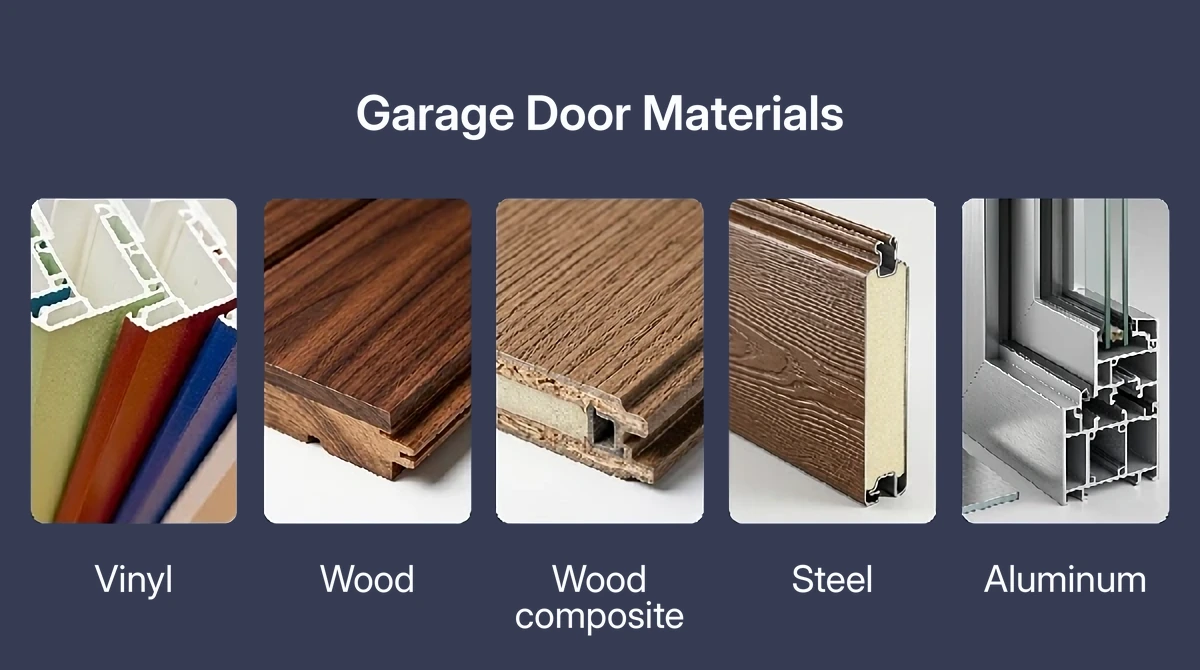
How the Most Common Garage Door Materials Compare
Your garage door covers as much as a third of the front of your house, so it drives curb appeal and energy bills at the same time. Garage door materials run from budget aluminum to custom cedar, and each one reacts differently to heat, humidity, hail, and road salt.
The pros and cons below cover every option, plus panel construction, R-value, and upkeep. Read them before you call a manufacturer or plan a wider garage remodel.
Here's how the seven typical materials stack up.
| Material | Relative Cost | Durability | Insulation | Upkeep |
|---|---|---|---|---|
| Steel | Low to mid | High (thicker gauge) | High when insulated | Low |
| Wood | High | Moderate | Low | High |
| Aluminum | Low | Low | Low | Low |
| Wood composite | Mid to high | High | Moderate | Moderate |
| Glass | High | Moderate | Low | Moderate |
| Fiberglass | Mid | Moderate | Moderate | Low |
| Vinyl | Mid | High | Moderate to high | Low |
Wood: Classic Looks, Serious Upkeep
Wood is the oldest material used in garage doors and still the benchmark for character. Cedar, redwood, and mahogany show grain that no printed finish fully matches. That beauty carries the heaviest maintenance load of any option.
Species matter. Cedar holds up well in warm, dry air, while redwood tolerates humid climates better than most alternatives. Whichever you pick, plan on staining or sealing it from day one.
Stain color shifts with the species, so hold samples against your siding first. A door that looks rich in a showroom can read orange next to gray brick.
Solid lumber insulates poorly unless the door wraps an insulated core. If you heat the space, read up on garage insulation before you commit.
Steel: Affordable, Tough, and Easy to Live With
Steel is the most popular pick in the Midwest. It's affordable, low maintenance, highly customizable, and available in finishes that convincingly mimic stained lumber.
Toughness tracks the gauge. Budget panels use 27 or 28 gauge; the lower the number, the thicker the metal and the stronger the door. A 24 gauge panel shrugs off dings that dent lighter doors.
Insulation depends on construction. Manufacturers sandwich polystyrene or polyurethane between layers of galvanized steel, and a bare single-layer door barely slows heat transfer at all.

Aluminum: Cheap and Light, but Easy to Dent
Aluminum offers nearly the same style range as steel at a lower price, and its light weight is easy on your opener and springs. Frames built around glass inserts are almost always aluminum.
The trade-off is strength. A stray basketball dents an aluminum panel, and bare skins insulate poorly. It never rusts, though, which makes it a sensible choice in damp air.
Wood Composite: The Look of Wood Without the Worry
Composite doors press recycled wood fibers into panels over a solid core. You get the texture and paintability of lumber with far better resistance to rot, splitting, and warping.
Composite is the smart call if you love a timber look but live where real boards struggle. It costs less than solid hardwood and accepts paint or stain the same way.
Glass: Modern Style and Plenty of Daylight
A glass garage door gives a house a clean, modern face and floods the bay with daylight. Homeowners who use the space as a gym, shop, or studio notice the difference right away.
Panels range from clear to frosted and tempered to insulated. Glass costs more than most options, and it's the wrong call if kids play ball nearby or you need strong insulation cheaply.
Fiberglass: Built for Salt Air and Hot Sun
Fiberglass is the go-to near saltwater because it can't corrode. It also reflects heat, so the bay stays cooler through long, hot summers.
It resists dents better than thin steel, costs less than hardwood, and comes in believable wood-grain finishes. Constant sun fades the topcoat over time, so ask your manufacturer about UV-stable finishes.
Vinyl: Nearly Dent-Proof and Never Rusts
Vinyl matches fiberglass on rust resistance and beats it on impact. Color runs through the panel, so scuffs don't show the way they do on painted metal.
Many vinyl doors wrap an insulated steel core, which makes them warmer and quieter than the price suggests. Color selection is narrower than steel, and you can't stain the surface.
The Three Matchups Homeowners Ask About Most
- Wood vs steel: wood wins on character, steel wins on price, dent resistance, and upkeep. Steel asks for a wash twice a year; wood needs refinishing every two to three years.
- Steel vs aluminum: aluminum costs less and never rusts, but steel of the same thickness resists dents far better and reaches higher insulation ratings.
- Fiberglass vs steel: fiberglass laughs off salt air and humidity, while steel holds its color longer and delivers more R-value per dollar.
How Panel Construction Affects Your Energy Bills
Garage door panel types shape performance as much as the material does. Single-layer doors are one skin of metal with no core, and they rate near R-6 or below.
Two-layer doors back that skin with polystyrene and usually land between R-6 and R-10. Three-layer doors sandwich polyurethane foam between two steel faces and climb past R-12.
When the garage shares a wall with living space, that foam pays you back every month. Attached garages in cold states gain the most from a triple-layer build.
Quick Tip
Compare gauge and R-value on the spec sheet before you compare prices. A 24 gauge, three-layer door costs a bit more upfront but resists dents and holds heat far better.
The Best Garage Door Material for Humid and Coastal Homes
Salt and moisture punish some surfaces and barely touch others. Within a mile of the ocean, fiberglass and vinyl outlast bare aluminum and uncoated steel by years.
Farther inland, composite and factory-finished steel resist the swelling humidity causes. Lumber moves with moisture, so seal all six sides of every panel.
Midwest homeowners face a different test: freeze-thaw cycles, hail, and road salt. Insulated steel handles all three better than anything else at the price.
How to Keep Each Surface in Good Shape
- Rinse the door with a hose and mild soap twice a year, and quarterly if you live near saltwater.
- Touch up chips in steel or aluminum right away so moisture can't reach bare metal.
- Reseal or restain wood every two to three years, and check the bottom rail each spring for swelling.
- Clean glass with a non-abrasive product and inspect the frame for pitting or chalky spots.
- Lubricate rollers, hinges, and springs twice a year no matter which surface you chose.
Choosing the Right Material for Your Home
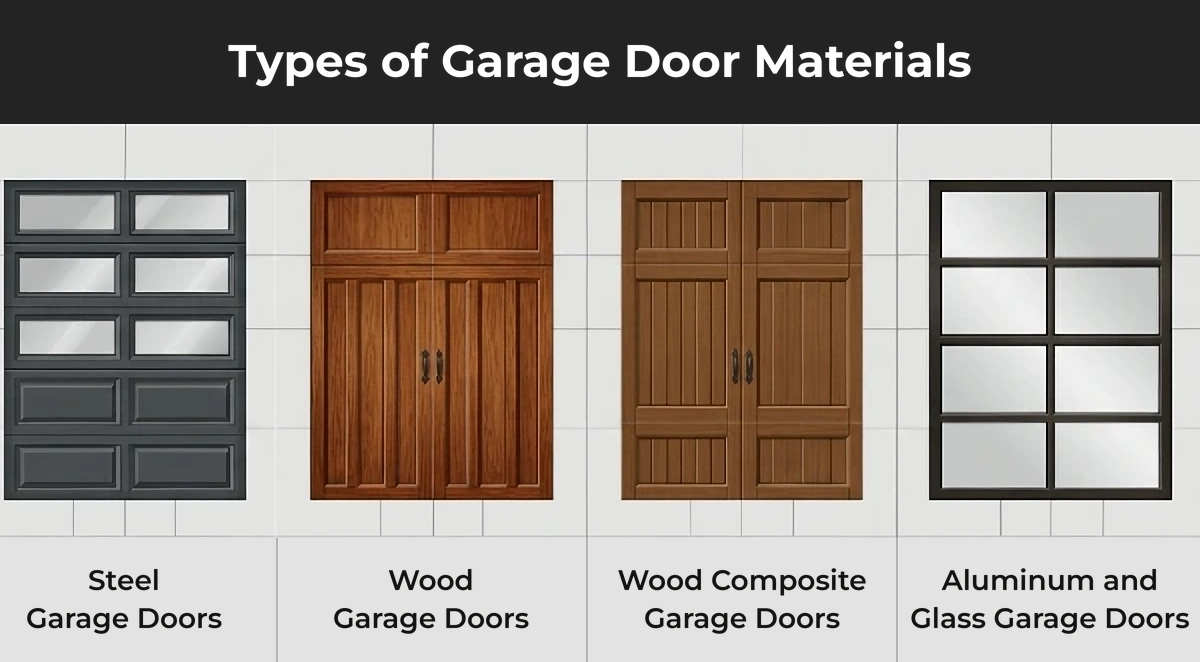
Start with your climate, narrow by budget, then choose the look you want. Weigh durability heaviest when the door faces open weather, a busy driveway, or a home gym you heat. Insulated steel suits the widest range of homes, and composite or fiberglass covers most of the rest.
Feldco has served more than 500,000 homeowners across Illinois, Wisconsin, Indiana, and Iowa since 1976. Every door is built for Midwest weather and installed by factory-trained crews. Browse garage door styles, then talk with a product specialist and get a free quote today.
FAQs
Which garage door material is the most durable?
Insulated steel in a 24 or 25 gauge, three-layer build takes the most abuse. Vinyl and composite follow, since both resist dents, rot, and rust without refinishing.
Why does wood require more maintenance than steel?
Wood is porous, so it absorbs moisture, then swells, splits, and invites rot as it dries. Steel carries a baked-on factory finish that sheds water, which is why it only asks for washing and occasional touch-ups.
How do you prevent salt air from corroding a metal garage door?
Rinse the panels and hardware with fresh water every few months and repair paint chips right away. Galvanized hardware plus a fiberglass or vinyl surface removes the problem entirely.
Do garage door materials affect noise reduction?
Yes, and the core matters more than the skin. Polyurethane-filled doors dampen street noise and rattle far less than hollow single-layer steel or aluminum.
What's the best garage door material on a tight budget?
Single-layer steel gives you the most durability per dollar, and aluminum costs less if dents don't worry you. Adding insulation to steel is the best money you'll spend on the door.


 866-4FELDCO