


Summary
Garage door safety sensors typically last 10 to 15 years, about as long as the opener. Most failures trace back to a dirty lens, a bumped bracket or damaged wiring, and all three are cheap to correct. A cracked housing, trapped water or LEDs that stay dim after cleaning mean the pair needs replacing.
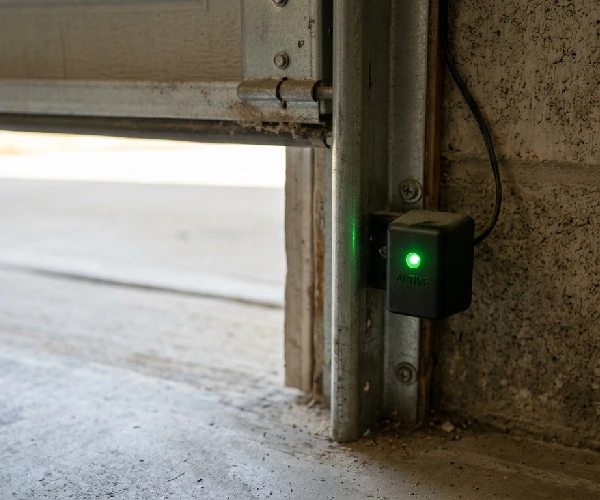
Why Garage Door Sensors Go Bad and How Long They Last
So do garage door sensors go bad? Yes, and sooner than owners expect. These photo eyes sit inches off a concrete floor, take knocks from bikes and trash cans, and run on thin low-voltage wire. The garage environment kills them long before age does.
Common Issues That Make Garage Door Sensors Stop Working
- Internal faults and ordinary wear that weaken the signal
- Dirty lenses, cracked housings or damaged electronics
- Dead springs and logic board failure, which mimic a sensor issue
What Decides How Long Your Garage Door Sensors Last
Most units last about as long as the opener itself, roughly 10 to 15 years. Climate and daily use shift that number. Replace them sooner if they've been soaked, cracked or knocked loose twice.
Universal replacements fit many openers, but read the compatibility list first. Wired models fail less often than battery-powered wireless ones. Buy in pairs so both eyes share an age.
Quick Tip
Clean and realign your sensors before you buy new ones, since most sensors that look dead are only dirty or knocked off target.
How Infrared Garage Door Sensors Detect an Obstruction
One unit sends an invisible infrared beam across the opening, six inches above the floor. The other receives it. Break that beam and the opener halts the door or reverses it instantly.
Federal rules have required this since 1993. A door that rises fine but won't close is telling you the beam is broken.
Common Signs Your Garage Door Sensors Are Going Bad
Sensor Lights, Blinking LEDs and Alignment Warning Signs
The LEDs tell you almost everything. Sensors not lighting up point to power or wiring; a blinking light points to aim, which a quick garage door sensor alignment corrects.
| Light status | What it usually means |
|---|---|
| Solid on both units | Aligned and powered |
| Blinking on one side | Garage door sensors misaligned or a shifted bracket |
| Dim or flickering | Marginal aim or hazy lens |
| No green light at all | Lost power, a broken wire or a dead logic board |
Physical and Environmental Factors That Fog the Lenses
- Grime on the glass blocks the beam
- Direct sun or standing water triggers false readings
Operational Red Flags That Point Straight to the Sensors
- A door that won't close, or opener lights that flash
- Odd noises, or a door that lands crooked
Run the cardboard box test. If the door crushes the box instead of reversing, the sensor is broken.
The Most Common Causes of Garage Door Sensor Problems
Obstructions, Dirt and Moisture Around the Beam Path
- Pollution, exhaust, spider webs and road salt cloud the lens
- Condensation behind the glass causes intermittent failures
Electrical, Wiring and Pest Damage to Rule Out Early
- Frayed, pinched or stapled wire running to the opener
- Corroded terminals or a loose connection at the motor
- Rodent damage: chewed insulation, bare copper, droppings nearby
Misalignment, Sunlight and Other Sources of Interference
- Weak or inconsistent power drops the beam at random
- Low-angle sun, and sometimes an LED bulb, drowns out the infrared
Easy Fixes to Try Before You Replace Garage Door Sensors
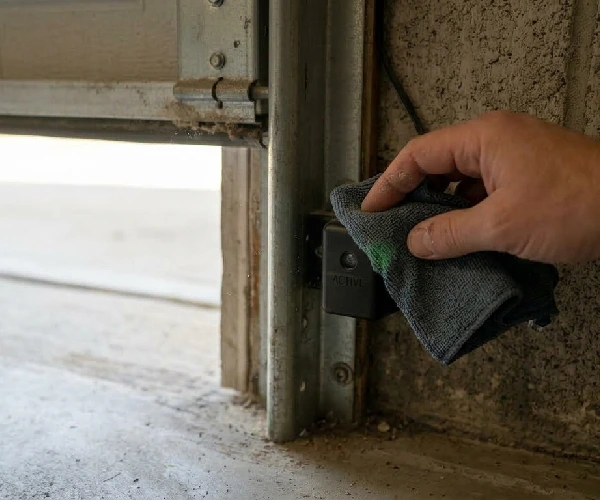
Cleaning solves more service calls than anything else:
- Unplug the opener so the door can't move
- Blow loose grit off each lens with canned air
- Wipe with a dry microfiber cloth, then a barely damp one. Skip glass cleaner and paper towels, which haze plastic
- Dry both lenses, restore power and watch the LEDs go solid
A cracked housing, trapped water or a lens that stays dim afterward means it's time to replace garage door sensors.
Step-by-Step Troubleshooting Tips for Garage Door Sensors
Initial Checks That Solve Most Garage Door Sensor Issues
- Confirm the sending unit's amber light is on, proving it has power
- Check the receiving unit's green light holds steady; if not, turn both eyes to face each other
- Clear the beam path, as federal safety rules require
- Tighten the brackets and wipe the glass
Advanced Diagnostics With a Multimeter and Phone Camera
- Wiggle test: flex the wires to expose a loose connection
- Direct connection test: bypass house wiring, run both eyes to the opener
- Voltage check: look for 4 to 5 volts DC across terminals 2 and 3 on the logic board. Correct voltage plus dead eyes means replacement
- Camera trick: point a phone camera at the sending lens. Many render the beam as a faint purple dot; no dot means no signal
Operational Adjustments for a Door That Still Won't Close
- Adjust the downforce limit screw if the door stalls partway
- Clear the track and check every roller sits properly
When to Call a Professional Garage Door Technician
Once cleaning, aiming and a wiring check come up empty, the fault sits deeper than the photo eyes. Technicians carry meters and parts for every brand of opener, and they'll check the springs, cables and force settings that knock sensors out of alignment.
Get a Free Quote for Garage Door Help in the Midwest
A door that fights you every morning needs more than a photo eye. Feldco has served over 500,000 homeowners across Illinois, Wisconsin, Indiana, and Iowa as the Midwest's #1 home exterior company since 1976. Get a free quote on your garage door project today.
FAQ
Why does my garage door start to close and then immediately reverse?
The opener reads a broken beam and aborts the close. Clean and realign the eyes first, then check the tracks and springs if the door keeps reversing.
How do I bypass garage door sensors in an emergency?
Hold the wall console button down until the door reaches the floor, watching the opening the whole time. Remotes won't work for this, and it's a one-time fix.
Does extreme cold weather affect garage door sensors?
Yes. Condensation fogs the lens and can freeze on it, and cold makes brackets brittle enough to let the aim drift. Recheck the LEDs after a freeze.
What happens if I operate a garage door with faulty sensors?
The door loses its ability to reverse on contact, so it can close on a child, a pet or a car bumper. That also breaks federal safety rules.
Can dirty or misaligned sensors stop my opener from working entirely?
They stop it from closing, not opening, so a garage door that stops when opening has another cause. If it won't move either way, look at the power supply, the logic board or the springs.


 866-4FELDCO