


Summary
Paint can be stored in a garage only if the space stays between about 60°F and 80°F, and most unheated garages can’t hold that range year-round. Freezing ruins latex paint, while summer heat thickens it and moisture rusts the cans, so a basement, utility room, or interior closet is the better spot. Seal leftovers tightly, label them, and keep them on a shelf away from concrete floors and heat sources.
Why You Shouldn’t Keep Paint in a Hot or Unheated Garage
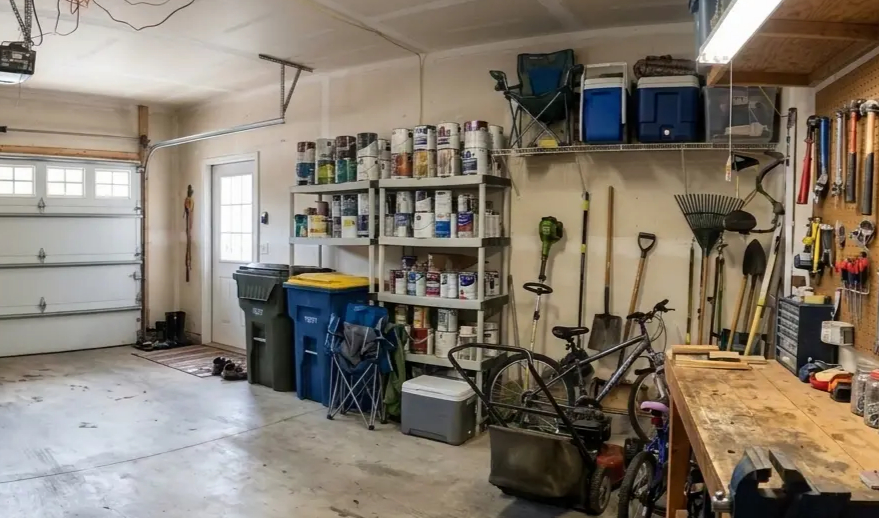
It would be nice to use the exact amount of paint you buy for a project. Unfortunately, no house project ever unfolds this way, and many of us end up with half-empty paint cans. So, can paint be stored in a garage? Not if you want to use it again.
You’re better off storing the cans in a basement or the back of a closet. The garage is a useful space for seasonal items, but it’s really no place for leftover paint.
Your garage faces extreme temperature changes that your home doesn’t. In summer, a hot garage gets as stuffy as the air outside, and in winter, most garages aren’t heated at all. These swings alter paint’s formula even when the lid is sealed tightly, while damp conditions rust the cans. The result is paint that won’t apply smoothly or becomes unusable.
Paint Storage Temperature: Safe Ranges for Latex and Oil Paint
Paint manufacturers recommend storing paint between 60°F and 80°F, out of direct sunlight. It’s safe to store paint in the garage only if yours stays in that range all year. Latex paint freezes at about 32°F, and repeated freeze-thaw cycles break down its binders.
- Latex (water-based) paint: Cold is the biggest threat, since a hard freeze leaves it lumpy and separated.
- Oil-based paint: It tolerates cold better but thickens, and heat is riskier because its vapors are flammable.
Quick Tip
Move latex paint indoors before the first hard freeze. One deep freeze can ruin a full can.
Where to Properly Store Paint: Garage vs. Basement and More
The number one rule of thumb for storing paint is to choose a spot that’s consistently cool and dry. Keeping paint in the basement is ideal thanks to its steady temperatures. Set the cans on a shelf, not the floor, since basement moisture can rust the bottoms.
| Storage Spot | Good for Paint? | Why |
|---|---|---|
| Basement shelf | Yes | Steady, cool temperatures |
| Utility room or closet | Yes | Climate-controlled and out of sunlight |
| Unheated garage | Short term only | Freezes in winter, overheats in summer |
| In a shed or outside | No | Even less protection than a garage |
| Car or truck | No | A hot car cooks paint fast |
How to Store Paint Cans So They’re Ready for Your Next Project
Cleaning up your paint can is tedious after a long project. Take the time anyway, and you’ll thank yourself on the next job.
- Pick the right container. Move small amounts into an airtight glass jar or screw-top plastic paint container so less air sits on top.
- Clean out the rim. Without a tight, reliable seal, your paint can spoil or spill.
- Lay plastic wrap between the can and the lid as a gasket for an airtight seal.
- Tap the lid shut with a rubber mallet, not a hammer, which dents the can and damages the seal.
- Label the lid with the color, room, and date.
- Store the cans upside down on a shelf. Gravity seals the lid, and any skin forms on the bottom instead of the top.
How Long Paint Lasts and How to Tell When It’s Ruined
Opened latex paint lasts about two years when stored well, and oil-based paint can last up to 15. In a garage with big temperature swings, one hard winter or hot summer can ruin a can.
After a cold snap, let the can warm to room temperature and stir it well. It’s ruined if lumps or a cottage cheese texture won’t stir out, if it smells sour, or if the liquids separate again. Otherwise, brush some onto cardboard; paint that dries evenly is still good.
Dispose of bad paint in an ecologically friendly manner. Dry out small amounts of latex with paint hardener or kitty litter. Take oil-based paint to a household hazardous waste or PaintCare drop-off site.
How to Keep Paint in an Unheated Garage When You Have To
Sometimes the garage is the only space you have. It’s fine to leave paint in the garage overnight during a project in mild weather. To keep paint in the garage longer:
- Keep cans off the concrete floor, which stays cold and damp and rusts can bottoms.
- Use a closed cabinet on an interior wall, away from the door, windows, and sunlight.
- Keep oil-based paint and aerosols away from water heaters, furnaces, and other ignition sources.
- Bring latex paint inside before the first freeze.

An insulated garage also softens temperature swings for everything you store in it. If you’re planning a new quality-built garage, our custom garage packages fit your needs, regardless of size or style. We’ve built over 100,000 garages for homeowners across the Midwest. Speak with a product specialist and get a free quote today.
FAQs
Can paint cans explode in a hot garage?
Standard paint cans rarely explode, but heat can bulge or pop the lids. Aerosol spray cans are the real risk; most labels warn they can burst above 120°F.
How should you store spray paint in a garage?
Keep aerosol cans upright in a ventilated spot between 50°F and 80°F, away from sunlight and heat. Stored this way, spray paint lasts two to five years.
Is oil-based paint safer to store in a garage than latex?
It handles freezing better, but it’s flammable, so a hot garage with a gas water heater adds fire risk. Neither type belongs in a garage long term.
Can humidity cause mold inside paint cans?
Yes. Humidity rusts lids and weakens the seal, letting in air and moisture that feed bacteria and mold in latex paint.
Are there fire safety rules for storing paint in an attached garage?
Rules vary by city, so check your local fire code. Keep only what you need, store oil-based products in a closed metal cabinet, and keep the door into the house shut.