


Summary
Storing golf clubs in the garage is convenient, saves money, and frees up space at home, but heat, cold, humidity, dust, pests, and theft are real risks. Clubs last longest at 50°F to 80°F and 40% to 50% humidity, cleaned, fully dried, and stored upright off the floor. Keep them out of the car trunk, and move them indoors if your garage drops below freezing in winter.
Proper Storage Protects Your Golf Clubs and Your Investment
A quality set of golf clubs can easily cost more than $1,000, so it pays to protect it. Storing golf clubs properly helps them retain their quality and survive for many years.
A garage is a popular choice because it's a better alternative than the back of a car, where heat and cold can harm your clubs. A storage facility offers superior humidity and temperature control, but most homeowners prefer the convenience of the garage.

The Pros of Storing Your Golf Clubs in Your Garage
Easily Accessible
Easy access is one of the key benefits of keeping your golf clubs in your garage. You can grab them anytime you want to hit the course, without driving to a storage unit or searching your house for your gear.
Cost-Effective
It's economical to keep your golf clubs in your garage. You don't need to pay for a storage unit, which gets expensive if you own several sets of clubs, and rental rates tend to climb over time.
Personalized Storage Option
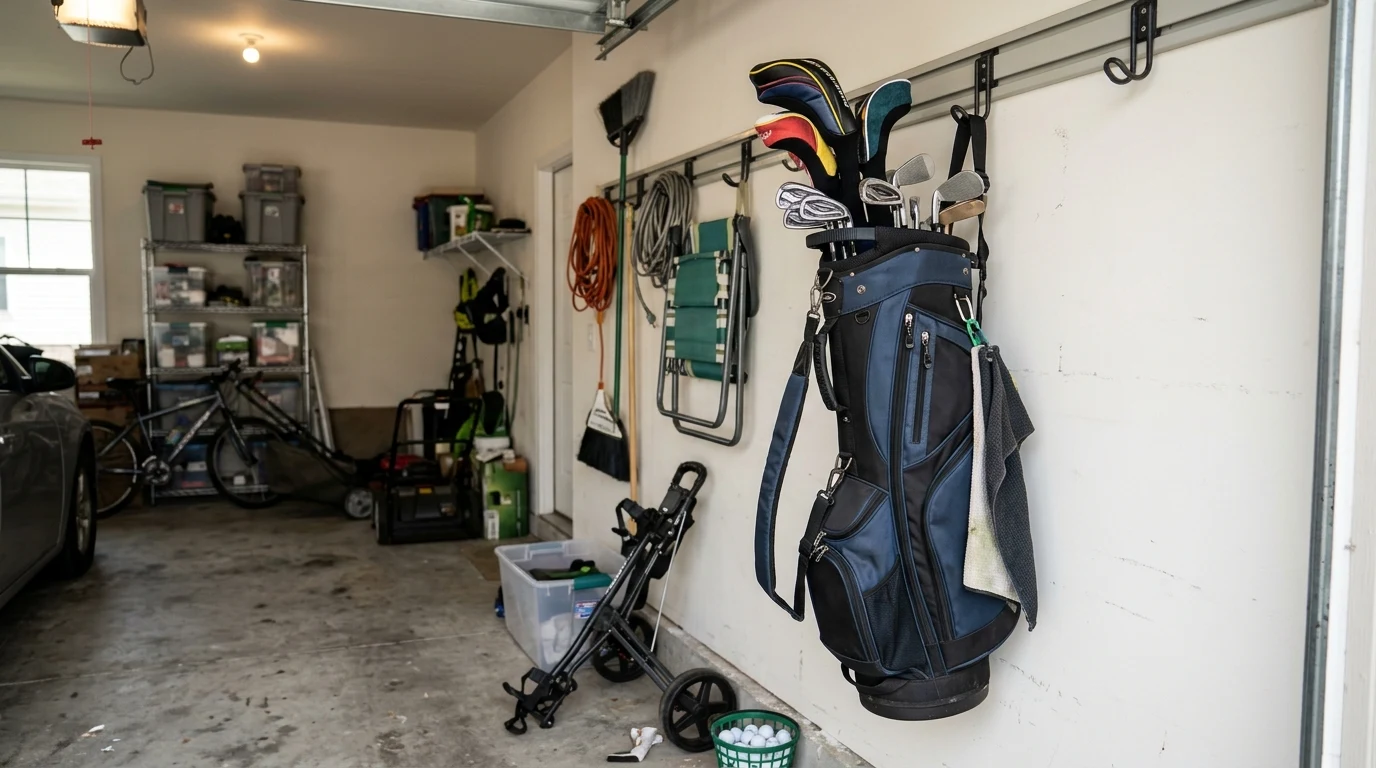
Your garage lets you store golf clubs in whatever way fits your space, which you can't do at a storage unit. Racks, shelves, or hooks keep your clubs and accessories organized and easy to find. A rack also holds the bag upright and off the concrete floor, which protects the shafts and grips.
Protection Against Theft
The theft risk is lower when you store your golf clubs in your garage. Golf equipment is pricey and attracts thieves, and a closed, locked garage hides it far better than your car.
Conserve Home Space
Storing your golf clubs in the garage frees up room in your house. Your home stays clutter-free, and your clubs stay within easy reach.
The Cons of Storing Your Golf Clubs in Your Garage
Maintaining Suitable Temperature and Humidity
Maintaining the proper temperature and humidity is the most pressing issue with keeping your golf clubs in your garage. Extreme heat, freezing cold, and excess moisture dry out grips, weaken the epoxy that holds clubheads in place, and rust steel. An air conditioner, a dehumidifier, or better insulation helps prevent this.
Dust and Debris
Garages are frequently dusty, and dirt that settles on grips, shafts, and heads wears down surfaces and shortens your clubs' lifespan. You'll have to clean them often, though a breathable bag cover cuts down on the work.
Infestation of Pests
Garages can serve as a breeding ground for pests like rats, insects, and spiders. These critters nest in golf bags and chew grips and fabric, so use pest control, empty the bag's pockets, and keep it off the floor.
Inadequate Security
The garage helps deter theft, but it's not completely secure. Your clubs are at risk if your garage door isn't properly secured, if you leave it open, or if the space is poorly lit. A security system, stronger locks, motion-sensor lights, or a smart opener increases protection.
Limited Storage Capacity
Keeping your golf equipment in the garage frees up space inside your house, but it takes up space in the garage. In a small garage, it's hard to fit your clubs alongside your car, bikes, and other sporting goods.
Lack of Aesthetic Appeal
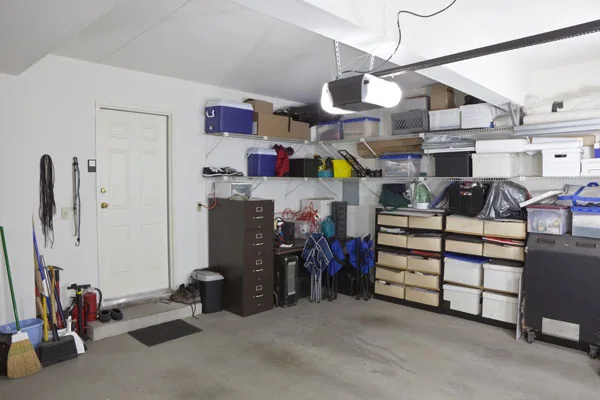
Golf clubs and other sporting goods make the garage appear cluttered and untidy, which also makes it harder to park your car. Wall racks and closed cabinets keep everything off the floor and out of sight.
Ideal Temperature and Humidity Levels for Golf Club Storage
Golf clubs do best in about the same conditions you do. Use these ranges to judge whether your garage needs help.
| Condition | Ideal Range | Outside the Range |
|---|---|---|
| Temperature | 50°F to 80°F | Below 32°F, grips and graphite shafts turn brittle. Above 90°F, grips get sticky and epoxy softens. |
| Humidity | 40% to 50% | Too humid causes rust, mildew, and slick grips. Too dry makes grips crack. |
| Sunlight | Little to none | UV light hardens grips and fades paint. |
| Airflow | Moderate | A closed, damp bag traps moisture. |
High humidity keeps rubber grips damp, so they turn slick and lose their tack. Temperature swings stress the epoxy that bonds each clubhead to its shaft, because the head and shaft expand and contract at different rates. Prolonged heat above about 130°F softens that bond, and a rattle or a loose ferrule is the first sign of trouble.
Garage, Car, or Basement: Choosing the Best Spot for Your Clubs
The Car Trunk Is the Worst Place to Leave Your Golf Clubs
A car trunk can top 130°F on a sunny day, hot enough to soften epoxy and dry grips until they're hard and slick. In winter it drops below freezing, and a visible golf bag invites a break-in. It's fine to leave golf clubs in the car for the drive and the round, but bring them inside once you're home.
Leaving Golf Clubs in a Cold Garage Through a Midwest Winter
You can leave golf clubs in the garage over winter if it's insulated and stays above freezing. If you leave golf clubs in the cold for months, graphite shafts and grips become brittle, so let them warm to room temperature before you swing. To prevent rust from condensation, wipe steel shafts with a lightly oiled cloth, keep oil off the grips, and store the bag off the concrete floor.
A Dry Basement or Indoor Closet Offers the Most Stable Climate
When it's not practical to keep golf clubs in the garage year-round, a dry basement or indoor closet is a great alternative. Check for a musty smell first, and run a dehumidifier to hold humidity around 40% to 50%.
How to Store Golf Clubs in the Garage for Long-Term Protection
The best way to store golf clubs in the garage comes down to preparation and placement. Follow these steps at the end of the season or anytime your clubs will sit unused for a few weeks.
- Clean each clubhead with warm, soapy water and a soft brush, then wipe the grips with a damp cloth.
- Dry every club completely, including the shafts and grips.
- Empty the bag's pockets, remove wet towels and snacks, and let it air out.
- Add a few silica gel packets and put dry headcovers on your woods and putter.
- Stand the bag upright on a rack, off the floor and away from the water heater, chemicals, and car exhaust.
- Cover it with breathable cloth instead of plastic, and check your clubs every two to three months.
Quick Tip
Make sure every club is completely dry before it goes into storage. Trapped moisture is the most common cause of rust and mildew in a stored golf bag.
Garage storage keeps your clubs close and costs nothing extra, as long as you manage temperature, humidity, dust, pests, and security. A well-built, insulated garage makes that much easier, with steadier temperatures through Midwest summers and winters and room for racks beside your car. Feldco has built over 100,000 garages and served more than 500,000 homeowners across Illinois, Wisconsin, Indiana, and Iowa since 1976. Get a free quote on a new garage and give your clubs a better place to call home.
FAQs
How do you store golf clubs in a small apartment with no closet space?
Stand the bag upright in a corner away from windows and heat vents, or tuck it beside a bed or behind a door. If there's no room at all, a small climate-controlled storage unit is the next best option.
Should you store golf clubs with headcovers on or off?
Keep them on, as long as both the clubs and the covers are completely dry. A damp cover traps moisture against the head and speeds up rust.
What's the best way to store golf clubs between rounds?
Bring the bag inside after each round instead of leaving it in the car. Wipe and dry the clubheads, then unzip the pockets so the bag can air out.
Are silica gel packets worth putting in a golf bag?
Yes, they absorb moisture trapped in a closed bag, which helps prevent rust, mildew, and musty odors. They're cheap and easy to swap out every few months.
How do you store golf clubs safely around kids and pets?
Mount the bag on a wall rack or anchor a stand so it can't tip onto a child or pet. Keep headcovers on, zip divot tools into a pocket, and store the bag out of reach of pets that chew grips.