


Summary
Steel entry doors cost less upfront and hold up best against direct force. Fiberglass doors resist dents and rust, last longer with less upkeep, and imitate real wood grain closely enough to fool people from the street. Both beat wood on maintenance and energy efficiency, so the right pick comes down to your budget, your entryway’s exposure and the look you want.
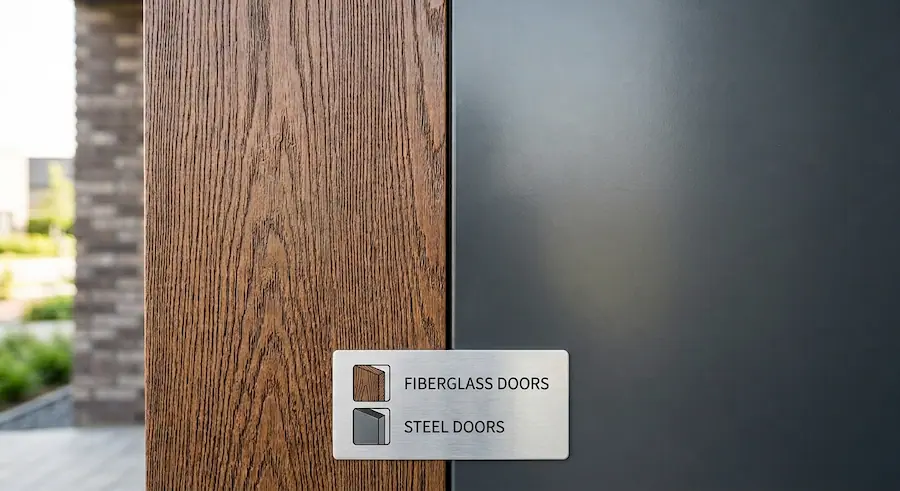
Fiberglass and Steel Entry Doors: A Comparison at a Glance
The fiberglass vs steel doors question used to have a simple answer: wood. Ask someone knowledgeable about entry doors ten years ago and that is what you would have heard. Advances in materials and fabrication changed that, and these two now dominate replacement projects.
Here is how they stack up on the factors homeowners weigh most.
| Feature | Fiberglass | Steel |
|---|---|---|
| Upfront cost | Higher | Lower |
| Energy efficiency | Excellent | Very good with a foam core |
| Dent resistance | Very good | Dents under hard impact |
| Rust | None | Possible where the finish chips |
| Security | Strong with a solid frame and deadbolt | Strongest under direct force |
| Maintenance | Mild soap and water | Touch up scratches promptly |
| Appearance | Realistic wood grain, stain or paint | Smooth painted finishes |
| Average lifespan | 30 years or more | 20 to 30 years |
| Best for | Main front entrances | Budget projects, side and back doors |
Curb Appeal: Wood Grain Texture Versus Smooth Painted Steel
How the door looks decides the purchase for plenty of homeowners. Both materials come in a range of textures, stain or paint colors, and glass options.
Fiberglass wins on wood realism. Its faux grains, cherry, oak and mahogany among them, run deep enough that most people believe they are looking at the real thing, especially from the street. You can stain or paint the slab, which helps later when you refresh the exterior.
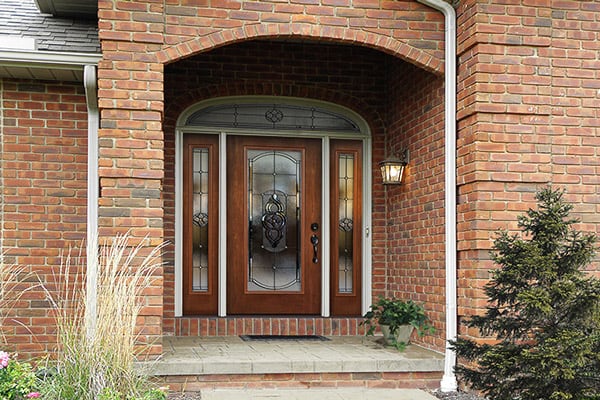
Steel has closed much of the gap. Manufacturers now sell it in wood grain textures with paint or stain finishes, so from a distance the effect holds. Its real advantage is the smooth slab, where a solid painted color looks crisper than it ever will over an embossed grain.
Pick fiberglass for stained, traditional entries. Pick steel for bold, modern paint.
Dent Resistance, Rust and Average Lifespan of Each Material
Steel is the tougher material under a single hard blow, but it records the damage. A dent on either face is difficult to repair, and scratches that cut through the galvanization will rust if you do not paint over them quickly.
Fiberglass takes a different route. It never rusts, shrugs off knocks from grocery bags and delivery boxes, and will not swell, split or delaminate. Severe direct impact can crack it, though that is uncommon and largely avoidable with normal care.
Service life follows from that. A quality fiberglass slab commonly runs 30 years or more with almost no attention. Well-built steel lasts 20 to 30 years, reaching the top of that range when it sits under cover and gets its chips touched up. Our guide to the advantages and disadvantages of steel doors digs further into that trade-off.
Performance in Midwest Heat, Cold, Snow and Humidity
Entryways across Midwest face subzero mornings, humid August afternoons, driving rain and road salt, often within the same year. Material choice shows itself fast under that punishment.
Fiberglass moves through freeze-thaw cycles without swelling or warping, and moisture does nothing to it. That makes it the safer bet for an uncovered opening that takes direct sun, snow and rain.
Steel expands slightly in summer heat and contracts in deep cold. It will not warp the way wood does, but the bottom edge stays vulnerable where slush and salt collect. Beneath a porch or a generous overhang, steel performs beautifully for decades.
Your doorway’s exposure matters more than the material name. Step outside and see how much weather actually reaches the slab before you commit.
Energy Efficiency and R-Value Insulation for Winter Comfort
Both materials run circles around wood here, because neither uses a solid slab. Polyurethane foam inside the door pushes R-values into roughly the R-5 to R-6 range, several times what a comparable wood panel delivers.
Fiberglass edges ahead on comfort. Steel conducts heat far faster, so even with insulated steel construction the interior face can feel cold on a January morning. Fiberglass slabs also tend to be thicker, leaving room for deeper insulation and tighter weatherstripping.
Glass changes the math. Any exterior door gives up efficiency once you add lites, sidelites or a transom, so confirm the model you want carries Energy Star certification.
In daily use most people will not feel a dramatic gap between the two. If surface warmth through a long winter is your priority, fiberglass takes it.
Security Differences and What Actually Prevents Break-Ins
Steel is the strongest slab material you can hang in an opening, which is why commercial buildings default to it. Under a shoulder or a boot it resists more than fiberglass or wood.
That said, the panel is rarely what fails. Preventing break-ins comes down to the frame, the strike plate, the hinges and any glass sitting near the lock. A hollow jamb held by short screws gives way long before a fiberglass door does.
Fiberglass security doors’ advantages show up over time rather than in a single impact: no rust at the bottom edge, no swelling that throws the latch out of alignment, no warping that leaves a gap at the jamb.
So put your money into the whole system:
- A deadbolt with a one inch throw into a reinforced strike plate
- Three inch screws running through that plate into the wall stud
- A solid frame, properly shimmed and squared
- Glass placed away from the lock, or laminated for impact
Either material gives you a secure entry when the frame, hardware and installation are right. Paying a bit more upfront removes the worry you would otherwise carry for years, and that peace of mind is hard to price.
Maintenance Requirements Over the Life of Each Door
Wood looks gorgeous stained, and it demands constant attention to stay that way. Weather is simply hard on it. Both alternatives ask far less of you, which explains much of why they took over the replacement market.
Fiberglass needs mild soap, water and a soft cloth. It does not rust, and refinishing is rare enough that most owners never bother. Keep the pressure washer on its lowest setting, since stronger spray can mar the surface.
Steel wipes clean just as easily, with one caveat: treat scratches immediately. Bare metal corrodes, and the damage creeps outward beneath the paint. Skip the hose, wipe instead, and repaint any chip as soon as you spot it.
One more thing to watch. Heat builds between a storm door and the entry slab, especially in dark colors, and fiberglass tolerates that buildup better than steel paint does.
Cost-Benefit Breakdown: Upfront Price Versus Long-Term Value
Steel is the least expensive of the three common materials, fiberglass sits in the middle, and wood costs the most. Premium fiberglass with hand-applied stain can approach wood pricing.
The same options drive the number up either way:
- Decorative, beveled or privacy glass
- Sidelites and transoms
- Custom sizes, including 8 foot slabs
- Upgraded locks and handlesets
- Special paint or stain colors
Now weigh the return. Steel gives back a strong share of its cost at resale precisely because it starts cheap. Fiberglass asks for more at purchase and repays you across years of service, with no rust repair, no repainting and no early replacement.
If this is your main entrance and you plan to stay put, fiberglass usually pays off. For a side, back or basement opening, steel does the job for less.
Trade-Offs to Weigh Before You Pick a Front Door Material
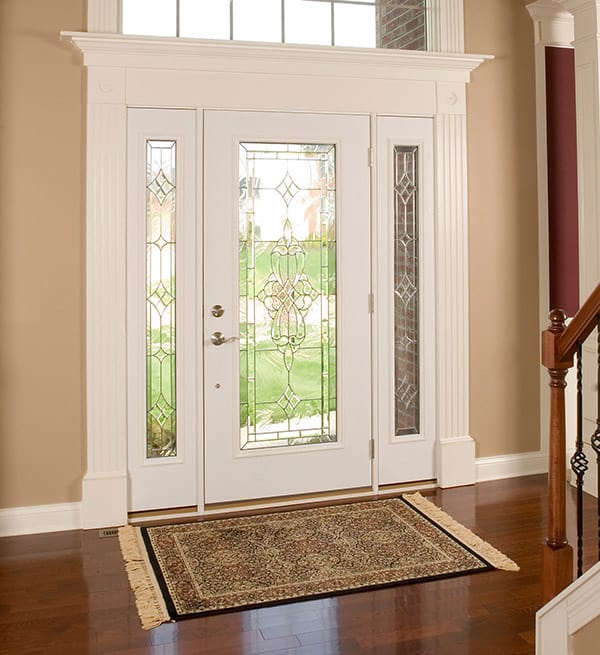
No single material wins for every house. Here is how the decision sorts out.
Choose fiberglass if:
- This is your main front door and curb appeal matters
- You want a stained wood look without wood upkeep
- The opening takes direct sun, rain or snow
- You want the lowest upkeep available
- You plan to stay in the home for years
Choose steel if:
- Budget leads the decision
- You picture a clean painted finish
- The doorway sits under a porch or overhang
- It serves a side, back or garage entrance
- Occasional paint touch-ups do not bother you
Both slabs withstand plenty of abuse from people and weather, stay low-maintenance and keep your family safe. Fiberglass earns the nod on realism, rust resistance and longevity. Stick with fiberglass if you can afford it. If not, steel makes a high quality alternative.
Custom Entry Doors Built for Midwest Homes From Feldco
Feldco builds both steel and fiberglass entry doors to the exact openings and weather you live with. Every one is customizable, and with the color, hardware and decorative glass options on offer you will find what you are picturing.
We have replaced more than 100,000 doors while serving over 500,000 homeowners across Illinois, Wisconsin, Indiana, and Iowa. Design the perfect entry door for your home and get a free quote today.
FAQs about Fiberglass and Steel Entry Doors
What Are the Main Pros and Cons of Fiberglass Versus Steel?
The benefits of fiberglass are rust-free durability, convincing wood grain and the lowest upkeep, while its drawbacks are a higher price and the chance of cracking under severe impact. Steel costs less and resists direct force better, though it dents, corrodes where scratched and offers fewer finish options.
How Long Do Fiberglass Doors Last Compared to Steel Doors?
A quality fiberglass door commonly lasts 30 years or more with nothing but basic cleaning. Steel typically runs 20 to 30 years, hitting the upper end when it stays sheltered and its chips get painted promptly.
Which Door Offers Better Soundproofing for Homes Near Busy Streets?
Fiberglass usually sounds quieter, since its thicker slab and denser core absorb more traffic noise than a thin metal skin. Either option beats an old, poorly sealed door, because most sound sneaks around the perimeter rather than through the panel.
Which Entry Door Material Is More Environmentally Friendly?
Steel leads on recyclability, since retired slabs go straight back into the scrap stream while fiberglass generally cannot. Fiberglass leads on service life and insulation, saving more energy across the decades it stays in your opening.
Do Fiberglass Doors Warp in Extreme Heat or Crack in Summer Sun?
Fiberglass holds its shape through drastic temperature swings and will not warp, swell or split the way wood does. Cracking takes a severe direct impact, not heat.


 866-4FELDCO