


Choosing the right garage door starts with understanding the sizes available. Whether you're replacing a door or planning a new build, knowing standard garage door sizes before you shop saves time and money. Most homes use a few common garage door sizes, but the right fit depends on your vehicles, your garage opening, and how you use it.
Below is a reference chart of the most common standard garage door dimensions for residential use:
| Type | Width | Height |
|---|---|---|
| Single (1-car) | 8 ft, 9 ft, 10 ft | 7 ft, 8 ft |
| Double (2-car) | 12 ft, 14 ft, 16 ft, 18 ft | 7 ft, 8 ft |
| RV / Oversized | 10 ft, 12 ft | 10 ft, 12 ft, 14 ft |
Use this chart as a starting point, then read on for the details behind each size category.
Standard Single Garage Door Sizes
A standard single car garage door size covers three common widths: 8 ft, 9 ft, and 10 ft. Standard heights are either 7 ft or 8 ft. Here's how they break down:
- 8 ft wide — The most compact option, typically found in older homes. It works for most standard sedans and smaller vehicles, but can feel tight for drivers of trucks or SUVs. Parking requires more precision.
- 9 ft wide — The most popular 1 car garage door width in modern construction. It gives drivers comfortable clearance on each side and accommodates most cars, small trucks, and crossovers without issue.
- 10 ft wide — Ideal if you drive a full-size truck, a van, or want extra room to move around your vehicle. This width is increasingly common in newer builds.
Height: A 7 ft tall door is the longtime standard and handles the vast majority of passenger vehicles, including most trucks with standard cab heights. An 8 ft door is the better choice if you have a lifted truck, a cargo van, or simply want extra clearance and a more modern look.
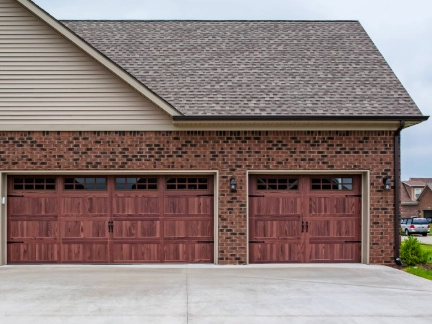
Best fit by use case:
- Compact car or sedan → 8 ft or 9 ft wide, 7 ft tall
- Crossover, SUV, or standard pickup → 9 ft wide, 7 ft or 8 ft tall
- Full-size truck or van → 10 ft wide, 8 ft tall
Standard Double Garage Door Sizes
A standard two-car garage door (also called a double garage door) is wide enough for two vehicles side by side. Common widths are 12 ft, 14 ft, 16 ft, and 18 ft, with heights of 7 ft or 8 ft.
- 12 ft wide — The minimum for a true two-car configuration. It fits two compact cars but leaves little room on the sides. More common in older or smaller garages.
- 14 ft wide — A comfortable fit for two average-sized vehicles. Provides enough clearance to open doors without hitting walls.
- 16 ft wide — The most common two car garage door width in modern homes. Handles two full-size sedans, SUVs, or light trucks with room to spare.
- 18 ft wide — Best for households with two large trucks, those who want extra workspace, or homeowners who plan to use the garage for more than just parking.
A wider door also improves functionality if you're pulling in boats, trailers, or other equipment alongside a vehicle. If you're unsure what width to choose, the 16 ft option covers most households well.
Standard Garage Door Height Options
Most residential garage doors come in 7 ft or 8 ft heights. The 7 ft door has been the traditional standard for decades and still fits the majority of homes and vehicles. The 8 ft door has become more popular as trucks and SUVs have gotten taller. It also looks better proportioned on larger homes.
When you might need taller:
- Lifted trucks or off-road vehicles with elevated roof lines
- Full-size cargo vans or passenger vans
- Homes with high-ceiling garage interiors or architectural detailing
- RV storage (which typically requires 10 ft, 12 ft, or even 14 ft clearance)
If you need more garage door height than 8 ft but don't want to widen the opening, a high-lift track system is an option. High-lift conversions raise the door higher along the wall before it travels horizontally, giving you more vertical clearance without a full structural change. This is worth discussing with a garage door professional before committing to a solution.
How to Measure Your Garage Door Opening
Before ordering any door, take four measurements. These take under ten minutes and prevent costly ordering mistakes.
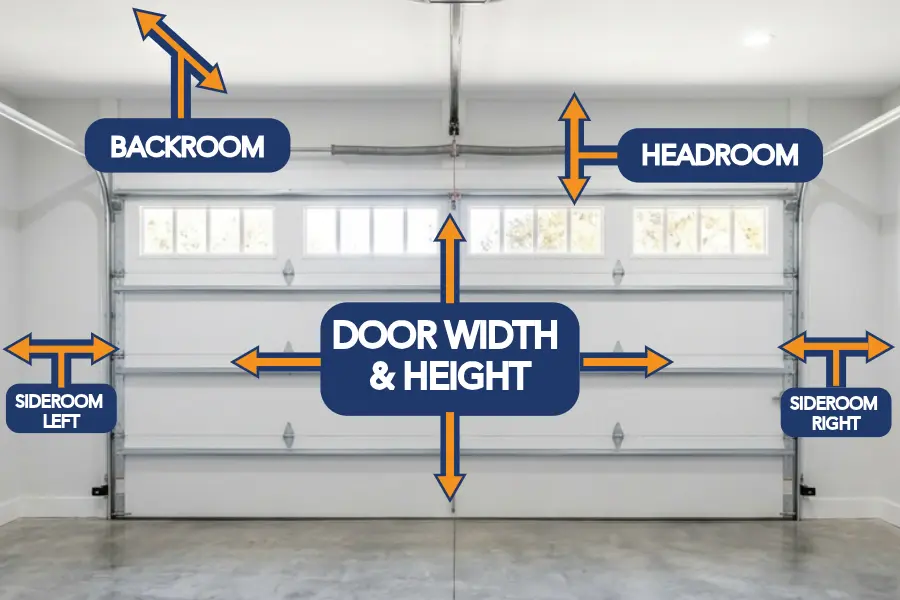
Step 1: Width
Measure the width of the opening at its widest point, from one side of the frame to the other. This is your rough opening width.
Step 2: Height
Measure the height of the opening from the floor to the top of the frame. This gives you the rough opening height.
Step 3: Headroom
Measure from the top of the opening to the ceiling (or lowest obstruction above). Standard garage door hardware needs a minimum of 10–12 inches of headroom. Low-headroom track systems are available if space is tight.
Step 4: Side Room
Measure from each side of the opening to the nearest wall or obstruction. Most standard track systems require at least 3.5–4 inches on each side for hardware clearance.
Keep a record of all four measurements before contacting a supplier or installer. If anything is unclear, a professional measurement visit is a good investment.
When to Consider a Custom Garage Door Size
Standard sizes work for most homes — but not all. There are situations where a custom door is the right call:
- Older home — Pre-1980s openings are often narrower or shorter than today's standards
- Unique architecture — Carriage-house, historic, or custom designs may need non-standard proportions to look right
- Oversized vehicles — RVs, lifted trucks, and commercial vehicles often need a door taller or wider than 18 ft
- Converted spaces — Modified garages (enlarged openings, lowered floors, added walls) may no longer match standard sizing
Custom doors cost more and have longer lead times, but they're the only way to get a proper fit when the opening falls outside the standard range.
Choosing the Right Garage Door Size
Narrowing down your options comes down to four factors:
- Vehicle size — Measure your tallest, widest vehicle. Add at least 2 ft to the width and 2 inches to the height for comfortable clearance. When between sizes, go larger.
- Intended use — Workshop space, bikes, and storage all argue for a wider door and more interior room.
- Clearance needs — Account for mirrors, roof racks, and accessories. A door that technically fits may still be frustrating daily.
- Curb appeal — A door proportionally matched to your facade looks intentional. Too narrow or too wide reads as an afterthought.
Once you know your size, the next step is selecting a style, material, and insulation level that fits your budget and climate. Regular upkeep matters too — learn more about how to extend the life of your investment in our garage door maintenance guide.
Ready to find the right garage door for your home? Get a free quote from Feldco's team. We serve homeowners across the Midwest and can help you confirm measurements, explore options, and schedule installation at your convenience.


 866-4FELDCO