


Summary
A standard single car garage is about 12 x 22 feet, a 2 car garage 20 x 20 to 22 x 22 feet, a 3 car garage 32 x 22 to 36 x 24 feet and a 4 car garage 40 x 24 feet or more. Full-size trucks, SUVs, storage and car lifts call for extra width, depth or height, so size your garage around your largest vehicle and what else it needs to hold.
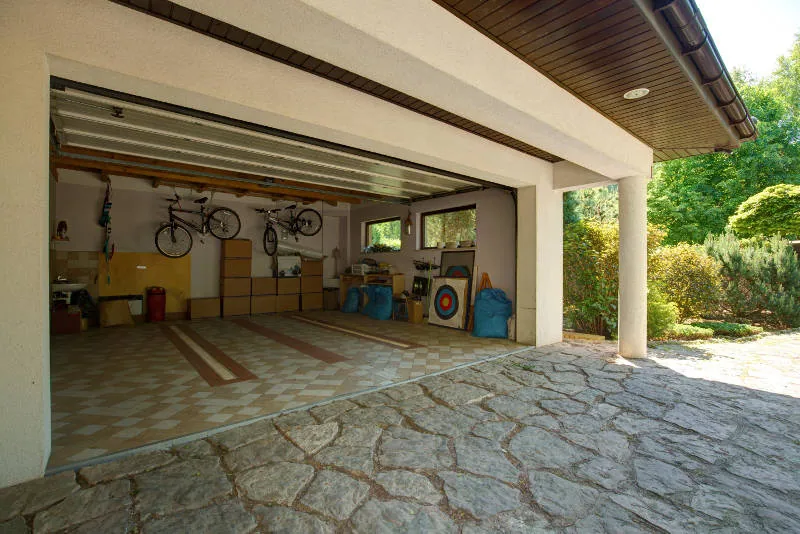
Garage Sizes Chart: Minimum, Standard and Comfortable Dimensions
Most residential garages are built in bays about 10 to 12 feet wide and 20 to 24 feet deep, which sets the standard garage dimensions used today. The chart shows each size as width x depth, with total square footage.
| Garage Type | Minimum | Standard | Comfortable |
|---|---|---|---|
| 1 Car Garage | 12 x 20 ft (240 sq ft) | 12 x 22 to 14 x 22 ft (264 to 308 sq ft) | 16 x 24 ft (384 sq ft) |
| 2 Car Garage | 18 x 20 ft (360 sq ft) | 20 x 20 to 22 x 22 ft (400 to 484 sq ft) | 24 x 24 ft (576 sq ft) |
| 3 Car Garage | 30 x 20 ft (600 sq ft) | 32 x 22 to 36 x 24 ft (704 to 864 sq ft) | 38 x 26 ft (988 sq ft) |
| 4 Car Garage | 40 x 20 ft (800 sq ft) | 40 x 24 to 44 x 24 ft (960 to 1,056 sq ft) | 48 x 26 ft (1,248 sq ft) |
Minimum sizes fit regular cars with little room to spare. Standard sizes add space to open doors and store a few items, while comfortable sizes fit full-size trucks, SUVs and a workbench.
Single Car Garage Dimensions and Width for One Vehicle
A typical single car garage measures 12 feet wide and 22 feet deep, or 264 square feet. That fits one sedan or small SUV with about 3 feet on each side. Sizing up to 14 x 22 or 16 x 24 feet adds a wall for bikes, tools or a mower.
Standard 2 Car Garage Dimensions, Width and Square Footage
The average two car garage size is 20 x 20 to 22 x 22 feet, or 400 to 484 square feet. An 18 x 20 foot space still parks 2 cars, but it's a tight squeeze between doors. If either vehicle is a full-size SUV, go with 22 to 24 feet of width. An oversized 24 x 24 foot garage (576 sq ft) fits two big vehicles plus shelving or a workbench.
3 Car Garage Dimensions and Square Footage for Busy Households
A standard 3 car garage runs 32 x 22 to 36 x 24 feet, giving you 704 to 864 square feet. It suits three drivers, or two cars plus a boat, ATV or workshop.
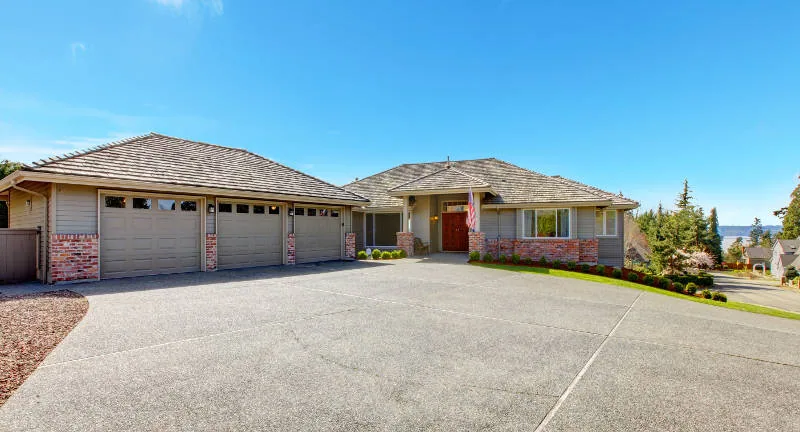
Garage Width, Depth and Height Measurements That Matter Most
Width controls how easily you open doors. Leave about 3 feet between parked cars and 2 to 3 feet between each car and the wall, which is why 20 feet is the practical minimum for 2 cars. A garage bay also needs more room than a normal parking stall, which is only about 9 feet wide and 18 feet long.
Minimum garage depth is 20 feet, enough for most sedans and small SUVs. Standard depth is 22 to 24 feet, leaving a walkway in front of the bumper.
How tall is a garage? Most have 8 to 10 foot ceilings: 8 feet works with a standard 7-foot door, while 9 to 10 feet suits an 8-foot door for tall vehicles. Car lifts need 10 to 12 feet, or about 12 to 14 feet to stack two SUVs.
Vehicle Fit: Garage Space for Sedans, SUVs and Full-Size Trucks
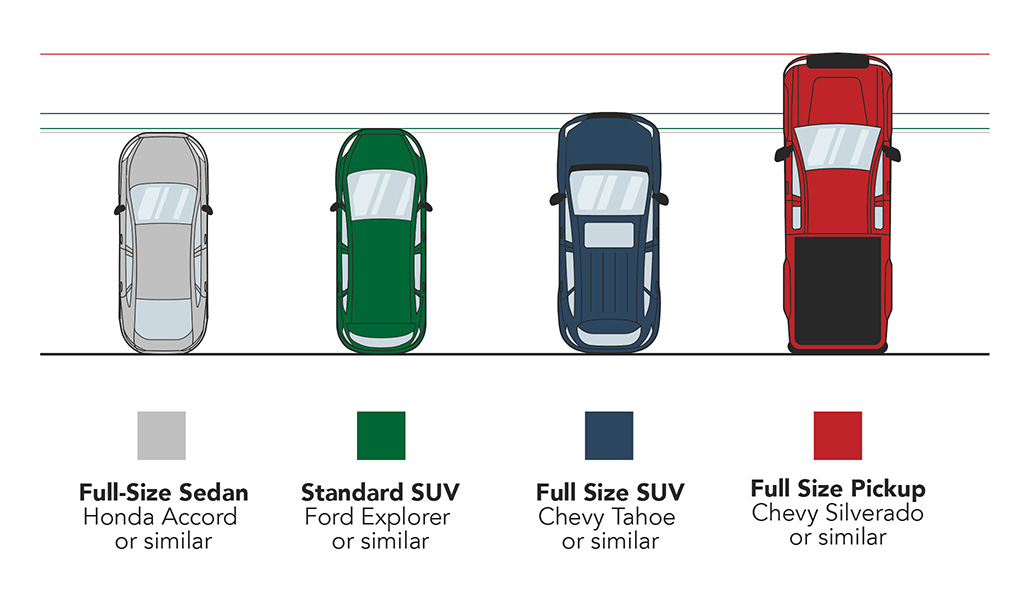
Today's vehicles are longer and wider than the ones many older garages were built for. Add 3 to 4 feet to your vehicle's length to find the depth you need.
| Vehicle | Typical Length | Minimum Depth | Recommended Depth |
|---|---|---|---|
| Sedan or midsize SUV (Honda Accord, Ford Explorer) | 16 to 16.5 ft | 20 ft | 22 ft |
| Full-size SUV (Chevrolet Tahoe, Suburban) | 17.5 to 19 ft | 22 ft | 24 ft |
| Full-size truck, crew cab (Ford F-150, Chevrolet Silverado) | 19.5 to 20.5 ft | 24 ft | 26 ft |
| Heavy-duty truck, long bed (Ford F-250) | About 22 ft | 26 ft | 28 ft |
All three layouts use the minimum 20-foot width. For full-size SUVs and trucks, plan on 22 to 24 feet wide.
For 2 SUVs, plan on at least 22 x 22 feet, or 24 x 24 feet for two full-size models. Lengths are approximate, so check your vehicle's spec sheet.
Common Garage Door Sizes for 1, 2, 3 and 4 Car Garages
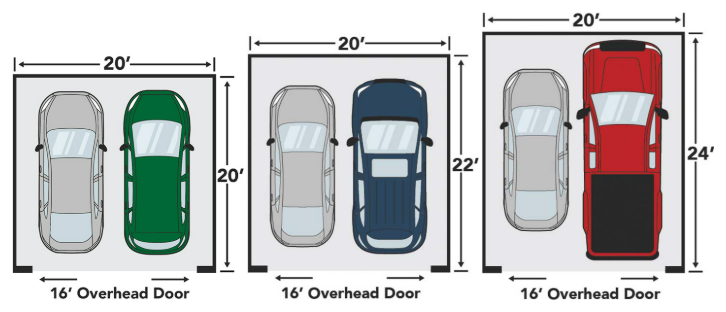
Residential garage doors come in a few common sizes, listed as width x height. Seven feet tall is standard, but 8-foot doors are popular for SUVs and trucks.
| Garage Type | Common Door Sizes |
|---|---|
| 1 Car | One 9 x 7 or 9 x 8 ft single door |
| 2 Car | One 16 x 7 or 16 x 8 ft double door, or two 9 ft singles |
| 3 Car | One 16 ft double plus one 9 ft single |
| 4 Car | Two 16 ft doubles, or one double plus two singles |
Plan for about 12 inches of headroom above the opening (15 with an opener) and 3.75 inches on each side for the tracks. Two single doors need a wider front wall, so they work best on garages 22 feet wide or more.
Attached vs. Detached Garage Sizes and What Shapes Each One
An attached garage gives you covered access to your home and is usually sized to fit the house and lot. A detached garage keeps noise and fumes away from living space and gives you more freedom on size and height. Local zoning often limits a detached garage's footprint, height and distance from property lines.
Going Beyond the Standard Garage Size With a Custom Build
A custom built garage can be any size or shape, with no standard to limit you. A 4 car garage size usually starts around 40 x 24 feet (960 sq ft), or 24 x 40 feet in a tandem layout that parks cars nose to tail on narrow lots. A taller garage lets you build a loft above your cars, or you can turn the space into additional living space.
How to Choose the Right Garage Size in 5 Simple Steps
The right garage fits what you drive today and what you'll park down the road. Work through these steps before you settle on a size:
- Measure your vehicles, including length, width with mirrors and height. Include any vehicle you plan to buy.
- List what else goes inside, such as bikes, bins, a mower, a home gym or a workshop.
- Set the width at 10 to 12 feet per car, or wider if you drive a full-size SUV.
- Set the depth by adding 3 to 4 feet to your longest vehicle. Add 2 to 3 more feet for shelves or 4 to 6 feet for a workbench.
- Check ceiling height for tall vehicles or a lift, and confirm local zoning limits.
Quick Tip
Size for your next vehicle, not just the one you drive now. Adding 2 feet of width and depth during the build costs far less than expanding later.
Garage Cost by Size: What to Expect for 1 to 4 Car Builds
Garage cost grows with square footage, so every added bay raises the price. Your foundation, materials, doors and finishes also play a big part. Most 1 and 2 car garages fall in the tens of thousands of dollars, while larger 3 and 4 car builds with upgrades like insulation or a loft can approach six figures.
Material and labor prices change often, so a quote is the only way to get an exact number. Feldco has built over 100,000 garages and has been the Midwest's #1 home exterior company since 1976. Get a free garage quote and our team will help you pick a size that fits your vehicles, lot and budget.
FAQs
Why are garages bigger now than in the 1950s?
Many 1950s garages were built for one car, often 10 to 12 feet wide and 18 to 20 feet deep. Today's garage standards are larger because households own more vehicles, SUVs and pickups make up most new car sales, and garages double as storage.
What garage size works best for a family with car seats and strollers?
Choose a 2 car garage at least 24 feet wide so rear doors open fully, with about 4 feet between vehicles. A 24-foot depth gives you room to unload a stroller without squeezing past the bumper.
How much room do you need for a home gym in the garage?
A basic setup with a rack, bench and weights needs roughly 10 x 10 to 12 x 12 feet, about the size of one bay. Go with a ceiling of 9 feet or more for overhead presses and pull-ups.


 866-4FELDCO