


Summary
Replacing a garage door lock or T-handle takes about an hour with a screwdriver, a drill, a replacement kit and a helper. Replace the lock when the key sticks, the handle spins freely, only one latch releases or rust covers the mechanism. A T-handle kit costs $25 to $60, a slide lock $15 to $35 and a smart lock $80 to $250, and professional labor adds $75 to $200. Unplug the opener before you start, and pull the cable tight so both latches retract together. If the handle and latches still work, rekeying costs less than a full replacement.
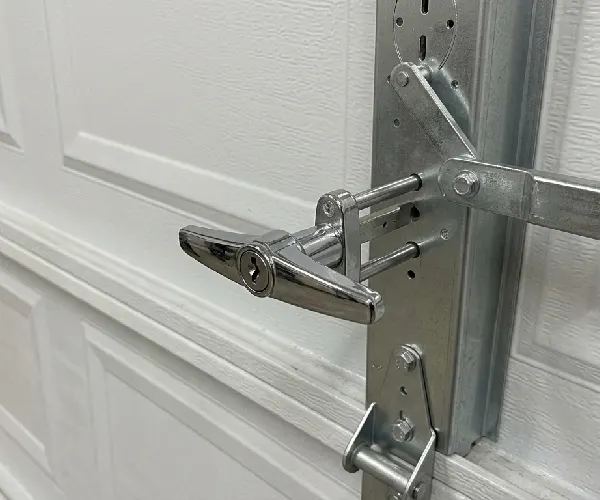
Why Homeowners Replace a Garage Door Lock or Handle
A garage holds tools, bikes and a door straight into the house, so burglars check it first. Knowing how to replace garage door lock hardware yourself keeps a small problem from getting expensive.
Changing Who Has Access to Your Garage After a Move
Keys spread over the years, and contractors, house sitters and previous owners all hold copies you can't account for. Changing a lock on a garage door cuts off every copy at once.
Replacing a Damaged Lock That No Longer Turns Cleanly
The cylinder seizes, the cable stretches, or the spring latch stops catching the striker. When the barrel or latch assembly is at fault, a garage door lock replacement is the fix.
Raising Security for Valuables Stored in Your Garage
A motorcycle, a classic car or a wall of power tools raises the stakes. Your locks set the ceiling for everything else you do.
Signs Your Garage Door Lock Is Failing and Needs Replacing
Locks rarely quit without warning. Watch for these signals:
- The key sticks, catches or needs jiggling before it turns
- Rust or corrosion has spread across the locking mechanism
- The T-handle spins freely without pulling the latches in
- One spring latch releases and the other stays put
- Keys have gone missing or snapped off
Ways to Keep Your Garage Safe With the Right Lock Type
Different doors call for different hardware. These are the options you'll see on a residential door:
- T-handle lock: a keyed handle outside, cabled to spring latches on both sides. It's the standard on manual sectional doors.
- Slide lock: a steel bar you slide through the vertical track from inside. It's the easiest to install.
- Side-mount deadbolt: a bolt that throws into the track and holds even if the opener is bypassed.
- Padlock and hasp: a bolt through the track above a roller, released with a wrench.
- Smart lock: a keypad or app-controlled bolt that logs entries and grants temporary access.
Match the lock to your door type. Hardware built for a sectional steel door won't fit a one-piece tilt door.
Steps to Replace Your Garage Door Lock or T-Handle Safely
These steps cover a T-handle lock, the most common setup on manual doors. Close the door and unplug the opener first.
Get the Instruments and Replacement Parts You Will Need
- Garage door barrel and keyed T-handle
- Mounting plate for the key lock
- Interior release handle, cable or sash chain, and spring latches
- Screws, a drill with 3/16-inch and 5/16-inch bits, and a measuring tape
- Flat-head or Phillips-head screwdriver, gloves and safety glasses
Bring in a second person to hold the handle outside while you tighten from inside.
Step 1: Study the Lock Diagram Before You Touch a Screw
Compare the kit diagram to your door. A T-handle set pairs two spring latches with a cable and a keyed barrel, and turning the handle pulls that cable to retract both latches.
Step 2: Remove the Previous Door Lock From Both Sides
Work from inside. Unhook the cable from the spring latches, then back out the two long screws holding the release handle, popping off any cover plate that hides them. Your helper lifts the old T-handle away outside.
Step 3: Install the Outer Part of the T-Handle Door Lock
Clean the mounting area, then seat the new handle:
- Have your helper hold the T-handle outside, spindle and posts pushed through the holes.
- Line up the mounting plate inside so its screw holes meet the posts.
- Drive the screws through the plate into the fixtures and snug them evenly.
If the posts miss the factory holes, drill fresh ones instead of widening the old ones.
Step 4: Set Up the Interior Locking System and Latches
Fit the release handle over the spindle so it engages the barrel, then screw the plate down. Mount a spring latch at each end of the section and connect it with the cable. Pull that cable tight before clamping, because slack keeps a rebuilt lock from pulling both latches.
Step 5: Test the Lock and Finish the Installation Cleanly
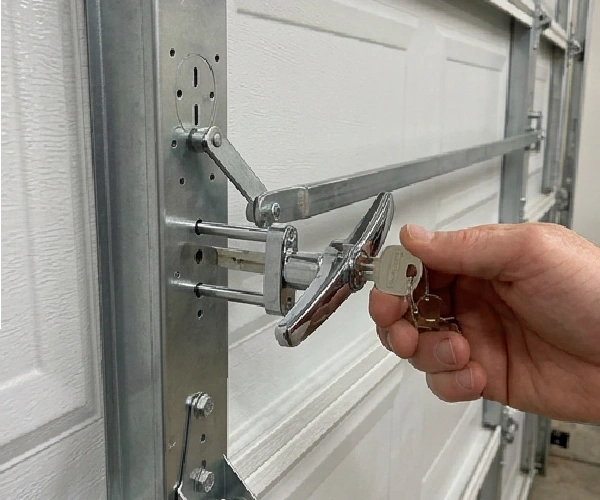
Turn the key with the door closed and watch both latches retract together, then snap into the strikers on release. Adjust the striker plates until they catch squarely and lubricate the moving parts. Never lock the door while working alone inside, since the key won't open it from outside.
Common Mistakes to Avoid During Garage Door Lock Installation
Most failed installs trace back to the same handful of errors:
- Leaving the opener plugged in while you work
- Leaving slack in the cable or sash chain
- Overtightening screws and dimpling the door skin
- Drilling the larger holes through both skins instead of the outside skin only
- Buying a handle with the wrong spindle shape or base thickness
What Garage Door Lock Replacement Costs in Parts and Labor
A complete T-handle kit with latches and cable runs roughly $25 to $60. A slide lock costs $15 to $35, and a keypad or smart lock lands between $80 and $250.
A technician adds $75 to $200 in labor, plus any service call minimum. Rekeying costs less than a full garage door handle replacement, so get a quote first.
When to Call a Professional Instead of Doing It Yourself
Most homeowners can handle a straightforward swap. Call a technician when the door itself is part of the problem: tracks that bind, a section dented or rusted through, electronic hardware that needs wiring, or an oversized door. A lock mounted to a damaged section won't hold.
Get Started With Feldco on Your Garage Door Replacement
A new lock only holds as well as the door it's mounted on. If your sections are dented, rusted through, binding in the tracks or letting in drafts, a new garage door gives you a solid, secure base for your lock.
Feldco has been the Midwest's #1 home exterior company since 1976, serving over 500,000 homeowners across Illinois, Wisconsin, Indiana, and Iowa.
If your garage door is past its prime, talk with a product specialist and get a free quote on garage door replacement today.
Frequently Asked Questions About Garage Door Lock Replacement
Can I replace my garage door lock myself?
Yes. A T-handle or slide lock swap takes about an hour with a screwdriver, a drill and a helper outside.
Which garage door lock is easiest for a DIY beginner to install?
A slide lock. It bolts to the inside of the door and throws into the vertical track, and most kits need four screws and no cable routing.
Why does my garage door lock cylinder stick or get hard to turn?
Grit, rust and worn wafers inside the barrel are the usual culprits, and cold weather makes all three worse. A barrel that keeps binding after lubrication needs replacing.
Can I rekey a garage door lock instead of replacing the whole handle?
Often, yes. If the T-handle and latches still work, a locksmith can rekey the cylinder or you can swap in a matching barrel.
What should landlords do about garage door locks between tenants?
Rekey or replace the cylinder at every turnover and log the key count in the lease file. Keyed-alike barrels let you manage one master set.


 866-4FELDCO