


Summary
Most garage damage happens at two spots: the side wall, where an opening door hits drywall, and the back wall, where the bumper rolls too far. Padded wall guards protect the sides, while floor blocks, hanging markers, laser guides, and parking sensors stop the car short of the back wall. A driver's door needs at least 30 inches of clearance to open without touching the wall.
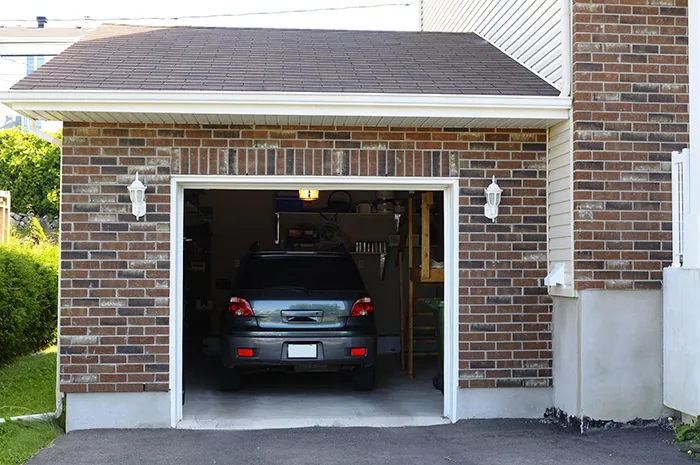
Why Garage Walls and Car Doors Take the Most Damage
Type keep car from hitting garage wall into a search bar and you'll get hundreds of gadgets. Almost all of them fall into three groups: padding, physical stops, and electronic guides. Picking the right group starts with understanding where the damage actually happens.
Not every garage is like an airplane hangar with room to spare. Most are built for one or two cars, and then lawn mowers, tool chests, bikes, and storage shelves eat into that space. What's left is a corridor barely wider than the car itself.
Two spots take almost all the abuse. The first is the side wall, where a swinging door catches drywall at hip height. The second is the back wall, where a bumper meets block or studs because the driver misjudged the last two feet.
Both problems cost real money. Drywall repair and repainting runs a few hundred dollars, and a scuffed door edge or cracked bumper cover can run far more at a body shop.
How Car Door Guards Protect Your Walls and Your Paint
A car door protector for garage walls is a padded strip that sticks directly to the drywall, block, or stud. When you swing the door open, the foam absorbs the impact instead of the wall. Nothing dents, nothing scuffs, and nothing needs repainting later.
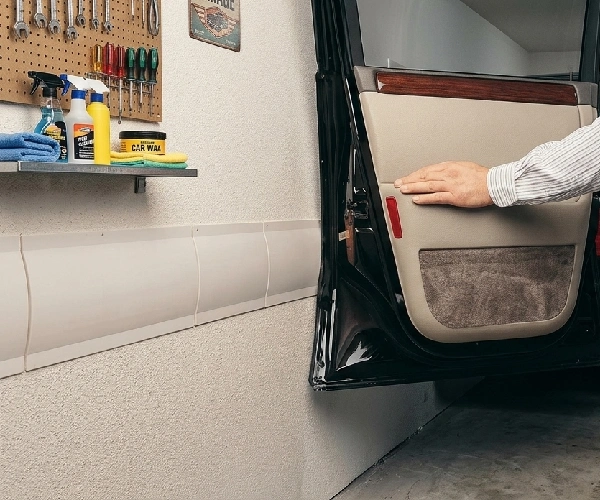
The protection works in both directions. Your door edge stays free of chips and paint transfer, which matters because door edges rust once the paint breaks.
The same product works on the back wall. Mount a strip at bumper height and a slow roll into the wall becomes a soft tap instead of a cracked fascia. That single upgrade turns the most common garage mistake into a non-event.
Many guards include reflective strips along the face. In a dim garage at 6 a.m., that reflective line is often the only thing telling you where the wall ends. Reflectivity is the feature most people skip and then wish they had.
Where to Buy Car Door Guards and How to Install Them
The best garage wall guard for your space depends on your car, not on price. Measure the height of your door at its widest swing point before you order anything. Doors on coupes and SUVs hit at very different heights.
You'll find guards at Amazon, home improvement stores, and auto parts retailers. Look for closed-cell foam or PVC rather than open-cell foam, since closed-cell material shrugs off moisture and won't crumble after a few Midwest winters.
Installation takes about twenty minutes:
- Park the car exactly where it normally sits and open the driver's door until it stops.
- Mark the wall at the point where the door edge comes closest.
- Repeat for the rear door, since rear doors often contact the wall lower.
- Clean the wall with rubbing alcohol so the adhesive bonds properly.
- Press the strip on and hold it for thirty seconds along its full length.
On bare concrete block or heavily textured drywall, adhesive alone won't hold. Use construction adhesive or short screws with washers instead.
Quick Tip
Mount the guard with the car parked and the door fully open. A strip placed by guesswork can sit a few inches too high or low and miss the door edge entirely.
DIY Garage Wall Guards You Can Build in an Afternoon
Store-bought protector pads work well, but you can build the same thing for under twenty dollars. Pool noodles are the classic choice because the foam is soft, weatherproof, and easy to cut.
Slice a noodle lengthwise with a utility knife and you get two half-round strips. Mount them to the wall with double-sided mounting tape at door height. One noodle covers both walls of a single-car bay.
Other cheap materials that hold up well:
- Pipe insulation foam, already split down one side and sized for tight strips
- Foam floor mats cut into panels and glued at bumper height
- Carpet remnants stapled to studs in an unfinished garage
- Reflective tape run along the wall as a visual guide rather than padding
The one thing DIY padding won't do is look polished. Foam noodles and carpet scraps read as temporary, so plan on replacing them every few years as the material breaks down.
Garage Parking Aids That Stop You Before the Bumper Does
Padding fixes the side walls. Stopping short of the back wall takes a different tool, and garage parking aids give you a signal before contact instead of after it.
The oldest trick still works. People have hung a tennis ball in the garage for decades: drill a hole through the ball, run cord through it, and hook it to the ceiling so it kisses the windshield at your ideal stopping point. Total cost is about five dollars.
The tennis ball has real limits. It hangs in your way whenever the car is out, it only works for one vehicle, and it won't help if you back in. Mounting it means balancing on a ladder over your own hood.
Floor-based options avoid the ceiling work entirely:
- Parking blocks are raised bars you anchor to the floor so your tires roll into them and stop
- A car stopper for garage floors works the same way but with a lower profile that's easier to step over
- Parking mats sit under the front tires with a small ridge that warns you before a larger ridge stops you
- Stop signs on weighted poles give you a visual cue, though the pole can mark your bumper over time
Floor aids share one drawback. They live on your garage floor permanently, so they're a trip hazard when the car is parked outside, and an unanchored one can get kicked out of position without you noticing.
Laser Guides, Sensors, and Cameras for Tight Garages
Electronic garage markers for parking give you feedback before your tires or bumper touch anything. They cost more, but they leave your floor clear.
A laser guide mounts to the ceiling and projects a dot onto your hood or dashboard. You pull forward until the dot lands on a spot you've memorized, then stop. Most models are motion activated and run on a battery or a plug, so a power outage doesn't strand you.
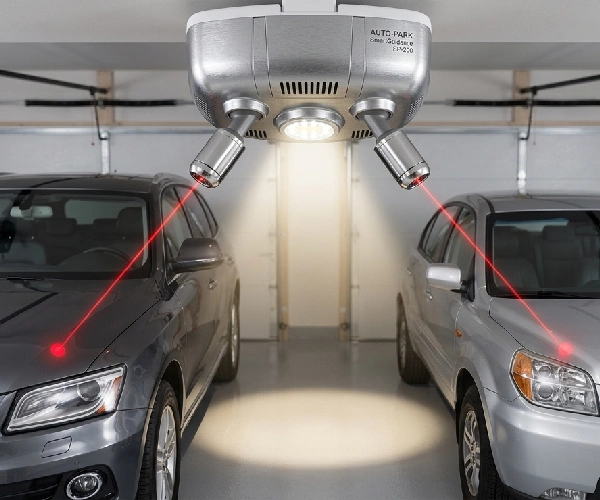
Parking sensors read distance and report it with a light bar, usually green, yellow, and red. You set the stopping point once, and the unit remembers it. Sensors mount at eye level on a wall, shelf, or freezer, which makes them the easiest option to install and the only one that works whether you pull in or back in.
Camera systems are the third route. Most cars built in the last decade already have a backup camera, and aftermarket wireless units add a front view or a license-plate sensor that alerts your phone. If your vehicle has a camera, calibrate to it before buying anything else.
Choosing Between Parking Blocks and Laser Parking Guides
These two options come up together constantly because they solve the same problem from opposite directions. One gives you a physical stop you feel; the other gives you a visual cue you see.
| Factor | Parking block | Laser guide |
|---|---|---|
| Typical cost | $20 to $40 | $30 to $70 |
| Installation | Adhesive or concrete anchors | Ceiling mount, ladder and drill |
| How you read it | Felt through the tires | Seen on the hood or dash |
| Works for a second car | No | Only with dual-laser models |
| Floor clutter | Permanent trip hazard | None |
| Power needed | None | Battery or outlet |
Pick a block if the same driver parks the same car every day and you want something that never needs batteries. Pick a laser if your garage is shared, your floor is already crowded, or you want to stop before contact rather than at it.
Safe Clearance Between Your Car and the Garage Wall
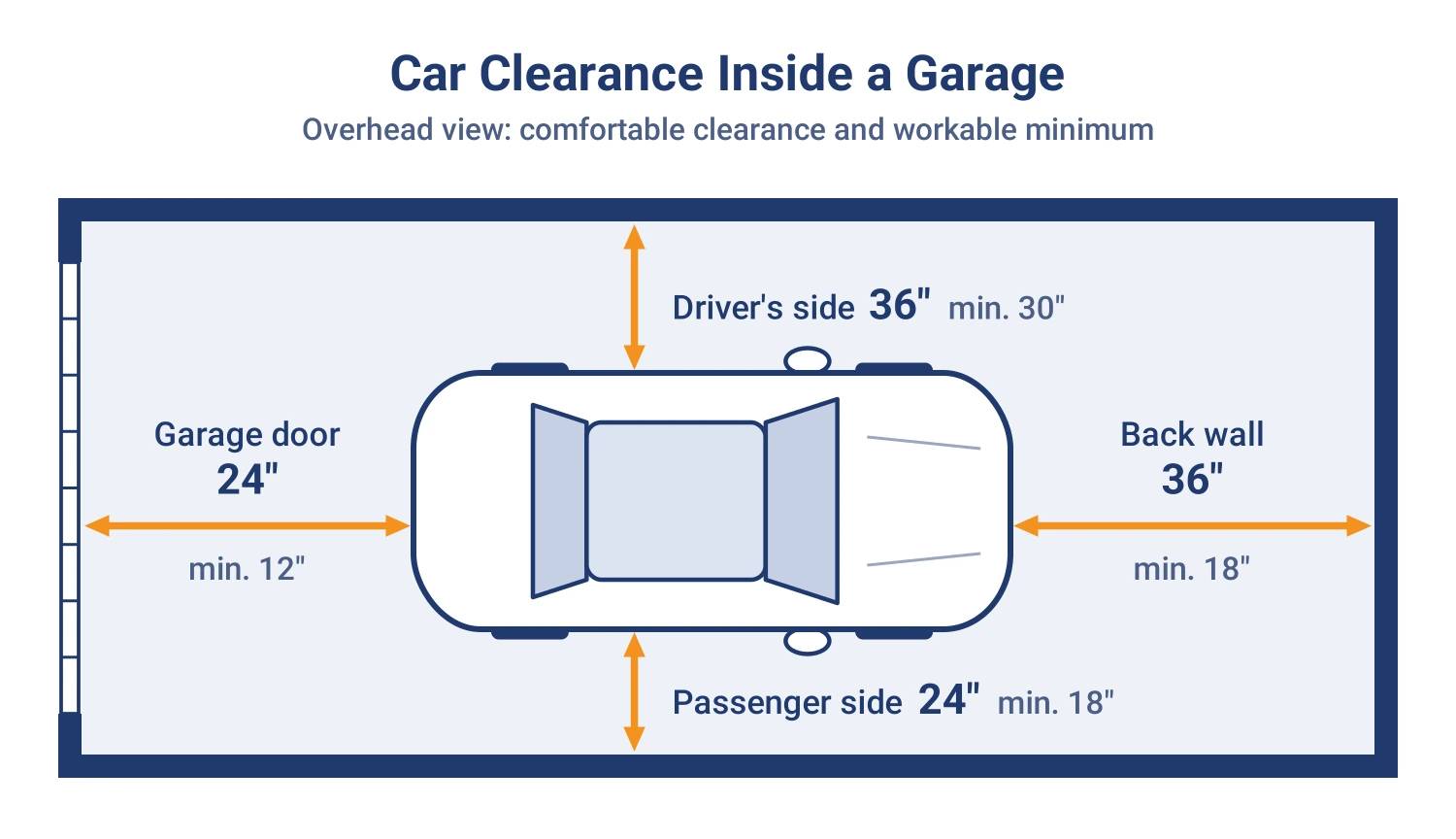
Knowing your target clearance makes every other decision easier. A standard car door needs roughly 30 inches of open space to swing wide enough for an adult to get out comfortably.
| Space | Comfortable | Workable minimum |
|---|---|---|
| Driver's side wall | 36 inches | 30 inches |
| Passenger side wall | 24 inches | 18 inches |
| Front bumper to back wall | 36 inches | 18 inches |
| Rear bumper to garage door | 24 inches | 12 inches |
These numbers explain why a small garage feels impossible. A 12-foot-wide single bay holding a 6.5-foot-wide SUV leaves about 33 inches split between two walls, which is under the comfortable minimum on both sides.
If your measurements come up short, center the car and give the driver's side the extra inches. You'll open that door thousands of times a year, and the passenger side maybe a few hundred.
Better Lighting and a Clear Floor Make Parking Simpler
Most garages run one or two dim bulbs, which is the worst possible lighting for judging distance. Depth perception depends on shadows and edges, and a single overhead bulb erases both.
Swap in LED shop lights or a multi-head fixture that screws into your existing socket. Aim for even light across the whole bay rather than one bright spot in the middle. Motion-activated fixtures turn on as the garage door opens, which is exactly when you need them.
Clutter matters just as much. Shelving that juts into the bay, a snow blower parked at an angle, and bikes leaning on the wall all shrink your margin. Moving storage to wall racks or overhead shelves buys back more room than any gadget on this list.
Habits That Keep Your Car Off the Garage Wall for Good
Tools help, but technique does the heavy lifting. Learning how to park a car in a small garage takes a few deliberate runs, not luck.
Try these adjustments:
- Approach straight. Most side-wall contact starts with a crooked entry at the door opening.
- Have someone spot you the first few times in a new house or a new vehicle, then park solo once you've found your reference points.
- Pick a fixed reference you can see from the seat, such as a shelf edge lining up with your mirror.
- Back in if the driver's side is the tight one, since reversing puts your door where you want it.
- Add convex mirrors in the corners so you can see the wall and the bumper at once.
New drivers and new vehicles cause most garage incidents. If either applies at your house, combine a physical guard with a few practice runs before you rely on habit alone.
Keep Your Garage Wall and Car Free From Dents and Scratches
You put real money into your home and your vehicle, and both hold their value better when the small stuff never happens. A $25 foam strip prevents a $400 drywall repair and a body shop visit that costs several times that.
It also matters at resale. Buyers notice a scarred garage wall, and no one wants to spend a weekend patching and repainting before a showing.
Start with padding on the side walls and the back wall, then add a stop or a sensor if you still misjudge the front. Two inexpensive fixes solve almost every garage parking problem.
Sometimes the real fix is a bigger bay. A custom garage from Feldco is sized around the vehicles you actually drive. You get enough width to open every door fully and enough depth to stop well short of the back wall. Storage gets its own space, too, so bikes and mowers stop crowding the car. Explore custom garage options or get a free quote from the Midwest's #1 home exterior company since 1976.
FAQs
What's the cheapest way to pad a garage wall?
Split pool noodles or split pipe insulation cost under $20 and cover both walls of a single bay. Attach them with double-sided mounting tape at the height where your door edge lands.
Why is it so hard to judge distance while pulling in?
Your hood hides everything within about eight feet of the front bumper, so you're estimating rather than seeing. Dim lighting and low speeds remove the shadow and motion cues your brain normally uses to gauge depth.
Is a garage parking laser dangerous to look at?
Consumer garage lasers are low-power Class 2 or 3R units, and brief exposure won't injure you. Mount the unit so the beam angles down onto the hood, and tell kids not to look directly into it.
Can one parking aid work for two different cars?
Wall guards and parking sensors work for any vehicle because they respond to whatever is in front of them. Tennis balls, single lasers, and floor blocks are calibrated to one car and one parking direction.
Do car door guards stick to unfinished garage walls?
Adhesive backing needs a clean, smooth surface, so it fails on bare block and heavy texture. Use construction adhesive or screws with washers on those surfaces instead.


 866-4FELDCO