


Summary
Most water leaking under a garage door traces back to a worn bottom seal, a door that no longer closes level, or a driveway that drains toward the garage. A replacement seal costs $60 to $100 and solves most cases. Thresholds, drains and regrading cost more but stop what a seal can't.
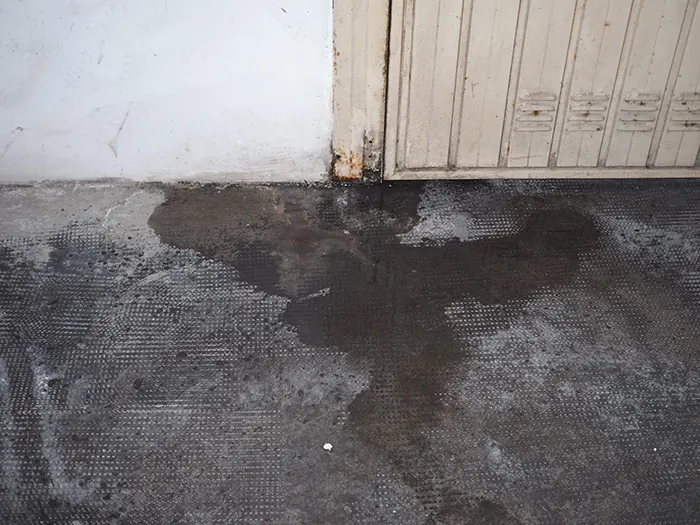
Quick Checks to Run Before You Buy Any Parts or Sealant
Water leaking under garage door seals almost always comes down to one of three problems, and you can spot all three in five minutes.
- Close the door, kill the lights and look for daylight underneath.
- Press the gasket with your thumb. A healthy one springs back; a dead one stays flat.
- Check whether the gap is even across the width. Uneven gaps point to the door.
- Find the dirt line inside the door. It marks how far water pushed in.
- Step outside during the next rain and watch where the runoff travels.
These checks tell you whether you're buying a $70 gasket or budgeting for concrete work.
The Bottom Seal Is the Most Common Culprit Behind Leaks
The only thing between rainwater and your garage is the gasket along the bottom of the door. A failing one looks flattened at the edges and cracked from freeze and thaw cycles.
How to Replace a Worn Garage Door Bottom Seal Yourself
Swapping a gasket that has seen better days is simple and isn't very time consuming. A new one runs $60 to $100 with tools.
Simple Steps to Replacing the Seal in Under an Hour
- Measure your door's width. Residential doors run 9 to 16 feet.
- Buy a gasket matching that width and retainer style.
- Raise the door to a comfortable height and unplug the opener.
- Pull the old strip from its aluminum track, or pry the nails on older doors.
- Slide the new gasket in, anchor it with evenly spaced fasteners, then confirm it compresses flat.
Seal Materials That Hold Up Against Midwest Winters
Cheap vinyl stiffens below freezing and stops compressing, which is why so many seals fail in February, not July.
| Material | Cold-weather performance | Lifespan |
|---|---|---|
| EPDM rubber | Flexible well below zero | 8 to 10 years |
| TPE | Flexible, resists UV | 6 to 8 years |
| Vinyl or PVC | Cracks in hard freezes | 3 to 5 years |
| Silicone blend | Best cold tolerance | 10 or more years |
EPDM rubber is the sensible default across the Midwest. It costs a little more per foot and lasts about twice as long as vinyl.
A Misaligned Door Leaves Gaps Even With a Brand New Seal
A door that closes crooked leaks no matter how good the gasket is. Tracks shift, rollers wear and hinges loosen, so the door touches down on one side first.
Adjusting Opener Travel Limits to Close the Bottom Gap
Openers use a down-travel setting that tells the motor when the door has hit the floor. If it drifts short, the door stops before the gasket compresses.
- Unplug the opener and pull the emergency release cord.
- Lower the door by hand and confirm it sits flush on the concrete.
- Reconnect the trolley, then turn the down-limit dial in small steps.
- Run the door and test the auto-reverse with a block of wood.
Stop if the door bounces back up or the opener strains. The limit is set too far.
Leaks Between Panels and at the Bottom Corners Explained
A garage door leaking between panels means the hinges have loosened and the sections no longer sit tight. Wind-driven rain gets pushed through the seam.
Leaks at bottom corners come from the vertical stop molding. When that side seal shrinks or pulls off the jamb, water runs down the track and puddles at the corner.
Clogged Gutters and Downspouts Send Water to Your Door
Yes, clogged gutters absolutely cause water to leak under a garage door. A blocked trough overflows down the wall above the opening, dumping more water at the threshold than any gasket can hold.
- Soil erosion or splash marks below the gutter line
- A downspout discharging near the opening
- Streaking or mildew on the wall above the door
Extensions carrying runoff eight to ten feet away are the cheapest fix here. Sagging gutters need replacing.
A Driveway Drain Is Often the Best Way to Redirect Water
If a fresh gasket isn't enough and you're still fighting leaking water, a driveway drain is the most effective option left.
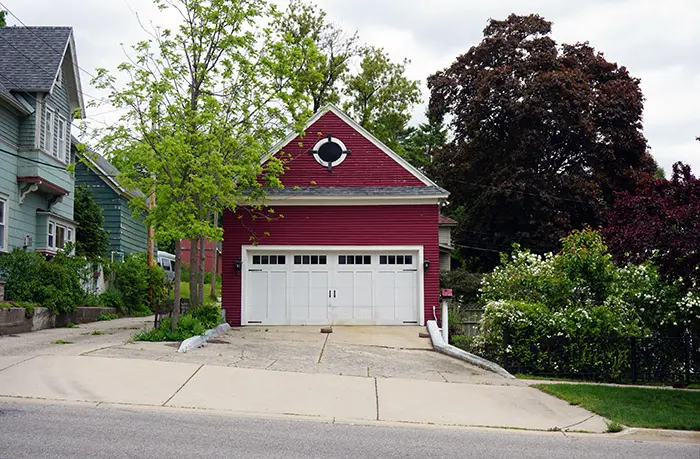
Older homes settle, so the slab often sits lower than the driveway. Driveways crack and shift their pitch too, changing how water travels.
A channel drain or French drain redirects that flow before it reaches the door. Both involve a discharge plan and a great deal of digging, so hire this one out.
Other Solutions to Fix a Leaking Garage Door for Good
When a drain is out of the question, a thin layer of concrete inside the opening gives the gasket a flat surface to seal against.
A garage door threshold is the simpler version: a rubber ramp bonded to the floor that raises the contact point. It suits floors that have settled unevenly, though it traps debris when you sweep.
Smart Leak Sensors Give You a Warning Before Damage
Smart sensors for detecting garage water leaks cost $20 to $40 and sit flat near the door. When water touches the contacts, they alert your phone.
- Wi-Fi or hub connectivity, not just a local alarm
- An operating range rated below freezing
- Replaceable batteries with a low-battery alert
- Rope extensions that sense the full door width
A sensor won't stop a leak, but it tells you at 2 a.m. instead of three weeks later.
Signs of Mold and Structural Damage Worth Calling a Pro
Repeated water leaking under a garage door damages framing, drywall and the slab. Call a professional if you see:
- Black, green or fuzzy growth on drywall or framing
- A musty smell that lingers after the floor dries
- Soft or discolored drywall along the wall base
- Rust creeping up the tracks, rollers or spring hardware
- New slab cracks, or a crack that widens between seasons
Mold beyond ten square feet calls for a remediation contractor. Shifting slabs need a foundation specialist, since sealing the door won't fix what's moving underneath.
Keep Your Garage Door From Leaking Season After Season
- Inspect the bottom gasket every spring and fall, and replace it yearly in harsh climates
- Clean gutters twice a year, more under heavy tree cover
- Check side and top weatherstripping for shrinkage
- Watch the door close once a month and confirm it lands level
Get a Free Quote on a New Garage Door From Feldco Today
Feldco has served over 500,000 homeowners across Illinois, Wisconsin, Indiana, and Iowa replacing more than 100,000 doors. Our steel garage doors are built for Midwest weather, with insulated panels and seals that stay flexible when temperatures drop.
Get a free quote and find out what a properly sealed door costs.
Frequently Asked Questions About Garage Door Water Leaks
What causes a garage door bottom seal to fail?
Constant compression, UV exposure and freeze-thaw cycling harden the rubber until it can't rebound. Road salt and grit speed up the breakdown.
Is it normal for a garage door to leak during a hurricane?
Yes. Hurricane rain is driven sideways at pressures no residential seal is rated to stop, so some intrusion is expected even on a healthy door.
How often should you replace a garage door bottom seal?
Inspect it twice a year and replace it every three to five years with vinyl, or eight to ten with EPDM rubber. In hard winters, check annually.
How much does it cost to stop water leaking under a garage door?
A new bottom seal runs $60 to $100 as a DIY job, and threshold kits add $50 to $150. Drains or regrading cost $1,000 to $4,000 installed.
Does a leaking garage door mean the whole door needs replacing?
Usually not. Replace the door when panels are rusted, warped or dented badly enough to stop closing square.


 866-4FELDCO