


Summary
A dent in the middle of a garage door panel is usually cosmetic, and you can fix it in an afternoon with a wood block, a rubber mallet, and filler. Dents near panel edges, hinges, or the bottom bracket are structural and belong to a technician. DIY repair costs $30 to $75 in materials, while a single panel replacement runs $300 to $900.
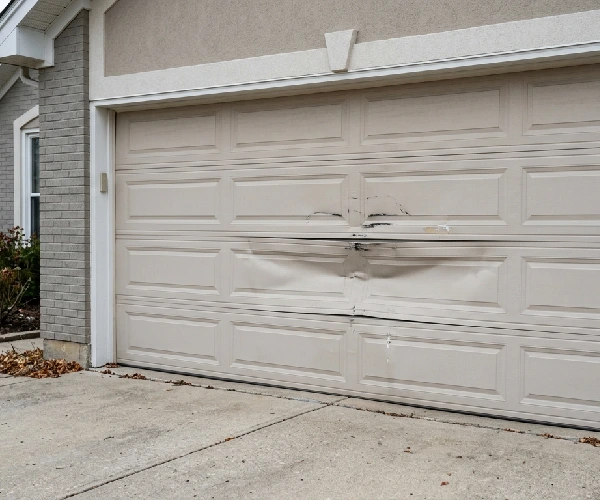
Why You Should Immediately Repair a Dented Garage Door
Your garage door covers roughly a third of the front of your house, so a ding is the first thing anyone notices. Garage door dent repair also protects the system behind the panel, because damage rarely stays cosmetic for long.
A bent section throws the door out of balance and strains rollers, hinges, and the opener. Buyers notice too, reading a beat-up door as deferred maintenance on the whole house.
Telling Cosmetic Dents Apart From Structural Damage
Location tells you almost everything. A dimple in the middle of a panel is cosmetic and fair game for a weekend fix, while a dent near an edge that pulls two sections apart is structural.
Signs a Garage Door Panel Is Too Damaged to Hammer Out
- Cracked, split, or flaking paint around the impact point
- Metal that's creased or folded rather than smoothly dished
- Damage within a few inches of a hinge, strut, or panel seam
- A door that sticks, grinds, or sags when you lift it by hand
- Two or more sections hit at once, as hail tends to do
Pounding on a creased panel stretches the metal further and rules out a clean repair later.
Safety Risks to Understand Before You Repair a Dent Yourself
Garage doors weigh 150 to 400 pounds and hang on springs wound under extreme tension. Those springs hold enough stored energy to cause serious injury if a cable lets go.
- Unplug the opener and pull the manual release first
- Work with the door closed and resting on the ground
- Keep tools away from springs, cables, and bottom brackets
- Wear safety glasses and gloves
- Skip open flames, which scorch and blister the finish
Never loosen a bottom bracket. It anchors the lift cable and stays under load even with the door closed.
Garage Door Tip
Check where the dent sits before you pick up a mallet. Mid-panel dings are safe to fix yourself, but anything near a hinge, seam, or bottom bracket needs a technician.
Tools and Steps for Garage Door Dent Removal at Home
This method handles most steel and aluminum panels. Walk the full door and mark every ding first so you prep once.
- A wood block, such as a scrap 2x4
- A rubber mallet
- A putty knife and fine-grit sandpaper
- Auto body filler, or epoxy wood putty for wood doors
- Primer, matching paint, a sponge, and mild dish soap
Clean the Dented Area Before You Start Any Repair Work
Stir a teaspoon of dish soap into warm water and sponge the panel until the grime lifts. Rinse with a hose and give it an hour to dry.
Set the wood block over the low spot and tap it with your rubber mallet in light, controlled swings. Shift the block around as you work instead of striking one place repeatedly.
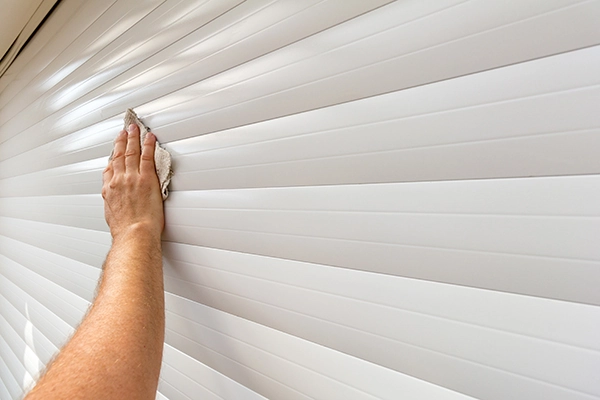
Sand the Surface Smooth and Level With the Door Panel
Once the metal sits close to flush, scuff the area with fine-grit sandpaper. The spot will look slightly dished next to the panel around it, which is what you want before filling.
Fill the Dent With Auto Body Filler or Epoxy Wood Putty
Steel and aluminum take auto body filler well, since it's built for the same material. Spread it in thin layers with a putty knife rather than one heavy pass.
Check the label for cure time, sand the patch flush, then wipe the dust away with a damp cloth.
Prime and Paint the Repair to Match the Rest of the Door
Primer gives the topcoat something to grip and seals bare steel against rust. Two thin coats of matching paint blend the patch in, and spray paint works just as well with less cleanup.
Removing Steel Door Dents With Heat and Compressed Air
Rapid temperature swings make thin metal expand and then contract fast enough to pop a shallow dent free. You'll need foil, a heat gun or hair dryer, and a can of compressed air.
- Wash the dented area and let it dry completely.
- Hold a piece of foil slightly larger than the dent flat against the panel.
- Heat the foil for a minute, keeping the gun moving so no spot blisters.
- Peel the foil off and spray for 30 seconds with the can upside down, which releases freezing carbon dioxide instead of air.
- Wait two minutes, then repeat once if nothing lifts.
This trick suits shallow dings in thin steel and aluminum. Creased metal won't respond, no matter how many rounds you run.
What Garage Door Dent Repair Costs for DIY and Pro Jobs
Doing it yourself runs $30 to $75 in materials. Professional repair cost tracks how deep the damage goes and whether your panel style is still made.
| Type of damage | Typical cost |
|---|---|
| Minor cosmetic dent, paintless repair | $100 to $300 |
| Moderate dent with cracked paint | $250 to $400 |
| Single panel replacement | $300 to $900 |
| Multiple damaged panels | $600 to $1,500 |
| Full door replacement | $700 to $3,500 |
Once two or more sections need work, a new door often costs less than piecing the old one back together.
Signs It's Time to Call a Garage Door Repair Professional
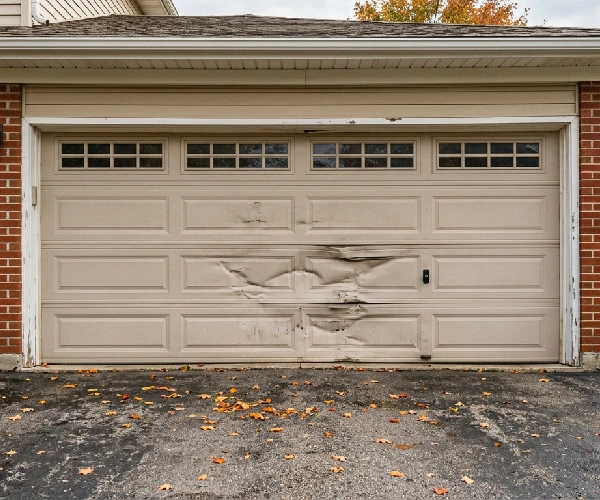
- The door binds, grinds, or won't close all the way
- Hail or a vehicle damaged several panels at once
- A section is creased, cracked, or splitting at a seam
- The damage sits near springs, cables, or bottom brackets
A technician can also run paintless dent repair, reshaping the metal from behind the panel and leaving the factory finish untouched.
Simple Habits That Keep Your Garage Door Dent Free
The best repair tips are the ones that keep you from needing a repair at all.
- Hang a tennis ball or mount a laser guide to mark where to stop
- Move basketball and hockey games off the driveway apron
- Trim shrubs and branches that scrape the surface on windy days
- Choose an impact-resistant door if hail hits your area often
Get a Free Quote on a New Garage Door From Feldco Today
When damage runs deeper than filler can hide, a replacement is the smarter investment. Feldco has served more than 500,000 homeowners across Illinois, Wisconsin, Indiana, and Iowa since 1976, replacing over 100,000 doors along the way. Talk with a product specialist and get a free quote on a new garage door today.
Frequently Asked Questions
Can a dented garage door cause it to go off track?
Yes. A deep dent can twist a section or shift a roller out of alignment, pulling the door off its track over time. Stop using it and have it inspected if it binds after an impact.
How do you fix an aluminum garage door dent without cracking the paint?
Work from behind the panel with light mallet taps, or pull the metal out with a flat-cup suction puller. Direct heat and hard strikes are what crack the finish on soft aluminum.
Is it safe to repair a garage door dent near the bottom bracket or springs?
No. Bottom brackets stay under cable tension even with the door closed, and torsion springs can release with enough force to break bones. Leave that zone to a technician.
Will a small dent get worse if you leave it alone?
A shallow cosmetic ding usually stays put. One that creases the panel or cracks the paint can spread, let moisture in, and rust the steel underneath.
Does homeowners insurance cover a dented garage door?
Many policies cover hail, falling objects, and vehicle impacts, minus your deductible. Normal wear isn't, so read your policy before paying out of pocket.


 866-4FELDCO