


Summary
A garage door that binds partway through its travel points to one of five things: dirty or bent tracks, worn rollers, a failing spring, a blocked sensor or a frozen bottom seal. Most take ten minutes to check. This guide covers what you can fix and when to call a technician.
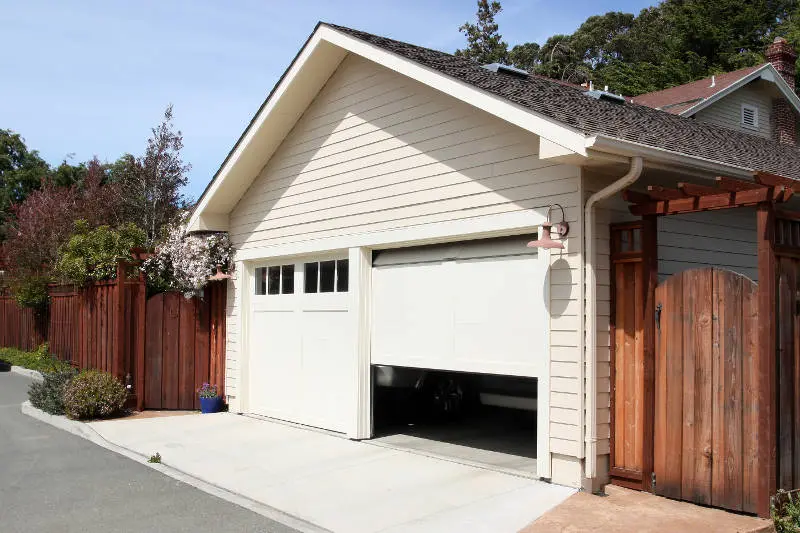
The Most Common Reasons Your Garage Door Sticks or Jams
Garage door sticking almost always starts small. A little grit in the track, a roller with a flat spot, a seal that swelled after a wet week. Then one morning the door catches halfway, and you're pressing a remote that does nothing.
The usual culprits:
- Weather: ice, snow and humidity attack hardware and panels
- Wear and tear: rollers, hinges and springs have a service life
- Debris: dirt, leaves and old grease collect along the rails
- Damage: clipping the door with a car bends panels and track
- Opener trouble: limit switches, force settings or a slipped chain
Pull the red release cord and lift the door by hand. If it glides, the fault sits in the opener. If it still binds, the door needs work. Do this only with the door closed.
Dirty Tracks, Bent Rails and Rollers That Have Worn Out
It takes very little buildup in a track to cause trouble. Wipe the inside of both rails, confirm they run parallel, then tighten any loose bracket bolts.
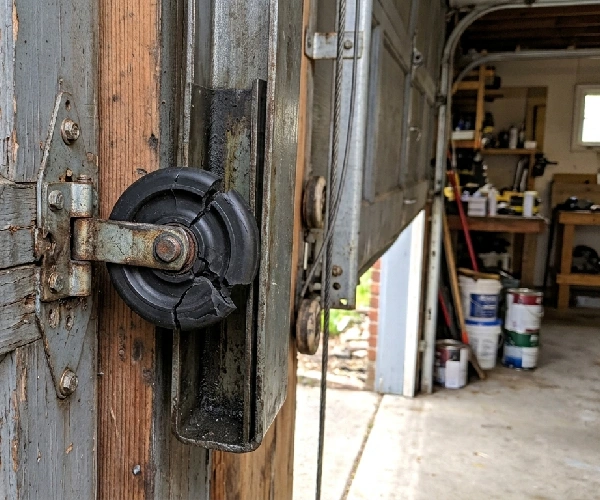
Rollers wear faster than the rails they run in. Swap them out when you notice:
- Cracks, chips or flat spots on the wheel
- A roller riding outside its rail
- Grinding or squealing during travel
- Visible wobble in the panels
Small dents come out with a wooden block and a few taps of a hammer. Anything badly bent gets replaced, not straightened.
Broken Springs and Cables That Stop a Door Halfway Up
The springs above your door carry nearly all of its weight. When one fails, the motor can't manage the load, so the door crawls, stalls or won't budge at all.
Test the balance with the opener disconnected and the door at waist height. A healthy door holds its position. One that drops or rises on its own has a tension problem, and that belongs to a technician.
Sensor Alignment Checks When a Door Sticks or Reverses
Photo-eye sensors sit a few inches off the floor on either side of the opening. Break that beam and the door stops or reverses, even when the path looks clear.
Both units should show a steady indicator light. Blinking or dark means the pair is dirty or out of line. Wipe each lens, clear away cobwebs, then nudge the brackets until the lights hold solid.
Sticking Versus Off Track: How to Tell the Difference
A sticking door still travels in a straight line. It drags or stops early, but the panels stay square and the rollers stay in their rails.
An off track door looks obviously wrong: crooked panels, a gap along the frame, a roller sitting outside the metal. Stop using the opener, because another cycle can bring the door down.
Ice, Weather Seals and Doors That Freeze to the Ground
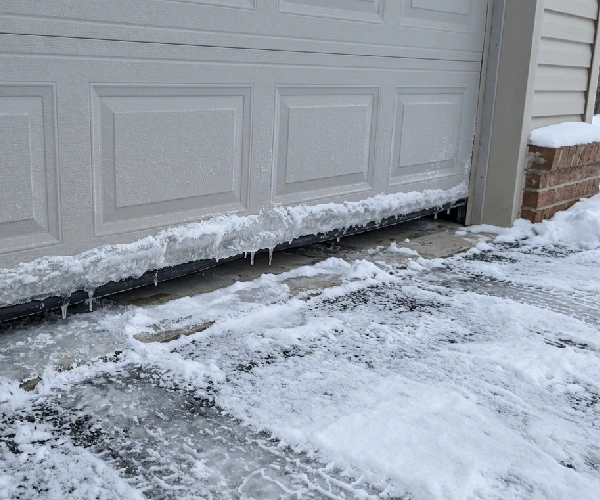
Cold weather rarely bothers the steel. It goes after the rubber gasket at the bottom, which bonds to the concrete once trapped moisture freezes overnight.
To keep the garage door seal from sticking, wipe the rubber with a cloth dampened with silicone. A line of table salt where the driveway meets the door lowers the freezing point and helps prevent the garage door from freezing to the ground.
Once the strip cracks, flattens or swells with moisture, cut it out and fit a replacement.
Preventive Measures That Keep a Garage Door From Sticking
Twenty minutes twice a year covers most of what goes wrong. Work through this with the door closed and the opener unplugged.
- Sweep and wipe both rails from the floor to the top curve
- Lubricate rollers, hinges and springs, then wipe off the excess
- Check alignment with a level and correct any lean
- Tighten loose nuts, bolts and bracket screws
- Inspect panels, cables and the bottom seal for damage
- Scrub anything sticky off the floor where the door lands
Common Mistakes That Make a Sticking Garage Door Worse
Don't grease the track, because grease traps grit and lets the door slide too freely. Save it for the gasket in deep cold. Don't force a stuck door either; hauling on one with a snapped spring warps panels and burns out opener motors.
When to Stop Troubleshooting and Call a Professional
Plenty of this is homeowner work. Some of it isn't. Bring in a technician when:
- A spring shows a visible gap or the door feels impossibly heavy
- A cable has frayed, kinked or slipped off its drum
- Rollers have left the rails or the panels sit crooked
- Track is bent past what a tightened bolt can correct
- The door still stops halfway after you've checked sensors and settings
Get a Garage Door That Opens Smoothly Every Single Time
Sometimes the repair list grows long enough that a new door is the cheaper answer. Feldco has replaced more than 100,000 doors for over 500,000 homeowners across Illinois, Wisconsin, Indiana, and Iowa. Get a free quote on a replacement garage door and we'll handle the rest.
Frequently Asked Questions
How do I know if my door is sticking from misaligned tracks or just needs lubrication?
Lift the door by hand with the opener disconnected. Binding at the same spot every time points to a bent rail; dragging across the whole travel means it's dry.
What is the best lubricant for garage door tracks and rollers?
A silicone or white lithium spray made for garage doors works best on rollers, hinges and springs. Skip WD-40, and never coat the rail surface itself.
Is it safe to adjust the torsion springs myself if the door is sticking?
No. Torsion springs store enough energy to break bones, and adjusting them takes proper winding bars and training. Leave spring tension to a professional.
What happens if I ignore a garage door that sticks?
The opener strains harder on every cycle, wearing out the motor and gears early. Left long enough, a binding door bends track, frays cables and can jump the rails completely.


 866-4FELDCO