


Summary
Chain drive openers cost less up front and pull heavier doors without straining. Belt drives run far quieter and need almost no upkeep. Chains last 10 to 20 years and belts 15 to 20, so the choice comes down to your door's weight and how close your garage sits to the bedrooms.
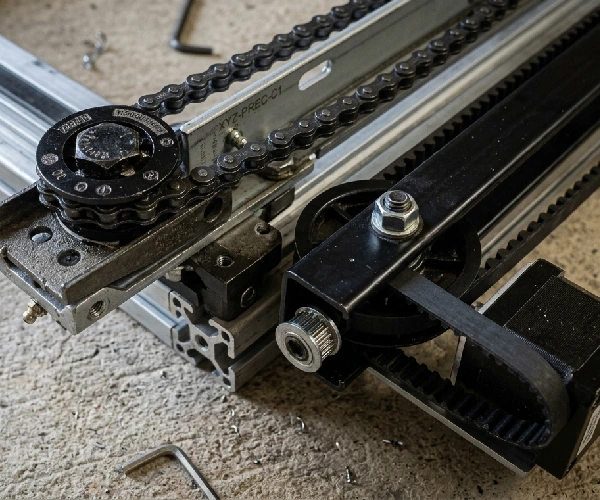
How Belt Drive and Chain Drive Garage Door Openers Work
Both openers do the same job: a motor pulls a trolley along a ceiling-mounted rail that raises or lowers your door.
A chain drive uses a metal chain, much like a bicycle chain, looped around a motor-driven sprocket. A belt drive uses a reinforced rubber belt, usually strengthened with steel or fiberglass, wrapped around a pulley. That single swap explains nearly every difference between the two.
Belt Drive vs Chain Drive Garage Door Opener Pros and Cons
| Factor | Chain Drive | Belt Drive |
|---|---|---|
| Upfront cost | $150 to $350 | $200 to $450 |
| Noise level | 50 to 75 decibels | 40 to 60 decibels |
| Maintenance | Lubrication twice a year | Occasional inspection |
| Average lifespan | 10 to 20 years | 15 to 20 years |
| Heavy doors | Excellent | Good with the right model |
Chain Drive Openers: Affordable Muscle With a Noise Penalty
- Pros: Cheapest option, sold by every major brand, strong enough for oversized doors.
- Cons: Loud, wears from metal-on-metal friction, needs lubrication and tension checks.
Belt Drive Openers: Quiet Operation at a Higher Price Point
- Pros: Very quiet, smooth, faster, close to maintenance free.
- Cons: Costs more up front, struggles with the heaviest wood and custom doors.
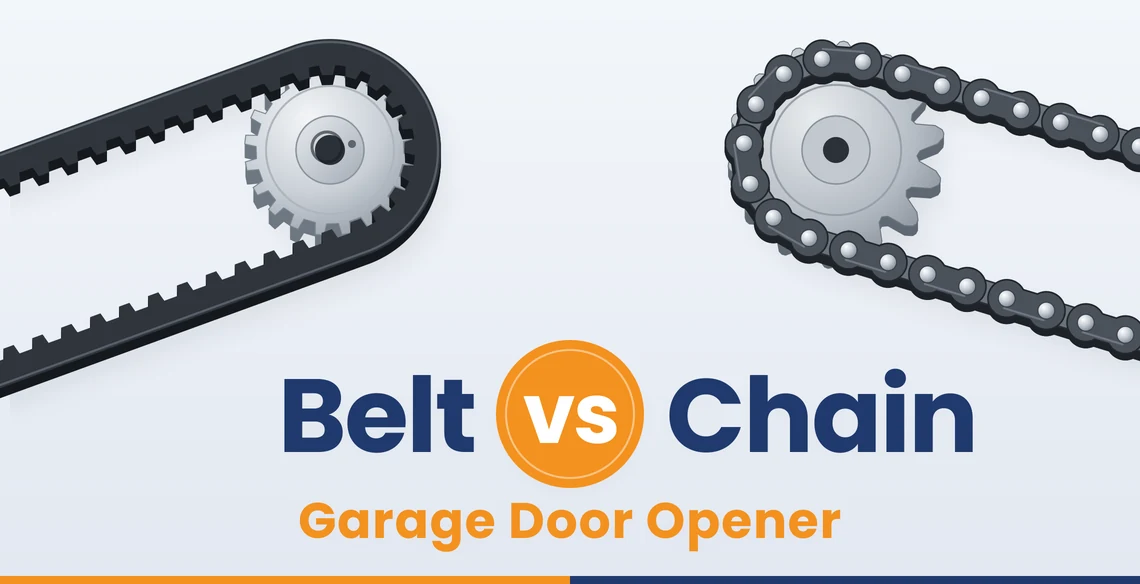
Upfront Cost and Long-Term Value of Belt and Chain Drives
A chain drive wins on sticker price by enough to notice. Expect to pay $50 to $150 less than a comparable belt model, which is why so many homes already have one.
A belt drive earns some of that back later. You skip the lubrication, and nothing grinds metal against metal every cycle.
Lifting Power for Heavy, Two-Car, and Three-Car Garage Doors
Strength is where chain drives pull ahead. The metal chain won't slip under load, so it handles solid wood, insulated steel, and carriage-style doors.
Most residential doors weigh 150 to 250 pounds, and either type manages that range. Anything heavier favors the chain, which makes it the safer pick for a two-car or three-car door. A belt drive covers a single-car door easily, and heavy-duty belt models exist for larger openings at a higher price.
Quick Tip
Ask your installer for your door's weight before you pick an opener. Doors over 250 pounds call for a chain drive or a heavy-duty belt model.
Noise Levels Compared: Decibel Ratings for Both Drive Types
Many people prefer a belt drive because it's the quietest of the garage door openers in common use.
Chain drives typically register 50 to 75 decibels, roughly the span between a normal conversation and a vacuum cleaner. Belt drives land between 40 and 60 decibels, and the quietest models drop into the 30s.
Picking a Quiet Opener When Bedrooms Sit Above the Garage
An attached garage with a bedroom overhead is the clearest case for a belt drive. Metal rattle travels through framing into the room above, which matters at 6 a.m. and again at 11 p.m.
A detached garage changes the math. Noise stays outside your living space, so a chain drive costs you nothing in comfort.
Maintenance Requirements and Average Lifespan of Each Opener
Chain drives ask for a little attention. Lubricate the chain once or twice a year and check it for slack annually. If it sags, tighten the tension screw on the power unit.
Belt drives need almost nothing beyond a yearly look for cracks or fraying. Chain drives run 10 to 20 years depending on use, and belts typically reach 15 to 20.
How Cold and Heat Affect Belt and Chain Drive Performance
Midwest winters test both types differently. Metal chains stay stable in the cold, but old lubricant thickens and the opener turns sluggish until you re-grease it.
Rubber belts stiffen when temperatures crash, though most carry ratings down to roughly minus 20 degrees. Humidity flips the advantage: chains rust in damp garages unless you keep them oiled, while belts shrug off moisture.
Smart Home Features Available on Both Chain and Belt Drives
Smart features track the model, not the drive type. Plenty of current chain drive openers ship with Wi-Fi, app control, and voice support through Alexa, Google Home, or Apple HomeKit.
Look for open and close alerts, guest access codes, battery backup, and a rolling code remote. Premium belt models bundle more of these, but a mid-range chain drive gets you most of them.
Speed and Everyday Convenience of Belt and Chain Openers
Belt drives open and close slightly faster and with less jolting, which reduces stress on the door over time.
Choosing the Right Garage Door Opener for Your Home
There's no universal winner. Choose a chain drive for the lowest price, a detached garage, or a heavy two-car or three-car door. Choose a belt drive if quiet matters most, especially with bedrooms near an attached garage, and you'd rather pay more once than maintain something twice a year.
Get a Free Quote on Your New Garage Door From Feldco
Feldco has served more than 500,000 homeowners across Illinois, Wisconsin, Indiana, and Iowa, and replaced over 100,000 doors. A product specialist can match an opener to your door's weight and garage layout. Get a free quote today.
Frequently Asked Questions About Garage Door Openers
Is a belt drive garage door opener worth the extra cost?
It's worth it when your garage is attached and someone sleeps nearby. If your garage is detached or your door is heavy, the premium buys little.
Why are belt drive garage door openers quieter than chain drives?
A rubber belt gliding over a pulley makes almost no contact noise. A metal chain rattles against a sprocket and sends vibration through the rail and ceiling.
Which garage door opener is better for a detached garage?
A chain drive, in most cases. You get the durability and lower price without the usual noise penalty.
Can you swap a chain drive opener for a belt drive on an existing door?
Yes. Mounting and wiring are comparable, so an installer can replace the unit in one visit if your door's weight suits it.
Are belt drive openers harder to repair than chain drives?
Chain parts are more common and cost less, so repairs run cheaper. Belt drives break down less often, which evens things out.


 866-4FELDCO