


Summary
Garage door cables carry a load that can top 150 pounds, so slack on one side pulls the whole system out of balance. With extension springs, you can remove that slack yourself by raising the door, clamping both tracks, and moving each cable hook up one hole. Snapped cables, torsion spring systems, and doors that still hang crooked after adjustment call for a trained technician.
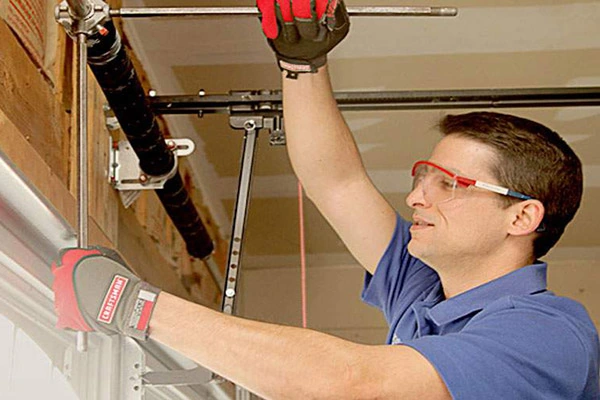
Why Garage Door Cables Matter More Than Most Homeowners Think
Automatic garage doors have come a long way on safety, but you still shouldn't leave anything to chance. Learning how to adjust a garage door cable starts with understanding what that thin steel wire holds up every day.
What a Garage Door Cable Does During Every Open and Close
The cable runs through the torsion springs and does the heavy lifting each time the door rises or drops. That makes it one of the most important safety mechanisms on the door.
A garage door tension cable has a second job. When a spring fails, the cable catches the pieces and shields you from the recoil, so the spring drops to the floor instead of flying across the garage.
Common Reasons Garage Door Cables Go Loose on One Side
Cables rarely fail on their own. Something else usually shifts first, and the slack you notice is the symptom rather than the cause.
- A worn or broken spring that no longer balances the door's weight
- A cable that slipped off the drum and unwound a turn or two
- Bent tracks or worn rollers that let the door sit crooked
- A bottom bracket loosened by years of daily cycles
- Rust and fraying from moisture, road salt, or humid Midwest summers
When garage door cables are loose on one side only, check the opposite cable first. Uneven tension usually points to a spring or drum problem, not the cable you see sagging.
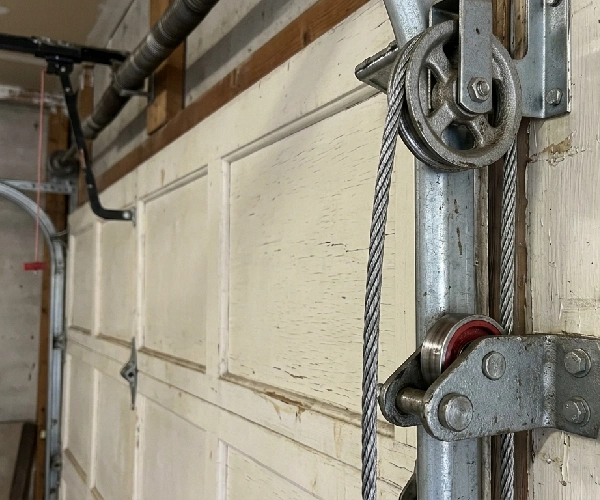
Warning Signs Your Garage Door Cables Are Fraying or Failing
Frayed wires look like tiny metal whiskers standing out from the strand. Use a flashlight, and watch for rust stains, kinks, and flattened sections.
- One side of the door sits higher than the other
- The door jerks, hesitates, or pops mid-travel
- A cable hangs slack while the door rests on the floor
- The cable has jumped the drum or bunched up in one spot
- The door suddenly feels much heavier by hand
Stop using the door as soon as you spot broken strands. A cable that snaps under load can whip sideways and drop the door.
Telling a Loose Opener Chain Apart From a Slack Lift Cable
Homeowners mix these two up constantly. The chain runs overhead along the opener rail; the lift cables run down each side of the opening.
If the sag sits above your head, tighten the garage door chain at the trolley nuts and leave the cables alone. If it hangs beside the door near the tracks, you're looking at a cable.
Safety Rules for Working Around Garage Door Spring Tension
Torsion springs store hundreds of pounds of energy. That energy makes a 200-pound door feel light, and it also makes a careless repair dangerous.
- Never loosen a torsion spring or winding cone without proper winding bars
- Work with the door raised fully, so the springs sit unloaded
- Clamp both tracks before your hands go near the hardware
- Unplug the opener so nobody can start the door remotely
- Wear safety glasses and gloves, since frayed steel cuts skin fast
Any job that means adjusting garage door springs and cables together belongs to a trained technician. Drum work happens under live spring tension.
Tools and Safety Gear You Need for Garage Door Cable Work
- Stepladder
- C-clamps
- Flat-head screwdriver
- Wire cutters
- Pliers
- Safety glasses and work gloves
- Locking pliers as a second set of clamps
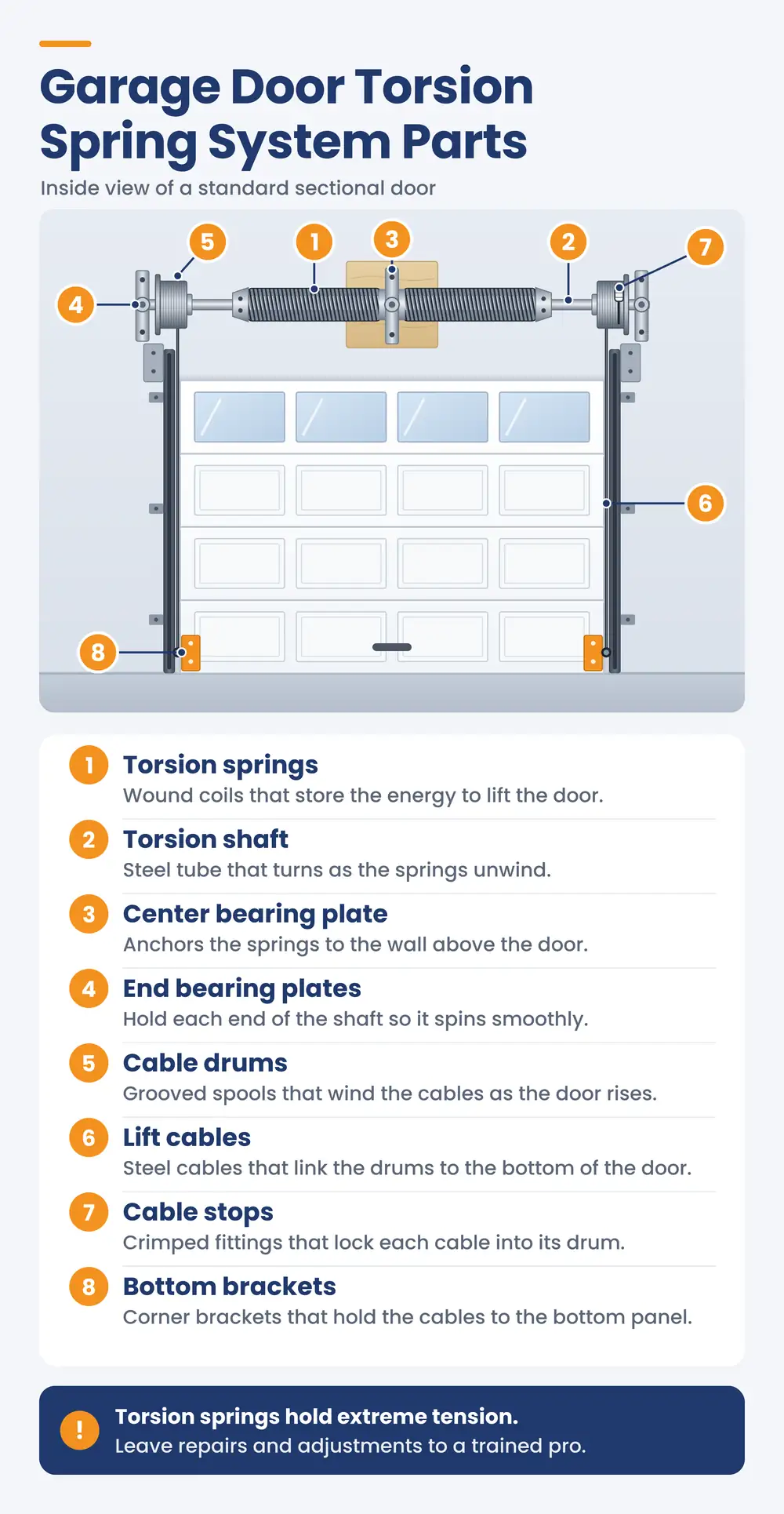
How to Adjust Your Garage Door Cables Step by Step at Home
Before you adjust tension on garage door hardware, confirm which spring setup you have. The steps to fix a garage door cable below apply to extension spring doors, where each cable ends at a hook on the track hanger.
Quick Tip
Extension springs stretch along the overhead tracks on each side of the door. If you spot one spring bar above the opening with a cable drum at each end, you have torsion springs, so call a pro instead.
Step One: Release the Opener and Cut Power to the Door
Pull the red rope hanging from your opener. That pull cord releases the door from its drive chain. Raise the door all the way up, which unloads the springs and takes the weight off both cables, then unplug the opener at the outlet.
Step Two: Clamp the Tracks So the Door Cannot Come Down
Attach two C-clamps to the tracks just beneath the bottom roller on each side. They hold the door up while you work. Skipping this step is how a heavy door lands on somebody.
Step Three: Disconnect the Cable From Its Anchor Point
You aren't cutting anything here, only disconnecting. The cable travels from the bottom bracket, around the pulley cable assembly, and ends at a hook above the doorway. Find the metal hanger with a row of holes, then unhook the cable end.
Step Four: Adjust the Bracket and Take Out the Slack
Move the hook up one hole to shorten the cable and add tension. If the bracket needs work, grip it with pliers and draw the wires through until the sag disappears.
Change both sides by the same amount so the door rises level. Stop the moment the slack is gone, since overtightening pulls the door out of square.
Step Five: Check the Drum, the Tracks, and Your Handiwork
Look at the drum at the top of each track, where the cable wraps in a neat spiral. Confirm that nothing has unwound and both cables sit in matching grooves.
Remove the clamps and lower the door by hand. Plug the opener back in, reconnect the trolley, and run one full cycle. A balanced door holds its position when you stop it halfway.
If this feels overwhelming, don't force your way through it. Call for help when a cable has snapped, when your door runs on torsion springs and drums, or when it still hangs crooked after you've removed the slack.
Simple Maintenance That Keeps Cables and Tracks Healthy
Twice a year is plenty for most homes. Pick two dates you'll remember, like the first warm week of spring and the day you swap the furnace filter.
- Inspect both cables end to end for fraying, rust, and flat spots
- Wipe the tracks clean and look for dents or loose bolts
- Lubricate rollers, hinges, and springs with a silicone or lithium spray
- Lift the door halfway by hand and see whether it stays put
Keep petroleum oils off the cables, because they attract grit that grinds the strands apart.
Sometimes the cables aren't the real problem and a tired door is. Feldco has served over 500,000 homeowners across Illinois, Wisconsin, Indiana, and Iowa, and replaced more than 100,000 doors along the way. Whether you want a new garage door, a detached garage sized for one, two, or three cars, or vinyl window replacement, a product specialist can walk you through the options. Speak with a specialist and get a free quote today.
Frequently Asked Questions About Garage Door Cable Repair
Is it safe to adjust garage door cables yourself?
On an extension spring door it's reasonably safe if you raise the door fully, clamp both tracks, and unplug the opener. On torsion spring systems with cable drums, hire a professional, because the work happens under live spring tension.
Why does my garage door cable keep coming off the drum?
A cable that jumps the drum repeatedly means the door is out of balance, the drum set screws slipped, or the tracks are misaligned. Rewinding the garage door cable alone won't hold until the cause is fixed.
How long do steel garage door cables last in humid climates?
Galvanized steel cables generally last eight to twelve years under normal use. Humidity, road salt, and damp concrete shorten that span, so inspect them yearly if your garage stays wet.
Should I adjust the existing cable or install new ones?
Adjust when the cable is intact and only slightly slack. Install cables in matched pairs once you see broken strands, kinks, rust pitting, or a cable that won't hold tension.
How often should I check my garage door cable tension?
Check both cables and the door's balance about twice a year, or any time the door starts sounding or moving differently. Regular checks catch fraying long before a cable snaps.


 866-4FELDCO