


Summary
Roofing nails use smooth shanks and wide heads and stop at 1-3/4 inches, while siding nails use ring shanks, smaller heads, and stretch up to 2-1/2 inches. Each fastener feeds a different gun and grips a different material, so mixing roofing nails vs siding nails leads to jams, cracked panels, and shingles that lift. Match the nail to the job and both surfaces hold up for decades.
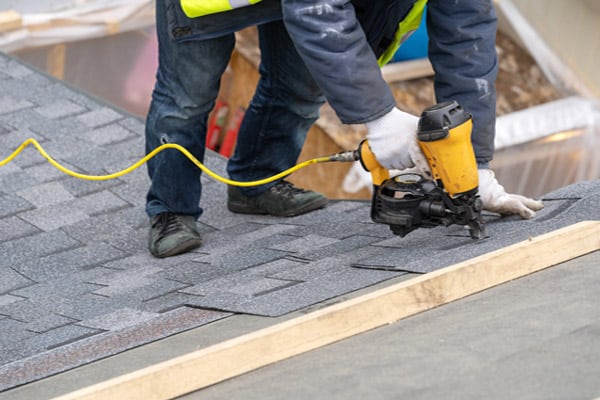
Roofing Nails: Designed for Fast and Easy Removal
Wondering what roofing nails look like? Picture a broad, flat head on a smooth shank. That's a completely different fastener from the ringed siding nail, and it doesn't belong on exterior walls even though it costs less.
The main difference is that roofing nails are built to come back out. Shingles get replaced every so often, and the larger head gives a pry bar something to grab. Smooth shanks slide free without tearing the deck. Siding nails, with their ringed shanks, resist that same pull.
Roofing nails also sit flush against the surface. They punch through asphalt shingles to lock them into the roofing system, so nothing should stick up and leave the roof line uneven.
Shingles aren't thick, so roofing nails stay short: no longer than 1-3/4 inches. Siding nails run much longer because they pierce a heavy layer of vinyl paneling. That gap in length is the most noticeable difference between the two, along with the price tag.
Siding Nails: Built to Stay Put for the Long Haul
A roofing nail and a siding nail look close enough that plenty of homeowners assume they're interchangeable. They aren't the same, though. Each one is engineered for a distinct material, so the kind of nails you grab decides how your project holds up.
Siding nails go in with a siding nail gun and fasten panels to exterior walls. They're designed to stay put; once one is set in the siding, you won't be pulling it back out. Siding isn't replaced nearly as often as roofing, so permanence is a feature. Ring shanks give these fasteners extra bite, and smaller heads help them sit tight against the panel.
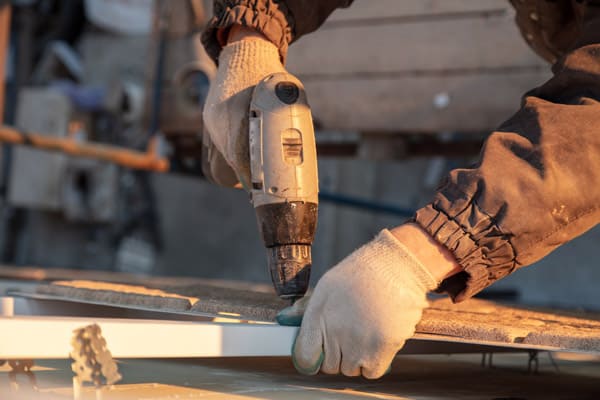
It goes against instinct, but never drive a siding nail flush. Leave a small gap between the head and the panel, because vinyl reacts to temperature shifts and rough weather.
Vinyl siding expands and contracts by nature, which is why you'll want to set the fastener a little cockeyed into the surface. That slight play prevents cracks at the puncture point when seasons swing from hot to cold.
You'll also notice siding nails cost more. Siding nail length runs up to 2-1/2 inches, and more material means a higher price. Panels are thick, so that extra reach is necessary, and there's a performance reason behind the premium. Don't swap in a cheaper roofing nail to do a siding nail's job; you could leave your siding cracking and popping off.
Coating matters too. Hot-dipped galvanized nails carry a thick zinc layer that shrugs off moisture, while electro-galvanized nails wear a thinner coat that corrodes faster outdoors.
Roofing Nailer vs. Siding Nailer: Don't Mix the Tools
The difference between a roofing nailer and a siding nailer starts with the fasteners each one feeds. Both are coil guns that look nearly identical on the shelf, yet the collation, shank diameter, and head size vary enough that the tools aren't interchangeable.
Siding nails in a roofing gun will jam the tool, and if you try to use a siding nailer for roofing, the fasteners won't seat correctly. A framing nailer isn't a fix either, since its nail sizes rarely match siding specifications.
So can you use roofing nails for siding? Some crews use roofing nails for vinyl siding when blind nailing hides the oversized head, but the risks are real: less holding power, a wider hole, and a finish the panel manufacturer may not warranty.
Most homeowners end up buying a roofing nail gun because roofing nails cost less and pull out easily, which makes the tool handy well beyond shingles.
Quick Comparison of Roofing and Siding Nail Features
You'll need different nails and different tools for shingles or siding. Whichever surface you're securing determines which gun and which fastener will get you a lasting result.
| Feature | Roofing Nails | Siding Nails |
|---|---|---|
| Head | Large and flat | Small and low profile |
| Shank | Smooth | Ringed |
| Length | Up to 1-3/4 inches | Up to 2-1/2 inches |
| Installation | Flush to the shingle | Angled, with a slight gap |
| Tool | Roofing nail gun | Siding nail gun |
Roofing Nail Features at a Glance for Shingle Work
- Designed to be removed
- Larger nail head for easier removal
- Smooth shank for removal
- No longer than 1-3/4 inches
- Installed flush against the shingle surface
Siding Nail Features That Keep Panels Secure Longer
- Meant to stay in place
- Smaller head to secure them in place
- Ring shank to help them remain in place
- Up to 2-1/2 inches long
- Installed at an angle, not flush against the siding
Trust Feldco for Expert Roofing and Siding Installation
At Feldco, we provide breakthrough design and triple-layer protection to keep your roof insulated throughout the year. Our installers are factory-trained, experienced, and professional, which is how we've served more than 500,000 homeowners across Illinois, Wisconsin, Indiana, Iowa, and Michigan since 1976. Speak to a product specialist and get a free quote today.
FAQs about Roofing and Siding Nails
What Are the Most Common Roofing Nail Mistakes Beginners Make?
Overdriving nails through the shingle mat and placing them above the nail line are the two biggest errors. Both let wind lift the shingle.
What Happens If You Load Siding Nails in a Roofing Nailer?
Expect jams and misfires. Siding nails in a roofing nailer sit differently in the magazine because of their thinner shank and smaller head, so they feed unevenly and often drive to the wrong depth.
How Do Shank Diameter and Gauge Compare Between These Nails?
Roofing nails typically measure about 0.120 inch across with a smooth shank, while siding nails are thinner, closer to 0.090 inch, with rings.
Which Head Styles and Shank Types Suit Each Application?
Roofing calls for a wide flat head on a smooth shank. Siding calls for a small head on a ring shank that resists pull-out.
What Trends Are Shaping Composite Siding Fasteners Next?
Manufacturers keep moving toward stainless and polymer-coated fasteners that resist corrosion behind fiber cement and composite panels.


 866-4FELDCO