


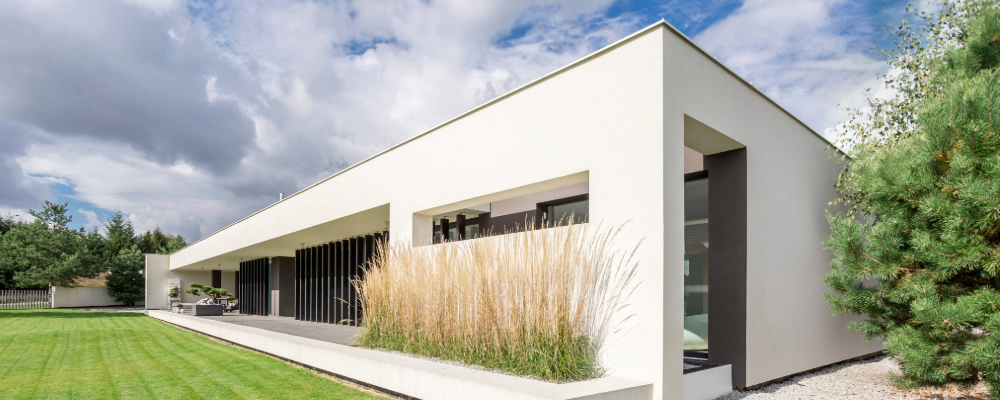
If you're considering a new roof, you've probably come across sleek, modern flat roof houses and wondered whether the look is worth it. Flat roofing is common on commercial buildings, but residential flat roofs have been gaining popularity too. Before you commit, it pays to understand the full picture of flat roof advantages and disadvantages — from cost savings and rooftop access to drainage headaches and limited curb appeal.
What Is a Flat Roof?
A flat roof is a roofing system with an extremely low slope – typically between ¼ inch and ½ inch per foot. Despite the name, these roofs are not completely level. That minimal pitch allows water to drain toward the gutter system and away from the building's foundation. A truly level roof would pool water on the surface and eventually fail under the weight. You'll find flat roofs on schools, hospitals, and multi-unit buildings, but they also appear on standalone homes where homeowners want a modern aesthetic.
Types of Flat Roof Systems
There are three main types of flat roof systems used on residential and commercial buildings:
- Single-ply membrane (EPDM) – a synthetic rubber sheet and the most common choice for residential flat roofs. EPDM is lightweight, affordable, and effective at heat retention, which can lower energy usage and utility costs.
- Built-up roofing (BUR) – a multi-layered system consisting of an insulation board on the bottom, multiple alternating layers of tar or asphalt and roofing felt, and a top layer of gravel. BUR is highly durable and resistant to water, UV radiation, and storm damage.
- Modified bitumen (MBR) – an asphalt-based material rolled out in wide sheets and heat-applied or self-adhered to the roof. MBR combines the durability of BUR with easier, lighter installation and performs well in colder climates.
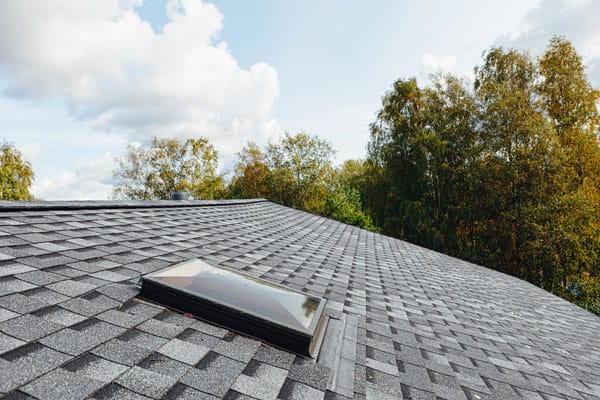
Advantages of a Flat Roof
Understanding the benefits of a flat roof helps explain why many property owners still choose this style over a traditional pitch.
- Lower installation cost. Flat roofing requires fewer materials and less complex labor than a pitched system. The simple geometry means shorter installation times, which reduces both material and labor expenses. For homeowners on a budget, single-ply EPDM is especially cost-effective.
- Easy access and usable space. Because the surface is walkable, flat roofs allow unrestricted access for inspections, maintenance, and the placement of HVAC units, satellites, and solar panels. Some homeowners convert the space into a rooftop deck or garden — a flat roof benefit that pitched roofs simply cannot match.
- Low maintenance. All three flat roof systems – EPDM, BUR, and MBR – require minimal upkeep over their lifetime. Repairs, when needed, tend to be inexpensive. EPDM patches can even be handled by a homeowner, and BUR resurfacing is a straightforward process of removing and adding layers.
- Durability of materials. EPDM rubber, modified bitumen, and built-up roofing are all engineered for longevity. These heavy-duty materials can be resurfaced and layered to extend the roof's service life. The typical flat roof lifespan is roughly 15–20 years with proper care.
- Energy efficiency. EPDM in particular is effective at heat retention, helping keep your home insulated throughout the year and potentially lowering your utility bills.
Disadvantages of a Flat Roof
No roofing style is perfect. Here are the most common issues with flat roofs that homeowners should weigh carefully before making a decision.
- Drainage problems. Drainage is the single biggest concern and happens to be your roof's main responsibility. At such a low angle, water, snow, and leaves have limited ability to slide off. Instead, moisture sits and puddles, which can cause buckling and surface damage. Even though the slight slope is designed to channel water toward the gutters, gravity is far less effective here than on a pitched roof.
- Leak risk. Prolonged pooling increases the chance of leaks seeping into the home. Water intrusion can lead to stains, mildew growth, and structural damage that may require costly repairs or even a full roof replacement.
- Fewer material options. A pitched roof supports shingles, tiles, shakes, and metal in a wide range of colors and styles. Flat roofing is largely limited to rubber, metal, and rolled polymers. Traditional shingles would soak up water at the low angle, and shingling a flat roof can actually shorten its lifespan. Metal is an option but comes at a steep cost.
- Insulation challenges. Pitched roofs benefit from an attic or loft space that acts as a natural thermal buffer. Flat roofs still need underlayment and insulation, but placing insulation below the roof deck can trap moisture and cause condensation – a bad outcome for both the structure and indoor air quality.
- Limited curb appeal. Flat roof houses can look striking in the right modern context, but the style is not universally appealing. Most neighborhoods associate flat profiles with commercial or institutional buildings rather than single-family homes. A flat roof may not meet HOA standards and could limit your property value compared to a traditional pitched design.
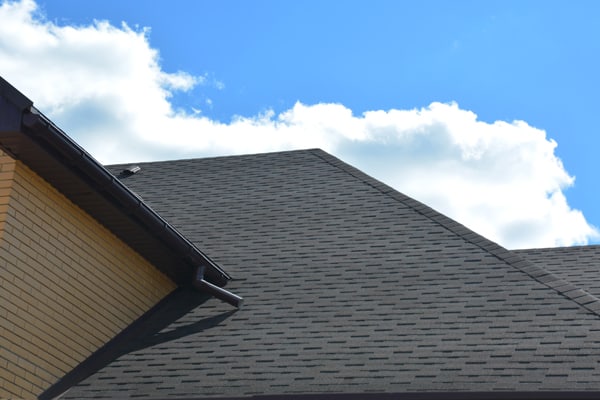
Flat Roof Pros and Cons at a Glance
| Factor | Flat Roof | Pitched Roof |
|---|---|---|
| Installation cost | Lower | Higher |
| Material options | Limited (rubber, metal, rolled polymers) | Wide (shingles, tile, shake, metal) |
| Drainage | Prone to pooling | Gravity-assisted runoff |
| Usable roof space | Yes — walkable, supports equipment | No |
| Maintenance | Low cost, easy access | Varies; harder to access |
| Insulation | Can cause condensation issues | Attic provides natural buffer |
| Lifespan | ~15–20 years | 20–50+ years depending on material |
| Curb appeal | Modern / niche | Broadly appealing |
The Bottom Line
The pros and cons of a flat roof come down to your priorities. If budget, rooftop access, and a modern aesthetic matter most, flat roofing is a legitimate option – especially with today's durable membrane systems. If long-term drainage reliability, material variety, and broad curb appeal rank higher on your list, a traditional pitched roof remains the safer investment. Whichever direction you choose, professional installation is essential. A properly installed roof – flat or pitched – will always outperform a poorly executed one.
Go with Professionals for Your Roof Replacement
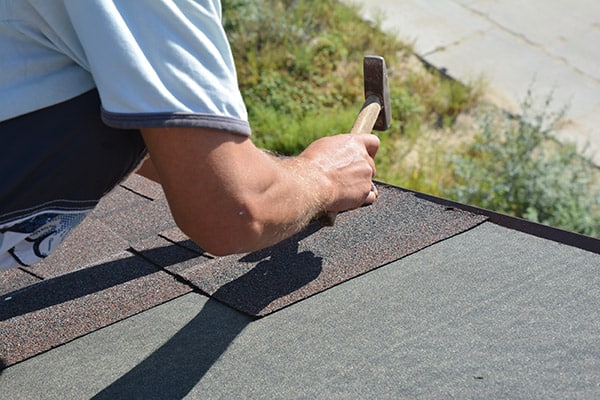
Whether you choose a flat roof or a traditional pitch, working with experienced professionals makes all the difference. Our factory-trained installers have been serving Midwest homeowners for decades, handling everything from tear-off to final installation with precise detail. Speak to a product specialist and get a free quote online today.


 866-4FELDCO